
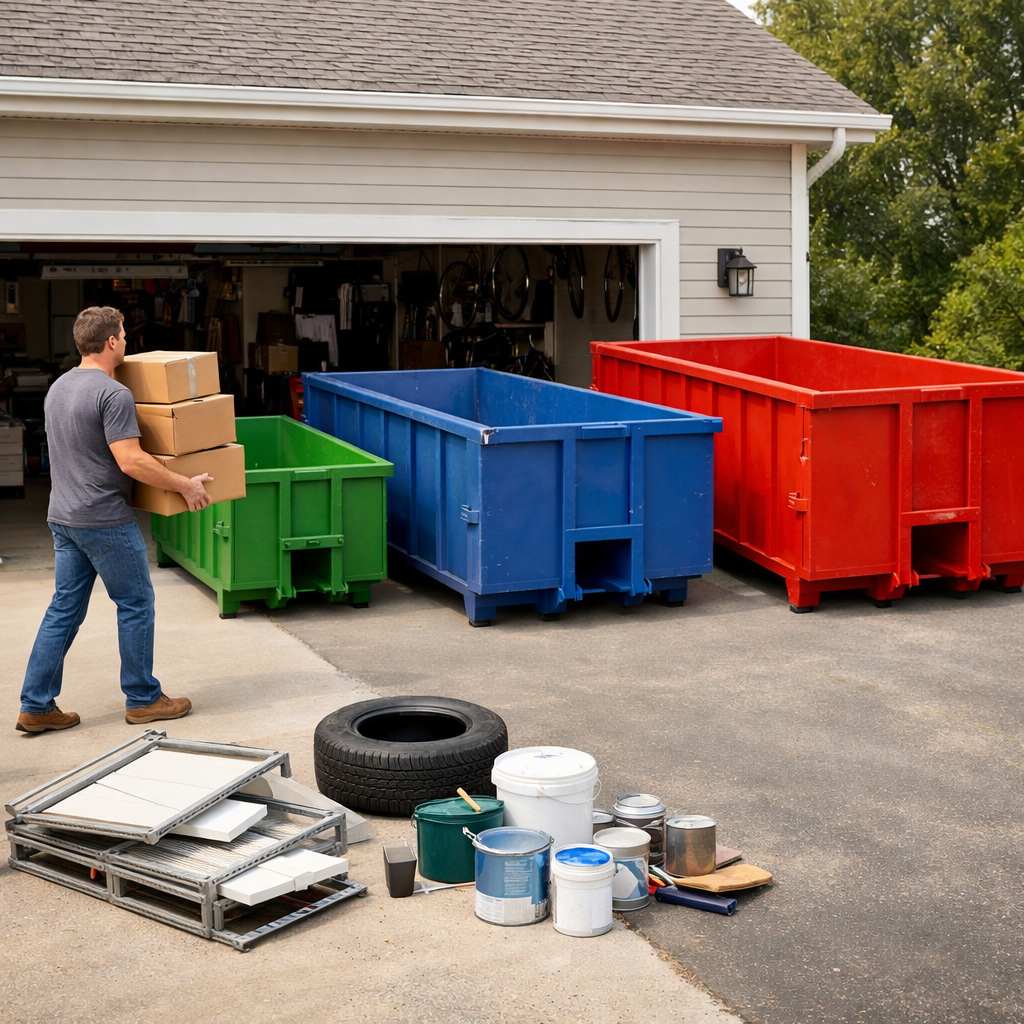
Weekend Dumpster Rental: Best Bin Sizes For A Garage Declutter
You can absolutely rent a driveway-safe dumpster just for a weekend—and choosing the right size keeps you from overpaying or running out of space. At Garbage Advice, the 10–20 yard range is the sweet spot for most single-garage cleanouts: 10-yard for smaller or heavy debris, 20-yard for mixed junk and furniture. Below, you’ll find a fast comparison of common roll-off dumpster sizes (with pickup-load equivalents), plus clear rules on weight limits, restricted items, permits, and a simple loading plan to finish in 2–3 days with minimal hassle.
Can you rent a dumpster just for a garage declutter weekend
Yes. Short-term (2–3 day) rentals are standard, and haulers commonly schedule Friday delivery with Monday pickup for weekend projects, often with options to extend if needed, according to industry guidance on garage cleanouts from Zters’ dumpster tips for homeowners (zters.com). A driveway placement streamlines your declutter by cutting landfill runs, containing mess, and keeping momentum.
A roll-off dumpster is a rectangular, open-top waste container delivered by a special truck. It “rolls off” onto your driveway or curb and is removed when full or after your rental period. Sizes typically range from 10 to 40 cubic yards for residential cleanouts and renovations.
How to choose the right bin size for a single weekend
For most single-garage cleanouts, 10–20 yards covers it. Garbage Advice’s shortcut: pick 10-yard when you’re tossing a modest volume or dense materials; go 20-yard for mixed boxes, totes, and furniture.
- Decision guide:
- Mostly heavy materials (dirt/concrete)? Choose a 10-yard to stay under weight caps.
- Mixed boxes/furniture? Choose a 20-yard—the most common home cleanout size.
Skimmable size comparison
| Size (cubic yards) | Typical exterior (L × W × H, ft) | Approx. pickup loads | Best for | Notes |
|---|---|---|---|---|
| 10 yd | ~14 × 7.5 × 3.5 | ≈ 3 | Small cleanouts; dense debris | Easiest fit in tight driveways |
| 15 yd | ~16 × 7.5 × 4.5 | ≈ 5–6 | Typical single-garage mixed junk | Good middle ground if 10 feels tight |
| 20 yd | ~22 × 7.5 × 4.5 | ≈ 6 | Furniture, shelving, boxes | Most forgiving for weekend projects |
| 30 yd | ~22 × 7.5 × 6 | ≈ 9 | Two-car garages; renovations | Larger footprint; higher cost |
Note: Dimensions vary by provider and market.
10 yard dumpster for small or heavy loads
Choose a 10-yard when you’re doing a modest purge, clearing a single room’s contents, or tossing dense/heavy debris like concrete and dirt that hits weight limits fast. Typical dimensions are roughly 14’ × 7.5’ × 3.5’ and capacity is about three pickup truck loads. It fits easily on most driveways and is simpler to position in tight spaces. Garbage Advice tip: confirm restricted items and local weight rules before loading.
15 yard dumpster for typical single garage cleanouts
If 10 feels tight but 20 seems excessive, the 15-yard (often listed as 12–15 yards, depending on the hauler) is a balanced upgrade for an average single-car garage full of boxes, small furniture, and mixed junk. Expect roughly 5–6 pickup loads. Confirm exterior dimensions for driveway placement and leave enough room for the walk-in door to swing—about an 8-foot radius is a good planning target.
20 yard dumpster for bulky items and mixed junk
The 20-yard is the most popular size for home cleanouts and garage projects with furniture and shelving—“a go-to for residential cleanouts,” per the Dumpsters.com size guide (dumpsters.com). Capacity is roughly six pickup loads, with enough length and door access to handle shelving, bikes, totes, and disassembled furniture. Use the walk-in door to move in heavier items, then stack disassembled pieces flat to maximize space.
When a 30 yard or larger makes sense
Step up to a 30–40 yard only for two-car garages, major purges, or renovation debris. Bigger bins add cost and need more space, and they’re often unnecessary for a simple weekend declutter. If your load includes demo materials or roofing, confirm weight limits and any special local rules before booking.
Measure placement space and plan delivery
Measure twice to avoid delays:
- Allow driveway clearance roughly double the dumpster’s width and height, and plan for an ~8’ door swing.
- Check overhead wires, tree branches, and steep slopes. Place the bin as close to the garage door as practical to shorten carry distance.
- If it can’t fit on the driveway and must sit on the street, verify city permit requirements ahead of time and ask about safe, curb-legal placement windows.
Understand weight limits and restricted items
A dumpster weight limit is the maximum tonnage included in your rental rate. If the bin exceeds this cap at the landfill scale, the hauler adds overage fees per additional ton. Limits vary by bin size, the materials you toss, and local disposal pricing.
Expect bans on hazardous materials such as paint, chemicals, tires, and batteries; dirt, concrete, stone, and ash are also commonly restricted or priced differently in residential rentals, per practical dumpster rental tips from Ace Robbins (acerobbins.com). Dense debris can reach weight caps even when the bin isn’t full—choose smaller bins for heavy materials and confirm accepted waste with your hauler.
Load efficiently to maximize space
Follow this simple Garbage Advice flow to fit more in a smaller bin:
- Load flat, heavy items first.
- Disassemble and stack bulky furniture/shelving.
- Collapse boxes and nest totes.
- Fill gaps with soft goods and small debris.
Spring cleaning guides emphasize consolidating trips and loading in stages to save time and fees (mcgreetrucking.com). Use the walk-in door for safer handling, and keep debris below the rim—overfilled bins may be refused at pickup.
Sort keep donate recycle trash before you toss
Set up four zones—keep, donate/recycle, hazardous, trash—outside the garage so your loading lane stays clear. This simple staging is the baseline we use at Garbage Advice. Local haulers and decluttering services note that staging these zones speeds decision-making during garage cleanouts (reddogdumpsters.com). For items you’re keeping, clear storage bins help you see contents; versatile 26–32 quart sizes stack well and cover most household categories, according to a practical guide to storage bin sizing (astage-global.com). Two quick organizing wins: store lawn-care items near the door, and use opaque bins where you want to hide visual clutter—simple tactics that show up repeatedly in garage storage playbooks (justagirlandherblog.com).
Cost factors for a weekend rental
Your price reflects:
- Bin size, included weight, and per-ton overage rates
- Rental duration and pickup timing
- Delivery zone and local disposal fees
- Restricted-item handling or contamination surcharges
- Add-ons such as driveway protection or Sunday pickup windows
Right-sizing prevents both overpaying and ordering a too-small bin that forces extra hauls. If you’re searching “bin rental near me,” Garbage Advice suggests asking upfront about overweight/overfill fees and any placement or protection charges.
Street placement permits and HOA rules
If you need to place the dumpster on the street, check your city’s permit requirements in advance—many municipalities require a simple, short-term permit for roll-offs during active projects (as flagged in homeowner-focused dumpster guides). Review HOA covenants for placement duration, appearance, and protective measures. Document dates, location, and protection boards in your request to speed approvals.
Timing your delivery and pickup for the weekend
Book first-thing Friday (or early Saturday) delivery, then aim for Sunday night or Monday morning pickup. Pre-booking keeps your momentum and avoids multiple landfill trips—many weekend declutter plans highlight how fast volume adds up once you start clearing zones (affordabledumpsterrental.com). Mini timeline:
- Friday: Delivery, pull big items forward, stage zones
- Saturday: Sort and load in waves
- Sunday: Final load, sweep, confirm pickup
For more on coordinating tight windows, see our take on same-day vs. next-day delivery for residential bins (garbageadvice.com).
Driveway protection and safety basics
- Place boards or mats under the wheels/rails; many providers offer driveway protection and light sweep-up after pickup, per industry best practices (acerobbins.com).
- Keep the area clear of vehicles, kids, and pets. Maintain door swing clearance and stable footing.
- Wear gloves and eye protection; don’t heave heavy items over the rim—use the door and walk materials in.
Alternatives when a dumpster isn’t the best fit
- Curbside bulk pickup (check item limits and schedules)
- Junk removal services for single-item or light loads
- Bag-style dumpsters for small, light waste
- Multiple landfill runs if you already have a truck
- Stage a project with a smaller 10-yard and plan a second haul if volume exceeds expectations
Donation pickups for usable furniture/appliances can shrink your load. Underestimating volume is common—err up a size or plan a backup haul if you’re on the fence (affordabledumpsterrental.com).
How this connects to in‑home waste systems
A tuned in-home waste setup reduces “future junk.” Consider upgrading to a quiet, powerful garbage disposal from brands like Moen or Waste King, and verify septic-safe models where needed. Add accessories such as splash guards, and maintain your system to prevent clogs—all of which cuts odors, mess, and overflow that often migrates to the garage. When seasonal cleanouts roll around, a driveway-safe dumpster and a pre-measured placement plan make quick work of the next purge.
Frequently asked questions
What size dumpster is best for a weekend garage declutter
For most single-garage cleanouts, Garbage Advice recommends a 10–20 yard bin. Choose 10-yard for small or heavy debris; pick 20-yard for mixed boxes and furniture since it’s the most popular home cleanout size.
How many pickup loads fit in a 10 15 and 20 yard dumpster
Roughly 10-yard ≈ 3 pickup loads, 15-yard ≈ 5–6 loads, and 20-yard ≈ 6 loads. Always confirm with your hauler because dimensions and fill rules vary by market.
What cannot go in a residential dumpster
Typically banned items include paint, chemicals, batteries, tires, dirt, concrete, and certain appliances. Ask your hauler for a complete list before loading to avoid fees.
Do I need a permit for a weekend dumpster in my driveway
Usually no permit is needed for driveway placement on private property. If the bin sits on the street, local permits are often required—check your city and any HOA rules.
How long is a standard weekend rental period
Most weekend rentals run 2–3 days, with options to extend for a fee. Garbage Advice recommends scheduling delivery early and confirming pickup windows before you start.