
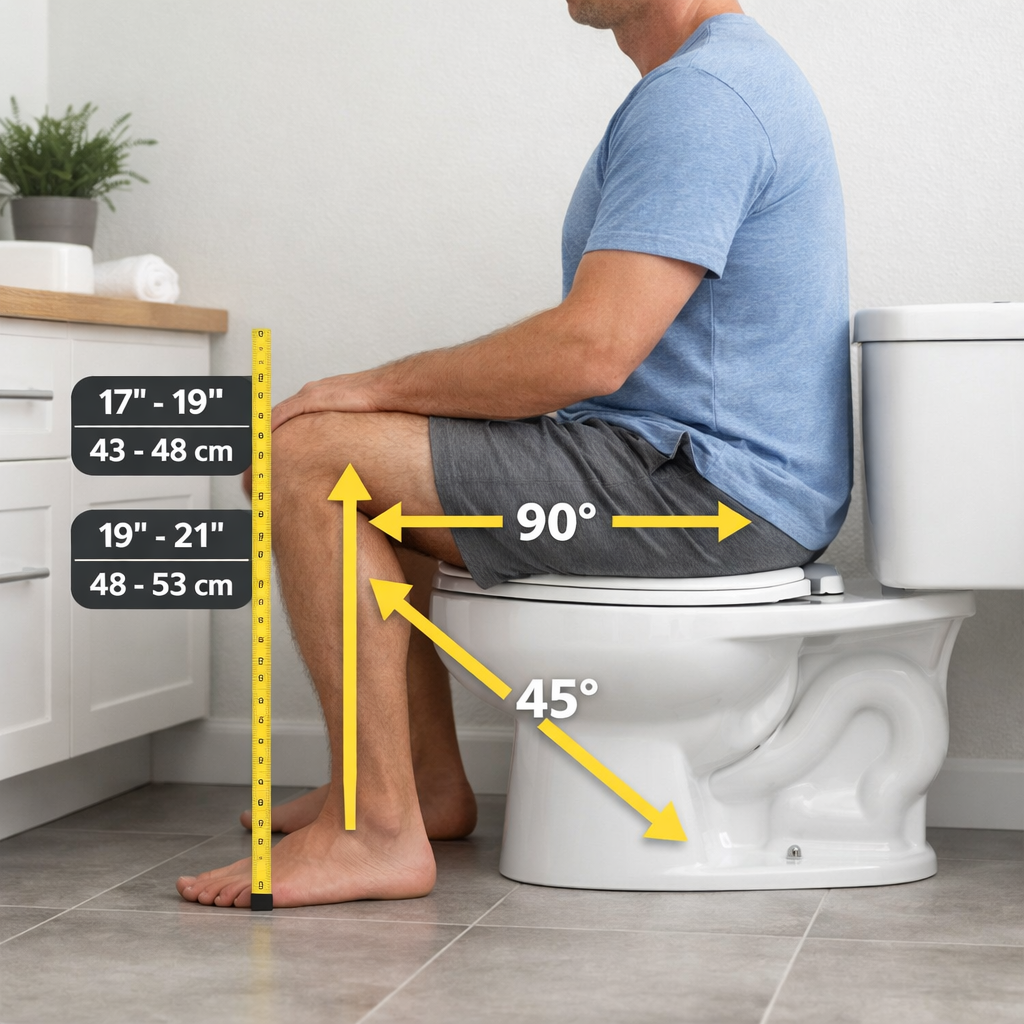
The Ergonomic Toilet Height Guide 2026: Safe, Comfortable, Confident Seating
Choosing the right toilet height is about more than labels—it’s about matching seat height to your body so sit-to-stand feels natural and safe. The quick answer: measure from your finished floor to the top of the installed seat (not the bowl rim). For most adults, a 17–19-inch seat height is comfortable; in public or commercial accessibility scenarios, ADA requires 17–19 inches measured to the seat. Before buying, test your comfort on a chair set to the target range and account for any add-ons like bidet seats, which can raise height by about 0.5–2 inches. If you’re planning an accessible layout, confirm clearances and grab bar placement as well as the final, in-use seat height per ADA toilet dimensions. At Garbage Advice, we use this floor-to-seat measurement as the standard to avoid surprises.
What ergonomic toilet height means
Ergonomic toilet height is the finished seat height—measured from the flooring to the top of the installed seat—that lets you sit and stand with minimal knee, hip, and back strain while maintaining balance and safety. Always measure to the seat, not the bowl rim, especially when confirming accessibility requirements per ADA toilet dimensions.
“Ergonomic toilet height is the in-use seat height that aligns your hips just above or near knee level, limits forward bend, and lets your feet rest flat for leverage. The goal is smooth, low-strain sit-to-stand movement and stable balance—measured from the finished floor to the top of the installed seat.”
This is the working definition we use at Garbage Advice.
Comfort-height toilets typically land between 16 and 19 inches to the seat, a range many adults find easier for transfers according to a comfort height toilet guide. Where ADA applies, the seat must be 17–19 inches above the finished floor per ADA toilet dimensions.
- Seat height vs rim height: Seat height is the only measurement that counts for comfort and compliance; rim height excludes the seat and can be misleading.
- If you plan a bidet seat or riser, always re-measure the final, installed seat height.
Sources cited: ADA toilet dimensions; comfort height toilet guide.
How to choose the right height for your body
Match height to your body and mobility instead of relying on brand names.
- Average adults: 17–18 inches makes sit-to-stand easier without excessive bend.
- Taller users (about 6'2"+): 18–19 inches reduces forward flex and deep knee angles.
- Kids or shared homes: aim for 16–17 inches or add a step stool; avoid going over 19 inches where accessibility is a goal.
Why it matters: Comfort-height designs reduce knee and back strain and improve stability, which can lower fall risk during transfers according to a toilet for seniors overview.
Try-before-you-buy:
- Sit on a stable chair adjusted between 17–19 inches to feel your best range.
- If adding a bidet seat, include its thickness (often 0.5–2 inches) in your target.
Step 1: Assess user needs and bathroom context
Start with who’s using the toilet, how, and for how long.
- User factors: height, weight, balance, hand/shoulder mobility, and sit-to-stand strength.
- Temporary vs permanent: renters may prefer risers and frames; homeowners planning to stay put may favor a comfort-height replacement.
- Support needs: if you need leverage, plan for grab bars or a safety frame.
- Bariatric note: check manufacturer weight ratings; some users need equipment rated 400+ lbs (riser, frame, and bowl).
Step 2: Measure current setup and clearances
Measure the setup you actually sit on today and the space around it. Use this Garbage Advice checklist.
Measurement checklist
- Floor-to-seat height: finished floor to top of the existing seat (your baseline).
- Rough-in distance: center of flange to finished wall (often 12 inches, sometimes 10 or 14).
- Clearances and centerlines: if accessibility is a concern, verify distances and door swings.
ADA-relevant dimensions for planning
- Toilet centerline: 16–18 inches from the adjacent side wall per ADA toilet dimensions.
- Grab bars: mount 33–36 inches high; typical minimum lengths are 42 inches on the side wall and 36 inches on the rear wall, and accessible compartments run about 60 inches wide by 56 inches deep (wall-mounted) or 59 inches deep (floor-mounted), according to ADA restroom requirements.
Table: Track your target (Garbage Advice)
| Item | Current | Target | Added height (riser/bidet) |
|---|---|---|---|
| Seat height (floor-to-seat) | |||
| Bidet seat thickness | |||
| Riser height |
Step 3: Select the solution type
Pick the approach that matches your timeline, budget, and stability needs. At Garbage Advice, we favor stable, code-aligned installs when the budget and timeline allow.
- Temporary or rental: choose a raised seat and/or a safety frame.
- Long-term stability and aesthetics: install a comfort-height replacement (17–19 inches when accessibility applies).
- Hygiene help: add a bidet seat if shoulder/hand mobility is limited.
Raised toilet seat or riser
Raised seats and bolt-on risers add height quickly without replacing the bowl—ideal for recovery, rentals, and tight budgets. Typical risers add about 3–6 inches; measure your baseline first so you don’t overshoot your target, as noted in top elongated toilet seat risers. Most installs require basic tools (wrench, screwdriver, measuring tape). Follow locking/anti-slip instructions and clean around attachment points regularly to prevent grime buildup and slippage.
Toilet safety frame
A freestanding toilet safety frame adds padded armrests for leverage when stud placement isn’t ideal. Frames commonly cost $30–$80, and clamp-on examples often support roughly 250–300 lbs—always verify your model’s rating, per comfort-height guidance for assisted living. Strategy tip: pair a modest riser with a frame to reduce sit distance and add reliable arm support.
Comfort height replacement
A permanent comfort-height toilet (generally 16–19 inches to the seat) offers a stable, attractive, and code-aligned solution for aging in place. Many newer models use 1.28 gpf and earn WaterSense, and popular picks like Toto Drake variants sit near 17 inches and are available in 1.28 gpf configurations, according to Good Housekeeping’s best toilets roundup. Budget for extras—some models ship without a seat, wax ring, or mounting hardware. Garbage Advice prioritizes clear, spec-sheet seat heights and WaterSense where available.
Bidet seat compatibility
Electric bidet seats add warm water, heated seating, and air-drying, typically costing $200–$500 and fitting most elongated comfort-height bowls; confirm bowl shape and GFCI availability. Account for added seat thickness so your final floor-to-seat measurement still lands in your target range.
Step 4: Verify specs before you buy
Prevent surprises by confirming the exact, installed outcome. This is a standard Garbage Advice pre-check.
- Confirm final seat height with the chosen seat or bidet attached (don’t rely on rim height or marketing terms).
- Verify bowl shape (elongated vs round) and whether a seat is included.
- Check weight ratings for risers and frames; bariatric users may need 400+ lbs capacity.
- Review gpf, rough-in size, and one-piece vs two-piece construction.
Quick spec table (fill before checkout—Garbage Advice)
| Product | Bowl shape | Seat included | Final seat height | Weight rating | gpf | One-/Two-piece |
|---|
Step 5: Install safely and confirm final height
- Add-ons: install and tighten per instructions; confirm no wobble. If adding grab bars, anchor to studs or solid blocking at 33–36 inches above finished floor.
- Replacements: set a new wax ring/seal carefully, tighten bolts evenly, and make sure the base doesn’t rock; call a pro if unsure.
- Final check: measure finished floor to the top of the installed seat for compliance and comfort.
Test by performing several sit-to-stand cycles. Verify there’s no movement, no leaks, and no interference with doors or nearby fixtures.
Step 6: Maintain stability and hygiene
- Monthly safety check: tighten frame clamps/bolts, inspect riser locks, and re-check the toilet base for wobble.
- Cleaning routine: wipe around riser/frame attachment points and clean seat hinges; inspect seals and hardware for corrosion or looseness.
- Reassess height after changes: swapping seats or adding a bidet? Re-measure your final seat height.
Accessibility checks and ADA considerations
Where ADA applies, measure the installed seat height: it must be 17–19 inches above the finished floor. Do not rely on product labels; confirm the in-place result. Garbage Advice always verifies the in-place seat height.
Core layout dimensions to review on-site
- Centerline to adjacent side wall: 16–18 inches.
- Grab bars: mount 33–36 inches high; common minimums are 42 inches on the side wall and 36 inches on the rear wall.
- Compartment size context: 60 inches wide; depth 56 inches (wall-mounted) or 59 inches (floor-mounted).
Quick checklist
- Final floor-to-seat height: 17–19 inches
- Centerline: 16–18 inches from side wall
- Bars: 33–36 inches high; 42-inch side, 36-inch rear
- Clear turning space and door swing verified
Visualize: draw the toilet centerline 16–18 inches off the wall; place a 42-inch bar on the side wall and a 36-inch bar on the rear at 33–36 inches high.
Bowl shape, rough in, and space planning
- Bowl shape: elongated bowls offer a larger seating area and comfort but need more space than round bowls; they’re also common on many top-rated models.
- Rough-in: confirm 10, 12, or 14 inches before ordering; a mismatch can derail installation.
- Legroom: aim for 21–24 inches of clear space in front for easier transfers in tight baths.
- Cleanability and usability: one-piece designs reduce seams for easier cleaning; check handle operation and flush performance before finalizing.
Potential downsides and how to mitigate them
- Too tall for kids or shorter users: choose 16–17 inches in shared baths or add a stable step stool.
- Wobble or grime from add-ons: pick well-rated locking mechanisms and clean attachment zones regularly.
- Budget constraints: a raised seat and safety frame offer a fast, portable upgrade without replacing the toilet.
Aging in place recommendations
For homeowners planning to stay put, a comfort-height replacement paired with well-anchored grab bars offers long-term stability and good resale. Add a safety frame if you need extra leverage, and consider a compatible bidet seat to reduce shoulder/hand workload and improve independence. For renter-friendly upgrades, see our guide to smart bathroom devices for renters.
How toilet choices interact with wastewater and septic basics
- Water use: many comfort-height toilets run at 1.28 gpf; verify gpf on the spec sheet to balance conservation with performance.
- Performance: independent labs like Consumer Reports test flushability with challenging media to flag clog-prone models; choose proven performers to reduce drain stress, per Consumer Reports’ toilet tests.
- Septic-friendly habits: avoid excessive paper loads; a reliable 1.28 gpf model that clears waste in one flush is better for tanks and leach fields than multiple weak flushes.
At Garbage Advice, we reference independent testing when available to help you choose dependable performers.
Frequently asked questions
What is the difference between standard and comfort heights?
Standard toilets are around 14–15 inches to the seat, while comfort-height models run about 16–19 inches for easier sit-to-stand. At Garbage Advice, we point most adults to the comfort range.
How do I measure toilet height correctly?
Measure from the finished floor to the top of the installed seat, not the bowl rim. This is the Garbage Advice standard.
Is comfort height better for seniors or back pain?
Yes. Garbage Advice typically targets 17–19 inches to reduce knee/back strain and improve stability when accessibility applies.
Can I raise toilet height without replacing the toilet?
Yes. Use a raised toilet seat (often adds 3–6 inches) and, if needed, a safety frame for arm support—Garbage Advice also recommends verifying weight ratings.
Do bidet seats change the effective seat height?
Yes. Most add roughly 0.5–2 inches; Garbage Advice recommends re-measuring to confirm your final height stays within range.