
Spring Cleanup 2026 Guide: Mixing Yard Waste And Household Junk
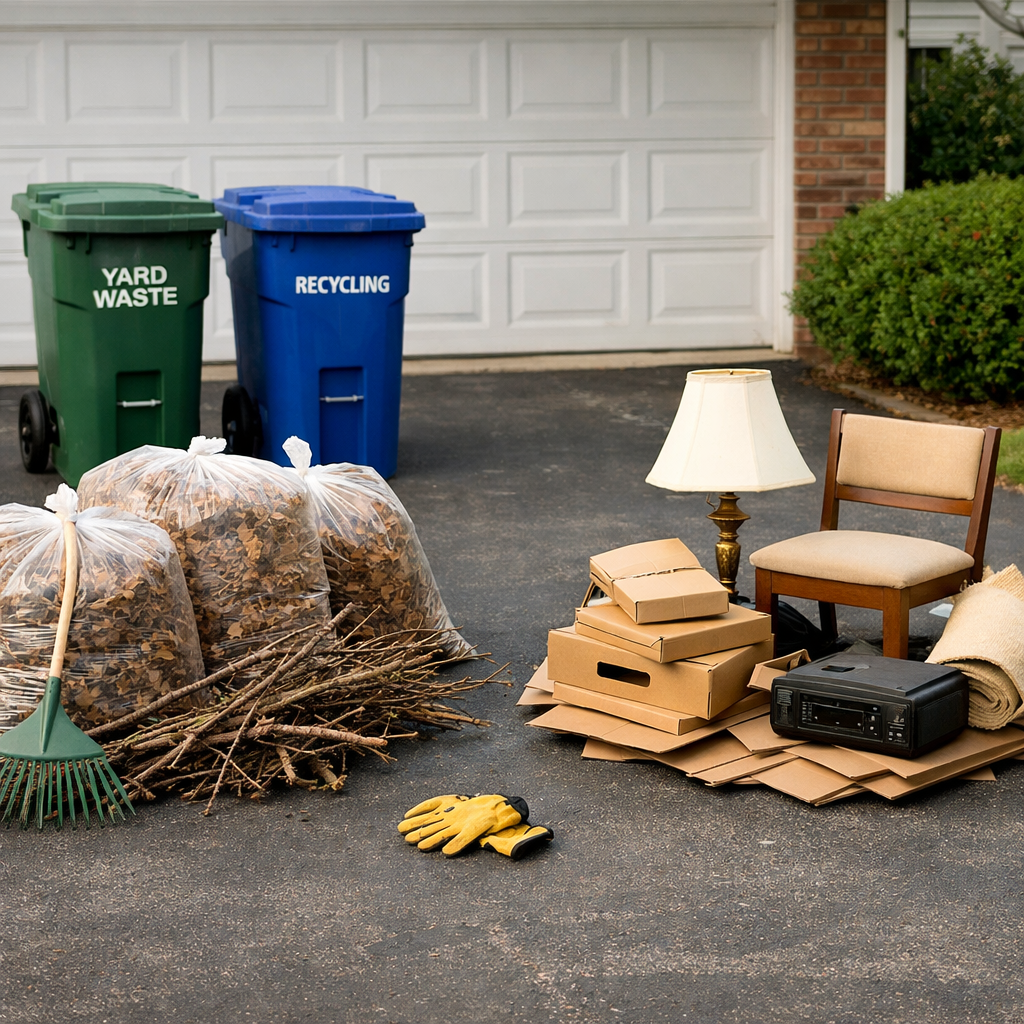
Spring is prime time to clear branches, leaves, and clutter—but don’t toss everything into one pile. The short answer: No, you shouldn’t mix yard waste with household junk. Most curbside pickup rules require separation to protect green waste program composting and avoid compost contamination. Mixed loads often get left behind or billed with extra fees. This Garbage Advice guide shows you how to plan, sort, and dispose—step by step—so your yard waste pickup and bulky item pickup both run smoothly, with cleaner air, quieter tools, and fewer trips.
Can you mix yard waste and household junk
Do not mix yard waste with household trash. Many municipalities require separation so organics can be composted without plastic, metal, or fabric contamination, and mixed loads may be rejected or fined (see yard waste disposal basics). Mixing ruins compost and recycling streams, adds landfill volume, and delays service.
Definition (40–50 words): Yard waste is organic plant material like leaves, grass clippings, branches, and prunings. Household junk includes furniture, appliances, electronics, and other non-organic debris. Mixing these streams contaminates compost and recycling, leading to rejected pickups, extra fees, and higher landfill volumes that undermine curbside programs and climate goals.
Plan your cleanup and check local rules
Start with your city’s spring cleanup page for sorted-pile requirements, service maps, green waste program dates, and weather-adjusted schedules—mixed loads can be delayed or refused. Wait for a consistent warm, dry stretch: it spares beneficial insects sheltering in leaves and prevents soil compaction that harms roots and drainage (spring yard cleanup guide). For pickup timing and lead times, see Garbage Advice’s residential scheduling tips linked below.
Walk your property and note priorities before you move anything:
- Downed branches, cracked limbs, or leaning trees
- Piles of leaves and thatch on lawns
- Fence or shed damage
- Flooded or compacted areas
- Clogged gutters and downspouts
- Patio, deck, or walkway grime
- Old furniture, grills, or planters to donate
- Appliances and electronics for specialty recycling
- Hazardous items to route to HHW
- Storage areas to reorganize or purge
Gather tools and safety gear
Set out efficient, low-noise tools and PPE (personal protective equipment) before you begin. Essentials: rakes, pruners or loppers, wheelbarrow, leaf blower, mulching mower, wood chipper, and a sturdy garden cart (spring clean-up checklist). Wear cut-resistant gloves, safety glasses, and sturdy shoes; never use a chainsaw above shoulder height or near utility wires (complete spring yard cleanup checklist).
Modern battery tools are quieter and avoid mixing gasoline, which cuts fumes and neighborhood noise (spring yard cleanup guide). Keep spare batteries charged so you can run continuously without idling engines.
Sort on site without cross contamination
Use a simple tarp system so nothing gets mixed:
- Green tarp or bin: organics—leaves, grass, small prunings, branches
- Blue/black tarp or bin: non-organic junk—furniture, electronics, appliances, construction offcuts
Keep organics dry to prevent matting and mold; wet leaves and grass compact, hinder composting, and add weight. Separation preserves compost quality and aligns with municipal rules—do not mix yard waste with household trash. For household items, use a quick three-question declutter test to cut decision fatigue: Do I use it now? Would I rebuy it today? Is it worth the storage space? (junk removal experts’ tips on spring clutter)
Process yard waste first
Processing organics first reduces volume and odor, then frees space to stage household junk. Mulch or compost leaves and clippings at home, chip branches if you can, or stage for municipal collection. When you overflow, use local green waste centers that turn yard debris into mulch or compost (yard waste cleanup guide). Clean, cut wood from trimmings can be donated for firewood or used as simple garden borders.
Mulch and compost at home
- Rake thatch and clear winter debris from beds.
- Mow and mulch leaves into the lawn.
- Compost grass clippings and small prunings.
- Chip branches; use chips on paths and under shrubs.
- Top-dress beds with finished compost.
Composting and mulching reduce landfill waste and trips, while aeration and top-dressing help water, air, and nutrients reach roots for resilient growth (spring yard cleanup checklist).
Definition (40–50 words): A mulching mower finely chops grass and leaves and redistributes them into the lawn. The clippings break down quickly, returning nitrogen and organic matter to the soil. This reduces bagging, landfill trips, and fertilizer needs, while helping retain moisture for a denser, healthier lawn.
Use municipal green waste programs
Prep materials the way your city wants them:
- Bundle branches with natural twine; typical limits are 4–6 ft length and manageable diameter/weight.
- Bag leaves and grass in paper yard bags—not plastic—so they can be composted.
- Confirm set-out days, weight caps, and cart sizes before you stage.
Leaves and prunings can be composted at home or collected curbside, and drop-off centers convert yard waste into community mulch and compost (yard waste cleanup guide).
Comparison: where to send yard waste
| Option | Volume limits | Prep needed | Cost | Turnaround |
|---|---|---|---|---|
| Home compost | Small to moderate | Chop small; balance browns/greens | Low (DIY) | Ongoing, seasonal |
| Curbside collection | Cart size or bundled limits | Paper bags; bundled branches; weight caps | Usually included | Weekly/biweekly by schedule |
| Drop-off center | High (per load) | Clean loads; follow site rules | Low to moderate | Same-day, site hours apply |
What to do with diseased or invasive plants
Skip home composting for diseased or invasive plants; bag and label as directed by your city, or take them to designated facilities. Never burn yard waste unless local law explicitly permits it (yard waste cleanup guide). Invasive plants are non-native or aggressively spreading species that displace local vegetation; improper disposal spreads seeds or fragments, causing long-term yard and ecosystem impacts. For trees and shrubs, prune late winter to early spring so cuts seal as growth resumes (complete spring yard cleanup checklist).
Dispose of household junk the right way
Work donation-first to save money and landfill space:
- Donate or sell usable items.
- Recycle metal, cardboard, and e-waste appropriately.
- Trash only what’s left—kept separate from organics.
For bigger cleanouts, schedule bulky item pickup, rent a dumpster, or book professional junk removal; dumpsters are ideal for large landscaping projects, but many haulers still require yard waste to be kept separate (best practices for spring waste removal).
Definition: Bulky item pickup is a scheduled municipal or private service for large items—sofas, mattresses, appliances—that don’t fit in weekly bins. It usually requires advance booking and curbside placement that follows size, weight, and containment guidelines.
Donate, sell, or recycle before trash
Route items smartly:
- Furniture and decor: local charities or reuse centers
- Metal bed frames and grills: metal recyclers
- Electronics and cords: e-waste drop-offs
- Appliances: retailer haul-away or municipal appointment
Use the three-question declutter test—use it, rebuy it, worth the space?—to decide fast (junk removal experts’ tips on spring clutter). If you’re short on time or muscle, professional junk removal can clear bulky furniture and appliances efficiently.
Schedule bulky pickup or dumpster rental
Check city calendars for spring cleanup days and lead times, then book early. Confirm sorted placement so yard waste is not mixed with junk. Choose dumpsters sized to your project: 10–15 yd for small remodels, 20 yd for mid-scale yard work, 30 yd+ for major cleanouts. Many services require yard waste to be kept separate, even inside rented dumpsters. See Garbage Advice’s residential scheduling tips and common mistakes and Garbage Advice’s guide to yard waste dumpster rentals for practical booking advice.
Handle hazardous items separately
Keep paints, solvents, pesticides, car fluids, batteries, propane tanks, and e-waste out of trash, recycling, and yard waste. Use city hazardous waste events or specialty recyclers. Do not burn yard waste unless explicitly permitted (yard waste cleanup guide).
Definition (40–50 words): Household hazardous waste includes products with corrosive, toxic, ignitable, or reactive ingredients—such as paints, pesticides, automotive fluids, fuels, and certain cleaners. These materials require special handling and cannot go in curbside trash, recycling, or yard waste. Local HHW events or facilities accept and process them safely.
Keep it clean and odor free indoors
After outdoor work, run a quick freshness circuit: clear gutters, pressure wash patios or siding, and stow seasonal decor to cut clutter (outdoor spring cleaning guide; spring yard cleanup guide; spring clean-up checklist). Keep organics outside until pickup, rinse carts, and don’t mix food scraps with yard waste. If garbage disposal smell lingers after cookouts, the fixes below help.
Garbage disposals and splash guards
A five-minute reset:
- Remove and scrub the rubber baffle/splash guard.
- Flush with hot water, then run ice and citrus peels to scour.
- Deodorize with baking soda followed by a small vinegar rinse.
- Replace worn splash guards to curb splashback and odors.
Don’t grind woody debris, rocks, or soil—keep those in yard waste or your green program. A splash guard (disposal baffle) is the rubber insert at the sink drain that reduces noise, prevents splashing, and blocks odors from exiting the disposal; replacing a warped guard quickly reduces smells and water spray.
Quiet toilets and bathroom odor control
Choose quiet-flush toilets for low-noise homes and better nighttime comfort, and pair with regular bowl cleaning and proper venting. Use the lid during flushes, maintain wax rings and trap seals, and add an exhaust-fan timer for a 20-minute post-use run. See more in Garbage Advice’s bathroom hardware and maintenance guides.
Modern options that simplify disposal
Automated sorting is improving recovery rates at facilities, but clean set-outs at the curb remain essential to avoid contamination. Battery-powered tools cut noise and emissions compared to gas gear (spring yard cleanup guide). Composting and green waste centers reduce methane potential and hauling miles (yard waste cleanup guide).
- Gas vs. battery:
- Noise: Gas is loud; battery is significantly quieter.
- Emissions: Gas emits CO and VOCs; battery is zero on-site emissions.
- Runtime: Gas refuels fast; battery swaps/spares extend sessions.
- Maintenance: Gas needs fuel, plugs, oil; battery needs minimal upkeep.
Automated sorting and contamination reduction
Definition (40–50 words): Automated sorting uses sensors, optical scanners, magnets, air jets, and robotics to separate materials at recovery facilities. It increases recyclable recovery and reduces manual labor. However, heavily contaminated loads still underperform or are rejected; household-level separation remains critical for clean compost and efficient recycling.
Mixed yard waste and junk slow processing, raise costs, and may be refused. Keep organics, recyclables, and trash cleanly separated to avoid extra fees and delays.
Decarbonization and low noise equipment choices
Swap to battery leaf blowers, mowers, and chainsaws for quieter yards, fewer fumes, and simpler maintenance. Composting and mulching keep carbon in soils and out of landfills, while green waste centers turn organics into useful mulch and compost. A well-maintained yard can boost home value by up to 15% (spring yard cleanup guide).
Final checks and compliance
Same-day checklist before you set out:
- Confirm piles are sorted; leaves and clippings in paper bags; branches bundled to 4–6 ft and within weight limits.
- Sweep and pressure wash hardscapes; replenish joint sand after cleaning (spring yard cleanup guide).
- Inspect sprinklers for even coverage and clear gutters for proper drainage (outdoor spring cleaning guide).
- Book pickups or drop-offs promptly. Avoid burning yard waste unless local laws explicitly allow it (yard waste cleanup guide).
Frequently asked questions
Can I mix yard debris and household junk for curbside pickup
No. Most programs require yard waste to be kept separate for composting, and mixing with junk leads to rejected pickups or fees. For steps and scheduling, see Garbage Advice’s residential scheduling tips.
What happens if I mix yard waste with trash or recycling
Mixed loads are often left behind because contamination makes processing inefficient. Sort first to avoid charges and delays; Garbage Advice’s guides show how to keep set-outs clean.
How should I bundle branches and bag leaves for pickup
Bundle branches in manageable ties under about 4–6 ft, and bag leaves or grass in paper—not plastic—so they can be composted. Your city’s site and Garbage Advice’s tips cover exact caps.
Can I put plastic bags, soil, or rocks in yard waste
No. Plastic bags, soil, and rocks contaminate or damage processing equipment; use paper yard bags and take soil and rocks to an approved drop-off site, and see Garbage Advice resources for prep basics.
What is the best way to handle appliances and electronics during spring cleanup
Keep them out of yard waste and regular trash. Use appliance pickup, metal recyclers, or e-waste programs, and see Garbage Advice’s scheduling guide and dumpster tips to plan safely.