
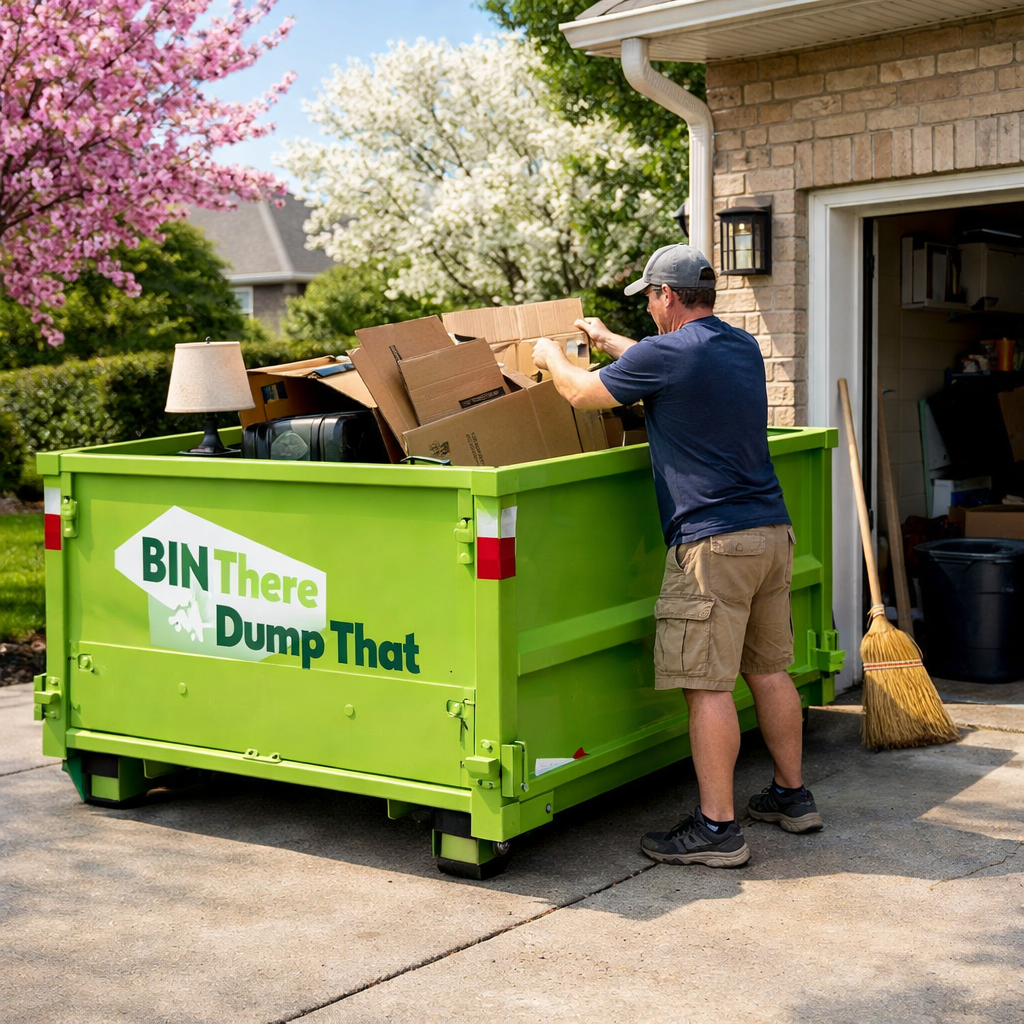
Spring Cleaning Dumpster Rentals: Is Bin There Dump That Worth It?
A roll-off dumpster can turn an overwhelming spring cleanout into a tidy, one-and-done workflow. If you’re asking “is Bin There Dump That good for spring cleaning dumpster rental,” the short answer is: it can be—if your local franchise is transparent on pricing, has 10–20 yard availability for your dates, protects your driveway, and posts clear weight and restricted-item policies. In this guide, Garbage Advice compares Bin There Dump That against national and local options, outlines fees to watch, and helps you decide whether a spring cleaning dumpster (vs. junk hauling) fits your project. Garbage Advice’s POV is practical and safety-first: protect your property, avoid surprise fees, and pick a size that fits your debris and your driveway.
How to decide if a dumpster rental fits your spring project
Roll-off dumpsters centralize large-volume disposal and cut out repeated landfill trips—ideal for garage and attic cleanouts, bulky spring decluttering, and yard waste that exceeds curbside limits, as highlighted in The Dump Dude’s spring cleaning guide (The Dump Dude). Many residential rentals bundle delivery and pickup within a set rental window (Plummers Disposal’s spring cleaning tips).
A quick Garbage Advice decision checklist:
- If your project exceeds about 10–15 bags or includes bulky items, a dumpster is typically more efficient (New South Waste’s comparison).
- If you lack loading labor, remember dumpsters don’t include it—budget for help or consider junk hauling.
Definition: Roll-off dumpster — A temporary, open-top waste container delivered on a truck and “rolled off” at your property. Rentals commonly include delivery, pickup, a fixed rental window, a weight allowance, and rules for restricted items.
What to evaluate in a spring cleaning dumpster service
Use these five criteria to compare any provider (Garbage Advice’s short list):
- Pricing transparency and what’s included: Look for flat rates that spell out delivery, pickup, rental period, and included weight. Regional providers often list typical surcharges (e.g., mattresses), weight overage fees, and dry-run policies (Yellow Dumpster Service’s spring cleaning page).
- Size options and local availability: Confirm the sweet spot for residential (10–20 yards) and inventory for your dates; heavy debris has lower weight thresholds (Angi’s dumpster cost guide).
- Driveway-friendly practices and insurance: Ask about protective boards, careful placement plans, and liability coverage for property care (CUBIC Hauling).
- Permit assistance and restricted-items clarity: Hazardous liquids/paints are commonly prohibited; verify item lists and whether the hauler helps with street permits (Angi’s dumpster vs. junk removal guide; Yellow Dumpster Service’s spring cleaning page).
- Customer service reliability and pickup punctuality: Understand delivery/pickup windows and any dry-run fee risk if access is blocked or the bin is overfilled (Yellow Dumpster Service’s spring cleaning page).
Definition: Weight allowance — The maximum included tonnage in your rental rate. Exceeding it triggers weight overage fees, often prorated per pound or per ton; heavy debris like concrete or brick hits limits quickly (Angi’s dumpster cost guide; Yellow Dumpster Service’s spring cleaning page).
Bin There Dump That
There’s no direct, source-cited data in our research for Bin There Dump That’s specific pricing, policies, or performance for spring cleaning. Garbage Advice’s take: treat it like any local franchise network—compare posted details and quotes against the five criteria above.
What to verify on your local franchise page:
- Flat-rate pricing that clearly bundles delivery, pickup, the rental window, and a stated weight allowance.
- A size matrix for residential projects—typically 10, 15, and 20 yards—with guidance that a 20-yard often fits larger cleanouts/light remodel debris while still fitting most driveways (Angi’s dumpster cost guide).
- Driveway protection (boards), liability coverage, and how they handle any surface damage claims.
- Restricted items, any mattress/box spring surcharges, and whether they assist with permits if street placement is required (Yellow Dumpster Service’s spring cleaning page).
Waste Management
Waste Management (WM) emphasizes upfront pricing, common roll-off sizes, and online availability checks for local rentals (WM dumpster rental). WM also helps homeowners visualize capacity; for example, it lists a 15-yard as roughly six pickup loads. Before booking, Garbage Advice recommends confirming service windows and site access requirements to avoid potential dry-run charges and timeline slips (Yellow Dumpster Service’s spring cleaning page).
Yellow Dumpster Service
Yellow Dumpster Service offers a clear size-to-project guide: a 10-yard for minor decluttering (about 60–90 32-gallon bags), 15-yard for home cleanouts and furniture, 20-yard for larger cleaning/remodel debris, and 30-yard for multi-room/light demo (Yellow Dumpster Service’s spring cleaning page). Typical inclusions are delivery, pickup, and a set rental period; watch for prorated weight overages and item surcharges like mattresses. If you need street placement, check with City Hall on permit requirements in advance.
The Dump Dude
Roll-off dumpsters simplify spring projects by enabling single-trip disposal and eliminating repeat landfill runs—especially useful for garages, attics, and yard waste that exceed curbside limits. You’ll save time and fuel across multi-day cleanouts, but verify which yard wastes (branches, leaves, clippings) are accepted before booking (The Dump Dude).
Local independents
Small operators can shine on responsiveness and property care. Many emphasize careful driveway placement, protective boards, and carry liability/transport insurance—reassurance for driveway protection and tight sites (CUBIC Hauling). Compare the full project price, not just the base rate: include weight overage fees and the risk of dry-run charges if access is blocked (Yellow Dumpster Service’s spring cleaning page).
Aggregators and marketplaces
Marketplaces help you collect quotes fast and weigh dumpster rental versus junk removal trade-offs for spring cleaning (Angi’s dumpster vs. junk removal guide). Use them to benchmark typical size ranges (2–40 yards) and driveway fit—20-yard commonly fits residential driveways (Angi’s dumpster cost guide). Final availability, weight allowances, and restricted-item rules are set by local haulers, so confirm details directly (Yellow Dumpster Service’s spring cleaning page).
Side-by-side comparison by key criteria
Below is a quick matrix you can skim, then dive into the criteria details that follow.
| Provider | Pricing clarity | Residential sizes | Driveway protection | Permit help/restrictions | Reliability notes |
|---|---|---|---|---|---|
| Bin There Dump That | Varies by franchise; verify flat rate | Typically 10–20 yd (check local) | Boards/liability coverage—confirm | Ask about street permits and item surcharges | Confirm windows; ask about dry-run terms |
| Waste Management (WM) | Upfront pricing shown online | Common roll-off sizes incl. 15 yd | Standard placement; ask about boards | Clear restrictions online; permits vary | Online availability checks; confirm access |
| Yellow Dumpster Service | Posts inclusions and surcharges | 10, 15, 20, 30 yd | Residential-friendly placement | Lists restricted items; City Hall permits | Publishes policies incl. dry-run |
| Local independents | Often flexible; ask for line items | 10–20 yd common | Boards and liability often offered | Will advise on permits; rules vary | Direct owner contact; confirm pickup policy |
Pricing transparency and inclusions
Garbage Advice looks for flat rates that bundle delivery, pickup, a standard rental window, included tonnage, and any posted surcharges (e.g., mattress fees). Major operators often emphasize “no hidden fees,” which builds trust (WM dumpster rental).
Definition: Dry-run fee — A charge when the hauler cannot deliver or pick up due to blocked access or an overfilled container; avoid by ensuring clear access and proper load levels (Yellow Dumpster Service’s spring cleaning page).
Size options and availability
For spring cleanouts, the residential sweet spot is 10–20 yards; a 20-yard commonly covers larger cleaning and light remodel debris while fitting most driveways (Angi’s dumpster cost guide). Quick visuals: a 10-yard holds about 60–90 standard 32-gallon bags; some providers peg a 15-yard at roughly 4 pickup loads, while WM lists its 15-yard at about 6 pickup loads (WM dumpster rental).
Driveway protection and property safety
Ask for protective boards, a clear placement plan, and proof of insurance. Many local firms stress careful placement and liability coverage, which reduces risk on stamped concrete, pavers, or asphalt in warm weather (CUBIC Hauling). Shorter, safer carries from the house to the dumpster also cut fatigue and time.
Permit help and restricted items clarity
Confirm whether street placement requires a permit with City Hall and whether your hauler assists. Common restrictions include hazardous liquids and paints; review each provider’s restricted-items list before loading to avoid rejection or surcharges (Angi’s dumpster vs. junk removal guide).
Customer service and pickup reliability
Look for published delivery/pickup windows, policy on missed pickups, and responsive contact channels. Because rentals depend on local inventory, confirm dates online when possible (WM dumpster rental). Blocked access and overweight or overfilled loads are common causes of delay—know your provider’s dry-run terms (Yellow Dumpster Service’s spring cleaning page).
Cost ranges and fee traps to watch
Dumpsters range from about 2–40 cubic yards; a 20-yard weekly rental commonly runs about $275–$700, and it typically fits most residential driveways (Angi’s dumpster cost guide). Standard rates usually include delivery, pickup, and a set rental period.
Common add-ons:
- Weight overages prorated per pound or per ton
- Restricted-item surcharges (e.g., mattresses, tires)
- Dry-run fees if access is blocked or the bin is overfilled
Heavy debris risk: bricks, concrete, and roofing can exceed weight allowances even when volume looks modest—confirm included tonnage and per-ton pricing in advance (Angi’s dumpster cost guide).
When a dumpster beats junk hauling and when it doesn’t
Dumpsters win when you want upfront pricing, multi-day access, and the ability to toss debris as you work—ideal for multi-room cleanouts, furniture/appliances, and construction or storm/yard debris (Angi’s dumpster vs. junk removal guide). Junk hauling can be better if you need labor included; hiring two people can run roughly $150–$200 per hour in some markets, which may erase savings. Also note that multiple municipal bag pickups can run $25–$40 per bag, so beyond ~10–15 bags, a flat-rate dumpster often pencils out.
Recommendation for homeowners
Bottom line: choose a dumpster for bulky items, multi-room cleanouts, or renovation debris—provided you can supply the loading labor. Otherwise, get junk-haul quotes and compare total project costs, including labor, permits, and potential weight overages. For brand fit, Bin There Dump That is worth it if your local franchise offers flat-rate clarity, 10–20 yard availability on your dates, driveway protection, and posted restricted/fee policies. If not, benchmark against a national like WM and a responsive local independent. And if you’re also upgrading the kitchen during spring cleaning, match any new garbage disposal (e.g., Moen or Waste King) to your power and plumbing, and choose septic-safe models where needed. Garbage Advice recommends collecting at least two quotes—one national and one local—before you book.
Frequently asked questions
What size dumpster is best for spring cleaning?
Garbage Advice generally recommends a 10–20 yard dumpster for most spring cleanouts; a 20-yard often handles larger cleaning or light remodel debris and still fits most driveways, while a 10-yard holds roughly 60–90 standard 32-gallon bags.
How much does a residential dumpster rental typically cost?
Garbage Advice typically sees a 20-yard dumpster range around $275–$700 per week, with delivery, pickup, and a set rental period included. Final cost depends on location, debris type, and weight.
How do I avoid weight overages and extra fees?
Garbage Advice’s rule of thumb: know your included tonnage and load evenly; heavy materials like bricks and concrete add weight fast. Confirm restricted items, mattress surcharges, and keep access clear to avoid dry-run fees.
Do I need a permit to place a dumpster at my home?
Garbage Advice’s take: if the dumpster sits in your driveway, permits are rarely required; street placement may need a permit from City Hall. Ask your provider if they assist with permits and paperwork.
How can I protect my driveway during a dumpster rental?
Garbage Advice recommends protective boards under the container and a placement that minimizes long hauls from the house. Confirm the hauler’s insurance and any policies for property damage.