
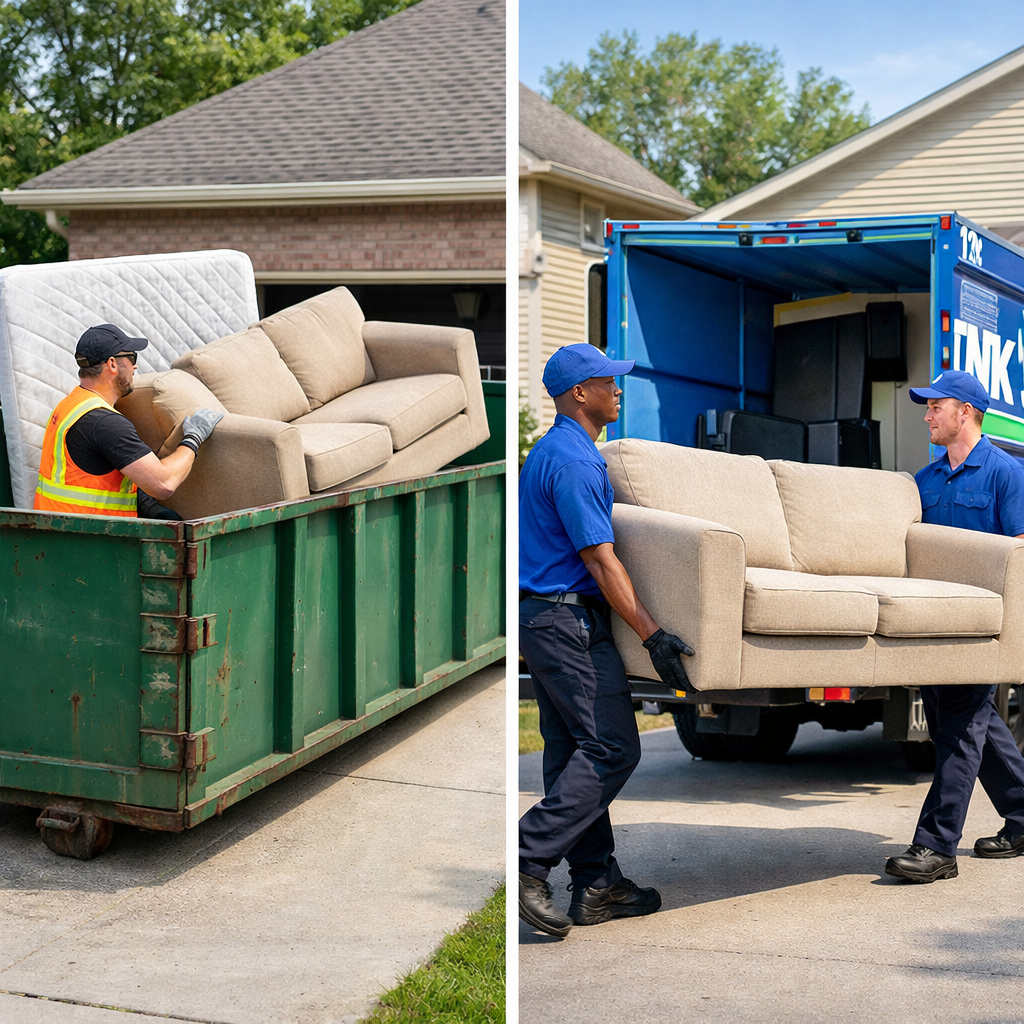
Roll-Off Dumpster Rental vs Junk Removal: Best for Bulk Furniture
Downsizing or clearing out rooms full of furniture? Here’s the short version: a junk removal crew is fastest when you need heavy, awkward pieces gone the same day, while a roll-off dumpster excels for higher volumes when you want time to sort and a predictable flat rate. Garbage Advice will help you decide in under a minute, then walk you through sizes, permits, safety, and eco-friendly options so you can book with confidence.
Bulk furniture removal means clearing large household items—sofas, sectionals, mattresses, dressers, tables, and similar oversized pieces—in one effort. It involves either hiring a junk removal crew to lift and haul in a single visit or renting a roll-off dumpster to load items yourself over several days.
Quick answer for bulk furniture removal
Verdict: Choose junk removal if speed and labor matter most—crews typically finish in 1–3 hours and handle stairs and tight spaces—while roll-off dumpsters fit better for multi-room cleanouts over several days with flat-rate pricing and a standard 7–10 day rental window, plus potential savings on larger loads, according to the Iowa Dumpsters comparison, Angi’s pros and cons, and the Dumpsters.com guide (volume-based vs. flat-rate) Iowa Dumpsters comparison, Angi’s pros and cons, Dumpsters.com guide.
- Pick junk removal if you have stairs, limited help, or a tight deadline—labor and equipment are included.
- Pick a roll-off dumpster if you have many items and want predictable flat-rate pricing over several days.
- For loads over roughly 15 cubic yards, dumpsters can save about $200–$650 versus multiple junk removal truckloads (same Iowa source above).
Garbage Advice’s scenarios and planning links below make the choice straightforward.
How to choose: decision criteria that matter
Use these five quick checks to pick confidently:
| Criterion | What to check | Tip |
|---|---|---|
| Volume | Estimate total cubic yards | Common dumpster sizes: 10, 15, 20, 30, 40 yards. |
| Labor | Who’s lifting? | If you lack help or have stairs, crews shine. |
| Timing | Your deadline | Junk removal: 1–3 hours. Dumpster: 7–10 day window. |
| Access/Permits | Driveway or street space | Confirm room for delivery and any city/HOA permits. |
| Budget model | Pricing transparency | Dumpster = flat rate with weight allowance; junk removal = volume-based that may finalize on-site. |
A cubic yard is a volume measure equal to a cube 3 feet by 3 feet by 3 feet (27 cubic feet), used to approximate the space your debris will occupy so you can match it to a dumpster or truck; large sofas and dressers typically consume several cubic yards.
Roll-off dumpster rental
A roll-off dumpster is a temporary container delivered to your property for a set period. You load it at your own pace, and the fee typically covers delivery, pickup, and a disposal weight allowance, with sizes ranging from 10–40 yards and many rentals running 7–10 days Waste Management dumpster rental details.
Pros:
- Predictable, flat-rate pricing quoted upfront so you can budget confidently.
- Work on your schedule and keep a central refuse area that improves site safety; one full container can also mean fewer total haul trips than multiple pickups Captain Hook Austin analysis.
Cons:
- DIY loading (or you’ll need to hire help).
- Requires driveway or street space and may be impacted by weather; some placements need permits.
Quick steps to book well:
- Measure your volume and choose a size (10–40 yards).
- Confirm placement access and ask your city/HOA about permits if placing on the street.
- Ask the provider about weight allowance, overage fees, and prohibited items before delivery.
If you’re on a tight timeline, Garbage Advice’s next-day booking tips linked below can help.
Junk removal
With junk removal, a crew arrives, loads your furniture, and hauls it in a single visit. Pricing is typically based on the portion of truck space used and includes labor, gear, and disposal (handy for stairs and tight hallways), as outlined in this Earthwise overview Earthwise overview. Most furniture jobs wrap in 1–3 hours, making it the fastest option for immediate clears. Quotes often finalize on-site after the crew sees the load, bundling truck, labor, and disposal into one number.
Pro tip: Ask about donation and recycling practices, and whether they can provide disposal or donation documentation for compliance or tax needs benefits of hiring expert junk removal.
Side-by-side comparison of cost, labor, and timing
| Factor | Roll-off dumpster | Junk removal crew |
|---|---|---|
| Cost model | Flat-rate with weight allowance | Volume-based; final price may be confirmed on-site |
| Typical timing | 7–10 day rental window | 1–3 hours, one visit |
| Labor | DIY or hire helpers | Crew and equipment included |
| Scale economy | Often saves $200–$650 at >~15 cubic yards | Better for small/one-off items |
| Convenience | Flexible schedule, keep sorting | Fastest path to cleared space |
Takeaway: Dumpsters win for multi-room, high-volume furniture; junk removal wins for single items, stairs, and urgent timelines.
Placement, permits, and access considerations
Avoid delivery-day surprises:
- Space: Measure driveway length/width, confirm overhead clearance (tree limbs, wires), and consider weather/soft ground risks.
- Permits: Some cities and HOAs require permits for street or certain driveway placements—check local rules early Little Rock Dumpster Rental guidelines.
- No space or permit headaches? Choose junk removal to skip placement constraints.
Mini-checklist:
- Mark the placement spot and protect surfaces with plywood.
- Face any walk-in door toward the loading path.
- Use a lock/cover if you’re worried about unauthorized dumping.
What counts as bulk furniture and what’s usually prohibited
What fits: sofas, sectionals, recliners, mattresses and box springs, dressers, wardrobes, dining tables, entertainment centers, and similar oversized wood, metal, or upholstered pieces.
Prohibited items are materials most haulers won’t accept in standard dumpsters or truckloads because they pose safety, environmental, or legal risks. These commonly include hazardous chemicals, certain electronics, tires, liquids, and appliances with refrigerants; they need special handling, paperwork, or dedicated drop-off facilities.
Before you book, ask your provider for a current prohibited-items list and any add-on recycling options (e.g., mattress or metal diversion).
Safety and injury risk when moving heavy items
Dumpsters require physical loading. If you’re moving bulky items, consider hiring help. Use team lifts, furniture dollies or forearm forklifts, stair protection, and clear paths; wear gloves and closed-toe shoes. If stairs, tight turns, or very heavy pieces are involved, lean toward a junk removal crew that handles stair carries and includes labor.
Environmental practices and donation options
- A single full dumpster can reduce total truck trips versus multiple pickups; some providers also separate recyclables.
- Ask both services about furniture donation, mattress recycling, metal diversion, and how they minimize landfill.
- Do this first: donate usable items, recycle mattresses/metal, request donation receipts for tax records, and schedule separate e-waste pickup if needed.
Garbage Advice guides to help you plan
- Need speed? See our next-day booking tips in the Austin market: how to get a next-day dumpster without hassle.
- For broader planning, budgets, and room-by-room checklists, browse our How-Tos & Guides.
We also go deep on home upgrades that often pair with cleanouts, including model-level garbage disposal reviews (Moen, Waste King, GE) and step-by-step troubleshooting for DIYers.
Our recommendation by scenario
- One-day, heavy furniture on stairs or tight deadline: choose junk removal; expect 1–3 hour completion with labor included.
- Whole-home or multi-room cleanout over several days with helpers: choose a 20–30 yard dumpster for predictable flat-rate pricing and potential $200–$650 savings on larger volumes.
- Limited driveway/street access or permit constraints: choose junk removal.
- Mixed debris (demolition + furniture) on an ongoing project: choose a 20–40 yard roll-off and load heavy, dense materials first to optimize space.
Frequently asked questions
Where can I get a bin for bulk furniture and item removal?
Order a roll-off dumpster from a local provider online or by phone; common sizes are 10–40 yards with flat-rate pricing and 7–10 day timelines. Garbage Advice’s planning guides below can help you choose the right size and timing.
How much does bulk furniture removal cost with junk removal versus a dumpster?
Dumpsters use flat-rate pricing and can be more cost-effective for larger loads, sometimes saving $200–$650 over ~15 cubic yards. Junk removal is volume-based with labor included and is often pricier per yard but faster for small quantities.
What size dumpster fits sofas, mattresses, and dressers?
A 10–20 yard dumpster usually fits a few large pieces plus smaller items. Garbage Advice generally recommends 20–30 yards for multi-room furniture cleanouts or mixed remodeling debris so you have space and predictable pricing.
Do I need a permit to place a dumpster at my home?
Some placements—especially on streets or in certain municipalities or HOAs—require permits; Garbage Advice suggests checking local rules before booking to avoid delivery delays or fines.
What items can’t go in a dumpster or with junk removal crews?
Hazardous materials, certain electronics, liquids, tires, and appliances with refrigerants are commonly restricted. Garbage Advice recommends asking your provider for a prohibited-items list and any recycling or special handling options before pickup or delivery.