
Residential Trash Pickup Scheduling: What to Expect and Common Mistakes
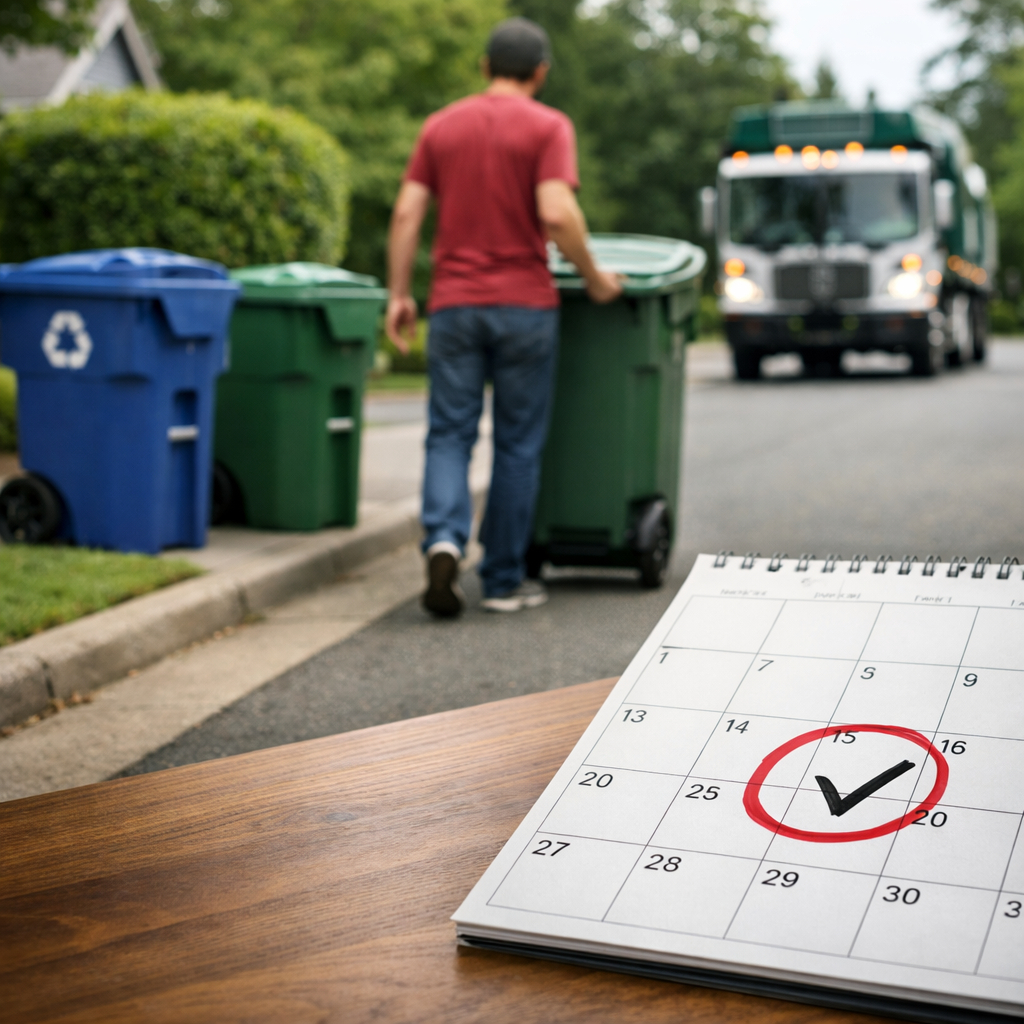
Getting residential trash pickup right is mostly about timing, placement, and knowing your local rules. Here’s the short version we use at Garbage Advice: confirm your pickup day with your city or hauler’s address lookup, set calendar reminders (one per stream), put bins out the night before where allowed, and leave at least three feet of clearance. If you’ve got extras or bulky items, schedule them—don’t just stack them beside your cart. This guide breaks down how scheduling works, how to prepare, and the mistakes that most often lead to missed or denied service, with practical steps to fix them fast.
How residential trash pickup scheduling works
Curbside collection means your hauler empties carts placed at the street edge on a set day within a defined time window.
Most cities and private haulers build residential trash pickup around fixed routes and service windows by neighborhood. Many run weekly or biweekly service based on policy and population density, so check your local waste collection schedule to stay aligned with your assigned day and stream cadence, per industry collection frequency guidance (collection frequency guidance: https://wastix.in/blog/blog.php?slug=garbage-collection-frequency-and-scheduling-essential-strategies-for-effective-waste-management). Routes often start early; a Spokane waste worker notes crews may begin as early as 6:00 a.m., so set out by then to avoid a miss (a Spokane waste worker: https://www.khq.com/news/spokane_news/local-waste-worker-shares-challenges-and-tips-for-efficient-trash-pickup/article_586c50ff-3483-4a67-ad90-12a3e2c725f7.html).
Weekly, biweekly, and stream-specific service expectations
Different streams can have different schedules. Plan your week around your hauler’s calendar.
- Municipal solid waste (MSW) definition: MSW is everyday household trash—food scraps, packaging, paper, and mixed refuse—managed by local programs through curbside collection and transfer to recycling, composting, or landfill facilities, according to EPA guidance on MSW programs (EPA guidance on MSW programs: https://archive.epa.gov/epawaste/nonhaz/municipal/web/pdf/k99007.pdf).
Typical frequencies:
| Stream | Common frequency | Notes |
|---|---|---|
| Trash (MSW) | Weekly | Some areas offer biweekly or a second weekly day for a fee. |
| Recycling | Weekly or biweekly | Often alternates by zone; confirm cart color and week. |
| Organics/Yard | Seasonal or weekly when volumes rise | Can pause or reduce frequency in winter; ramps up in growing/leaf seasons. |
EPA research indicates weekly MSW service is sufficient for most households, and second weekly pickups are often underutilized when residents use tight-fitting lidded containers (EPA guidance on MSW programs: https://archive.epa.gov/epawaste/nonhaz/municipal/web/pdf/k99007.pdf).
Finding your pickup day and getting reminders
- Use your city or hauler’s address lookup tool to confirm your garbage pickup day and recycling calendar; Garbage Advice’s quick planner helps you lock it in.
- Subscribe to text/email/app alerts; routes can shift after holidays or severe weather.
- Set personal calendar reminders for each stream and place carts the night before where allowed to avoid early-morning misses.
Set-out rules and curbside placement basics
- Place bins at the curb by 6:00 a.m. on collection day.
- Leave about three feet of side-to-side clearance from cars, mailboxes, and other carts to give truck arms room to work.
- If bins are blocked or inaccessible, crews may leave waste with a tag for later service or denial; don’t rely on drivers to exit the cab when safety is questionable.
Quick placement checklist:
- Wheels to the curb; handle facing your home.
- Lids fully closed—no overflow.
- Three feet between carts.
- Not behind parked vehicles.
- Not under low branches or wires.
Recycling, organics, and contamination pitfalls
Contamination is placing prohibited items in a collection stream, which forces manual sorting, raises costs, and can lead to tags, fees, or denied pickup. Following resident best practices reduces landfill waste and conserves resources (resident best practices: https://www.sbcwastesolutions.com/trash-pick-up-dos-and-donts-best-practices-for-residents/).
Common errors that trigger rejections:
- Recycling: foam packaging (often called Styrofoam), plastic bags/film, tanglers like hoses.
- Yard/organics: lumber, dirt, pet waste.
Accepted vs. not accepted (always verify locally):
- Recycling accepted: clean paper, cardboard, metal cans, plastic bottles/jugs #1–2, glass bottles/jars.
- Recycling not accepted: plastic bags/film, foam clamshells/peanuts, greasy pizza boxes, batteries/e-waste, tanglers (cords/hoses).
- Organics/yard accepted: leaves, grass, small branches (size limits apply), garden trimmings, approved food scraps (if program allows).
- Organics/yard not accepted: lumber/treated wood, soil/rock, pet waste, plastic liners, food-soiled packaging.
- Trash accepted: bagged household refuse, non-recyclable packaging, broken items within cart-size/weight limits.
Bulk and special item scheduling
Regular routes don’t take everything. Bulky tree waste, appliances, and heavy trash often require special pickup or a roll-off dumpster rental—check limits and set an appointment (Houston heavy trash guidance: https://www.gainsboroughwaste.com/news/houston-trash-schedule/). Garbage Advice’s bulk-prep tips can help you meet size, weight, and placement rules the first time.
Before your bulk day:
- Schedule at least 48 hours ahead and confirm any fees.
- Dismantle large items; bundle branches to size/weight specs.
- Keep items curbside, separated from carts, and labeled if required.
- Use your hauler’s on-demand or seasonal programs where offered (bulky set-out tips: https://www.iputyourjunkinmytrunk.com/10-surprising-tips-for-efficient-bulk-trash-removal).
Holiday changes, weather delays, and service alerts
- Holiday weeks commonly push service one day later; severe weather can temporarily suspend routes.
- Sign up for provider alerts and check the night before.
- During prolonged disruptions, some residents switch to private service until municipal routes normalize.
Holiday shift examples:
- Monday holiday: Monday moves to Tuesday; Tuesday to Wednesday, and so on.
- If your day falls on a Friday during a holiday week, expect Saturday service.
Technology and tools your hauler may use
Modern haulers increasingly use compactor monitors, fill-level sensors, and smart scheduling to reduce unnecessary trips and costs (2025 waste insights: https://www.conservice.com/blog/key-insights-for-your-2025-trash/). Many also offer digital “fixes” for common service issues via hauler technology solutions (hauler technology solutions: https://www.sbcwastesolutions.com/trash-pick-up-solutions-addressing-common-challenges-and-concerns/). Still, route-optimization analysis shows dynamic waste patterns, driver deviations, and missed notes can affect ETAs and costs, so plans can’t be perfectly static (route-optimization analysis: https://www.dynoroute.com/blog/waste-collection-route-planning-challenges-and-how-to-overcome-them/). When apps fall short, Garbage Advice fills the gap with practical, step-by-step guidance.
Use your hauler’s app/portal for:
- Real-time ETAs and service alerts.
- Contamination feedback photos.
- Bulk scheduling and extra-cart requests.
Apartment, townhouse, and HOA considerations
- In multifamily settings, management sets collection days, enclosure rules, and bulk sign-up procedures; residents must break down cardboard, avoid contamination, and follow posted schedules.
- Expect specialized streams like composting or e-waste drop days in 2025-forward programs; check lobby notices and resident portals for updates tied to recent 2025 waste insights. For plain-language summaries of new stream rules, see Garbage Advice.
- Shared dumpster etiquette: keep lids closed, don’t block enclosures, and never leave items outside containers unless it’s a scheduled bulk day.
Preparing bins for efficient pickup
A quick pre-collection routine prevents spills, tags, and route slowdowns:
- Bag loose trash.
- Keep lids closed—no overflow.
- Leave three feet of clearance around each cart.
- Set out by 6:00 a.m. on your day.
- Keep hazardous waste out.
- Verify the correct stream before rolling to the curb.
Every extra minute a crew spends separating carts or correcting overflow adds time and cost to routes—good prep helps your neighbors and your bill down the line, as frontline crews emphasize. Hazardous waste includes items like batteries, chemicals, and solvents that require special handling to protect health and the environment, per resident best practices guidance.
Common mistakes that cause missed or denied pickups
- Late set-outs: Fix it fast—set app or calendar reminders.
- Blocked carts/alleys only: Fix it fast—leave three feet of clearance and ensure street access.
- Overfilled carts/lids ajar: Fix it fast—right-size your cart or schedule an extra pickup.
- Contamination: Fix it fast—remove plastic bags/foam from recycling; keep lumber/pet waste out of yard bins.
- Ignoring bulk-item rules: Fix it fast—schedule bulky pickup or order a roll-off.
Troubleshooting missed pickups and next steps
- Verify you set out on time with proper placement; take photos.
- Check provider alerts for holiday/weather shifts.
- Look for contamination or “denied” tags and correct issues.
- Contact customer service with photos for a re-collection or next available day; driver notes matter, but they can be missed on fast routes.
- If you need help rolling carts, ask about special assistance—many programs support the 1–6% of residents with physical limitations through enrollment. Garbage Advice’s troubleshooting checklist can help you document and escalate efficiently.
Garbage disposal use and kitchen waste reduction tips
- Reduce trash volume by composting eligible scraps where offered and using a garbage disposal for soft food waste; recycling and composting conserve resources and reduce landfill loads per resident best practices.
- Disposal care: run cold water, feed small batches, and avoid fibrous peels, rinds, and bones. This keeps systems quieter, longer-lasting, and low-maintenance.
Low-maintenance waste management upgrades to consider
- Tight-sealing, animal-resistant carts and clearly labeled bin sets cut odors and contamination; weekly service is often sufficient with lidded containers.
- For larger households or multifamily, choose rolling toters with rugged wheels, odor-control liners, and a simple cart corral or garage rack to speed set-outs.
- In smart communities, opt into fill-level sensors or app reminders to match service to need.
Total cost of ownership and service add-ons to watch
Expect these line items on your trash service cost over time:
- Base service charge.
- Extra cart rental or cart swap.
- Second weekly pickup (optional, often fee-based).
- Bulky item fee or appliance pickup fee.
- Contamination fee for incorrect set-outs.
- On-demand pickup surcharge.
Inefficient routing, delays, and repeat trips raise provider fuel, maintenance, and emissions costs, which can influence future rates—another reason clean set-outs and accurate scheduling pay off.
Frequently asked questions
What time should my bins be at the curb and how much clearance is required?
Place bins by 6:00 a.m. with at least three feet of clearance from cars, mailboxes, and other carts; keep lids closed and wheels to the curb. Garbage Advice’s placement checklist makes this easy to remember.
How do holidays or severe weather affect my pickup day?
Most providers shift service by one day during holiday weeks and may delay routes during severe weather; check your hauler’s alerts or app the night before. Garbage Advice posts plain-language reminders for common holiday shifts.
Do I need an appointment for bulky items or appliances?
Usually yes—bulky items, appliances, and large tree debris require scheduled pickup or a roll-off; confirm limits, fees, and prep steps before set-out. Garbage Advice’s bulk set-out tips help you prep to spec.
Why was my recycling or yard waste tagged and left behind?
Tags usually mean contamination, like plastic bags or foam in recycling, or lumber/pet waste in yard bins; remove the problem items and set out on your next day or schedule a special pickup. Garbage Advice lists the most common contaminants to check first.
When should I pull my carts back in after collection?
Most communities require carts to be removed from the curb the same day; bring them in promptly to avoid fines and keep sidewalks clear. Garbage Advice suggests setting a same-day reminder so carts don’t linger.