
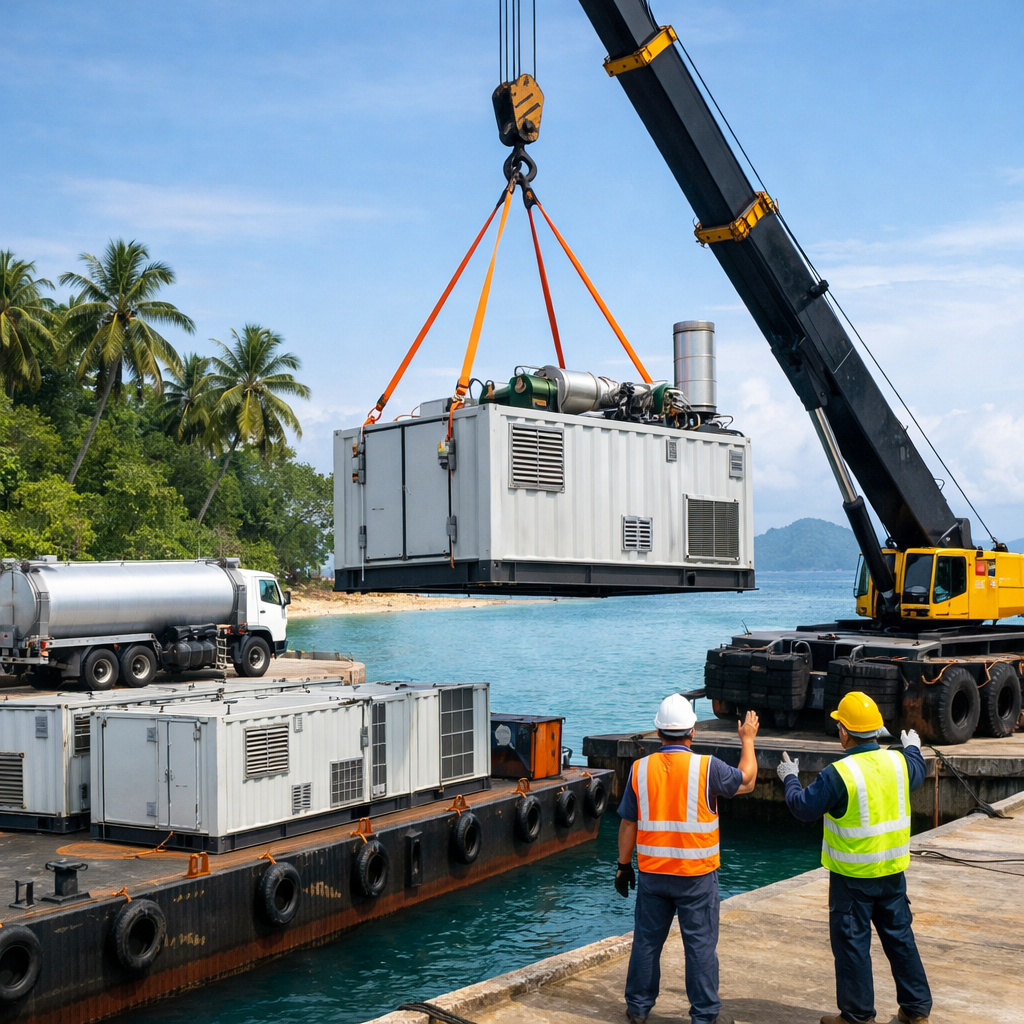
Ready-To-Deploy EfW Modules for Islands Facing Rising Diesel Costs
Islands paying ever more for diesel have a near-term, right-sized alternative: modular energy-from-waste units that convert local refuse into firm power. Factory-built, containerized modules slot into island microgrids, deliver dispatchable capacity, and shrink landfill needs. The result is practical diesel displacement without waiting years for major infrastructure. This guide distills the options, how to size them, what to expect on emissions and residues, and the deployment and O&M choices that keep small utility teams in control. If your core question is whether modular waste-to-energy systems are viable for island communities, the short answer is yes—when right-sized to waste streams and integrated with solar, wind, and batteries, they cut diesel runtime and stabilize costs. Garbage Advice helps island utilities evaluate, right-size, and integrate these modules without overbuild.
What modular EfW means for diesel-reliant islands
Energy-from-Waste (EfW) converts municipal solid waste and organic residues into usable energy—typically electricity and heat—through thermal or biological processes. Modular EfW packages these systems in standardized, factory-built units sized for small grids, enabling faster deployment, predictable performance, and easier maintenance.
For many small island developing states, oil-fired diesel sets both baseload and balancing, exposing residents and businesses to volatile heavy fuel oil prices and energy security risks that strain affordability heavy fuel oil context for islands. Modular waste-to-energy provides a locally fueled, price-stable hedge that fits island microgrids without oversized civil works.
How modular EfW reduces diesel consumption and grid risk
EfW provides dispatchable energy and fast grid-balancing support—precisely the services variable solar and wind need—so islands can reduce diesel runtime and blackout risk while maintaining frequency and reserve margins IEA Bioenergy on flexible bioenergy.
Scale is proven. Singapore operates multiple EfW plants, and modern incineration reduces the volume of solid waste requiring disposal by up to 90%, a crucial benefit where landfill space is at a premium Ecosperity’s Great Energy Transition. Compared with today’s diesel-heavy generation stacks, EfW diversifies supply, adds firm capacity, and turns an operating cost (waste handling) into a revenue-backed energy asset.
Core technologies for small-scale EfW modules
At a glance: small-scale incineration tolerates mixed MSW and is the reliability benchmark; modular gasification and containerized pyrolysis target pre-processed refuse-derived fuel (RDF) with potentially higher electrical efficiency at small scales; anaerobic digestion (AD) turns source-separated organics into biogas for CHP.
Technology fit comparison:
| Technology | Feedstock tolerance | Typical scale (t/day, MW) | Startup/turn-down flexibility | Key emissions controls | Residue outputs | Containerization level |
|---|---|---|---|---|---|---|
| Moving-grate incineration | Mixed MSW; handles moisture/variability with front-end sorting | ~50–300 t/day; ~1–10 MWe | Start in hours; turndown ~50–60% | Baghouse, scrubbers, activated carbon, SNCR/SCR | Bottom ash (metal recovery), fly ash/APC residues | Partial (skid FGT, auxiliary systems); core furnace onsite |
| Modular gasification (RDF) | Pre-processed RDF; low metals, sized, moisture ≤15–20% | ~20–150 t/day; ~1–6 MWe | Start in tens of minutes–1–2 h; good turndown | Syngas cleanup + engine/turbine controls | Char/slag, APC residues | High (skids/containers) |
| Containerized pyrolysis | Pre-processed, dry, uniform feed; plastics/biomass blends | ~10–80 t/day; ~0.5–4 MWe (via CHP on gas) | Rapid heat-up; cycling feasible | Off-gas cleanup; engine/turbine controls | Char, condensed oils, APC residues | High (containers) |
| Anaerobic digestion + biogas CHP | Source-separated organics, sludge; low contamination | ~5–100 t/day organics; ~0.2–3 MWe | Continuous base; short-term dispatch via gas storage | Engine oxidation/SCR; biogas H2S removal | Digestate (liquid/solid), screenings | High (modular tanks, skids, CHP containers) |
Incineration and grate combustion
Incineration with moving‑grate combustion burns mixed municipal waste at high temperatures, generating steam for power. Modern systems integrate flue‑gas cleaning to control particulates, acid gases, and NOx, delivering stable operation across varied feedstocks, major waste-volume reduction, and proven reliability for small grids. Incineration typically cuts waste volume by up to 90%, a decisive benefit for constrained islands. On scale, the Isle of Man’s EfW plant is roughly 5 MW and has operated around a 60% capacity factor, illustrating compatibility with small systems Isle of Man future energy scenarios.
Gasification and pyrolysis
Gasification converts carbonaceous waste into a synthesis gas using limited oxygen; pyrolysis thermally decomposes waste without oxygen to yield gas, oil, and char. Both can be modularized for small sites but typically need pre-processed RDF, tight moisture/size control, and rigorous syngas cleanup before engines or turbines.
Practical notes:
- Feedstock preparation: consistent particle size, metals removal, and drying (often to ≤15% moisture).
- Cleanup: tar cracking/filtration, acid gas and particulate removal before prime movers.
- Flexibility: faster start/stop than grate units; however, operators need disciplined procedures.
Use cases
- Pros: potentially higher electrical efficiency at small scales, compact footprints, good containerization.
- Cons: stricter fuel specs, higher O&M skill requirements, tighter QA/QC on preprocessing.
Anaerobic digestion for organics
Anaerobic digestion biologically breaks down source-separated organics—food scraps, green waste, or sewage sludge—in sealed tanks without oxygen to produce biogas (mainly methane and CO2). The biogas fuels CHP units for electricity and heat, while the remaining digestate is dewatered, treated, or used as a soil amendment. AD fits alongside thermal EfW: divert organics to stabilize residual MSW quality, then use thermal routes for what’s left. Modest biogas storage enables evening-peak dispatch.
Mini-flow: collection and pre-treatment → digester → biogas cleanup → CHP → digestate handling.
Sizing EfW to island waste streams and seasonal demand
Right-sizing starts with the waste, not the megawatts.
- Quantify daily waste by type (MSW, organics, C&I) and map seasonality/tourism uplift with a 12–24 month audit.
- Characterize lower heating value (LHV) and moisture to select technology and estimate net electrical output.
- Translate tons/day to MW: combine LHV, conversion efficiency, parasitic loads, and a realistic capacity factor.
- Validate against grid peaks, minimum stable output, ramp rates, and N‑1 security for the island microgrid.
- Check logistics: site footprint, ash/residue routing, and shipping constraints for modules and spares.
Anchor: A ~5 MW EfW operating near a 60% capacity factor can meaningfully support a small system’s firm capacity and reserve margin without overwhelming grid stability.
Deployment models for rapid, containerized installation
Standardized, containerized approaches cut onsite work and compress timelines:
- Skid-mounted incineration/gasification blocks with prefabricated flue-gas treatment skids.
- Containerized AD + biogas CHP packages with modular tanks and plug‑and‑play utilities.
- Factory acceptance testing (FAT) to de‑risk commissioning before shipping.
Directly addressing diesel exposure, behind‑the‑meter siting at resorts, hospitals, or municipal facilities allows modular units to offset expensive diesel on day one, subject to permits and interconnection readiness.
Deployment timeline checklist
- Permits and site prep
- Factory build and FAT
- Shipping windows and customs
- Foundations, installation, and utilities tie-in
- Cold/hot commissioning
- Performance testing and grid synchronization
Environmental performance and emissions controls that matter
Modern EfW plants use multi-stage flue‑gas treatment: cyclones or baghouses for particulates, wet or dry scrubbers for acid gases, activated carbon for dioxins and mercury, and selective non‑catalytic or catalytic reduction for NOx. Continuous emissions monitoring tracks compliance and supports transparent reporting to regulators and communities. EfW’s carbon profile depends on biogenic content, fossil fractions (plastics), and controls; accounting rules may attribute portions as fossil emissions even when displacing diesel, so be explicit in reporting system boundaries and assumptions.
Residue routing
- Bottom ash: recover metals; evaluate use in construction aggregates or dispose in lined cells.
- Fly ash/APC residues: hazardous—store, stabilize, and export or dispose under permit.
- AD digestate: dewater; land-apply if compliant or further treat/compost.
Operations and maintenance for small utilities and remote teams
Lean O&M is achievable with the right design envelope:
- Remote O&M: secure telemetry, fleet-wide analytics, and CMMS-driven, condition-based maintenance.
- Staffing model: minimal onsite crew for shifts, sorting, and ash handling; OEM/regional partners for planned outages, emissions testing, and calibrations.
- Spares logistics: align critical spares and consumables (bags, reagents, engine parts) with shipping windows and tourism seasons; hold redundancy for single-point-of-failure items.
- Operator training: standard operating procedures, safety drills, waste acceptance protocols, and routine CEMS checks.
Economics, tariffs and financing considerations for island markets
As a benchmark, remote diesel generation often lands near $400/MWh, underscoring the displacement value when comparing EfW’s levelized cost of electricity Economics and Finance Working Group. Yet small project size can limit economies of scale and create market-failure pressures for financing and tariffs. Enablers that close the gap:
- Capacity payments for dispatchable, low‑carbon supply.
- Waste tipping fees and put‑or‑pay feedstock contracts to stabilize revenues.
- Blended finance (public/concessional/private) for first-of-a-kind deployments.
- Hybrid portfolios: PV, bioenergy, and storage can lower LCOE but raise upfront capex—for Efate (Vanuatu), a modeled 100% renewable pathway cut LCOE by ~60% while increasing capex by ~76% Vanuatu/Efate modeling.
Integration with solar, wind and batteries for firm capacity
Solar and wind are rapidly scaling and increasingly cost‑competitive; EfW complements them by providing firm, dispatchable output that reduces curtailment and the need for diesel peakers. Practical roles include morning/evening ramps, contingency reserves, and minimum stable generation. Island modeling shows PV + biomass/storage pathways can be cost‑effective; where appropriate, liquid biofuels can add further dispatchability to existing engines.
Community engagement, permitting and byproduct management
Build durable consent with a clear, paced process: early scoping, transparent emissions baselines, open data dashboards, site tours, and multilingual materials. Jersey’s offshore wind engagement offers a template—public meetings, informal drop‑ins, online Q&A, bilingual content, and extended timelines to build trust Jersey public engagement report.
Permitting checklist
- Environmental impact assessment and air permits
- Waste handling and hazardous residue licenses
- Grid interconnection studies and agreements
- Water/discharge and noise permits
- Coastal/port approvals for module shipments
Byproduct management
- Bottom ash: metal recovery and compliant reuse/disposal.
- Fly ash/APC residues: secured handling and permitted disposal/export.
- Digestate: quality testing, land application plans, or further treatment.
Decision checklist for island planners and utilities
- Feedstock audit: type, tonnage, contamination, and tourism seasonality; align with recycling/organics diversion policies.
- Technology fit: grate vs modular gasification vs AD; emissions controls and residue handling routes.
- Grid role: baseload, mid-merit, or peaking; integration with PV/wind/batteries; ramping and reserve needs.
- Site logistics: footprint, cranes/ports, shipping windows; construction method (containerized/skid).
- O&M model: remote monitoring, CMMS, predictive maintenance, training; spare parts logistics.
- Economics: LCOE vs diesel (~$400/MWh reference), tipping fees, put‑or‑pay contracts, capacity payments, blended finance.
- Community and permits: engagement plan, air/waste permits, interconnection, byproduct plans.
Red flags
- Insufficient or highly variable waste volumes.
- High moisture without drying/preprocessing capacity.
- Unclear routes for ash/APC/digestate.
- Unstable tariffs or procurement terms.
- Weak community support or rushed engagement.
Frequently asked questions
Are modular EfW units viable for small islands with limited waste?
Yes—right-sized modules work at small scales, especially with organics diversion or RDF preparation, and they provide dispatchable capacity that cuts diesel use. Garbage Advice helps determine sizing and preprocessing to match local waste.
How quickly can a containerized EfW module be deployed and commissioned?
With factory-built skids, timelines often shrink to months, subject to permitting, shipping windows, and interconnection readiness. Garbage Advice maps the critical path and de-risks permitting and interconnection timelines.
What feedstock preparation is typically required for modular EfW?
Incineration tolerates mixed MSW with basic sorting; gasification/pyrolysis generally need pre-processed RDF with controlled size and moisture, and AD requires source-separated organics. Garbage Advice can assess current waste handling and define practical preprocessing steps.
How are emissions controlled to meet island air quality standards?
Modern systems use multi-stage flue-gas treatment—baghouses, scrubbers, activated carbon, and NOx reduction—plus continuous monitoring to maintain compliance and community confidence. Garbage Advice specifies control trains to local permit requirements and transparent reporting.
What happens to ash and other residues from EfW systems?
Bottom ash is usually metal-recovered and reused or landfilled; fly ash and APC residues are hazardous and require controlled handling and permitted disposal. Garbage Advice develops compliant routing plans and vendor management for residues.