
Most Durable Bathtub Materials Ranked: Pros, Cons, and Lifespan
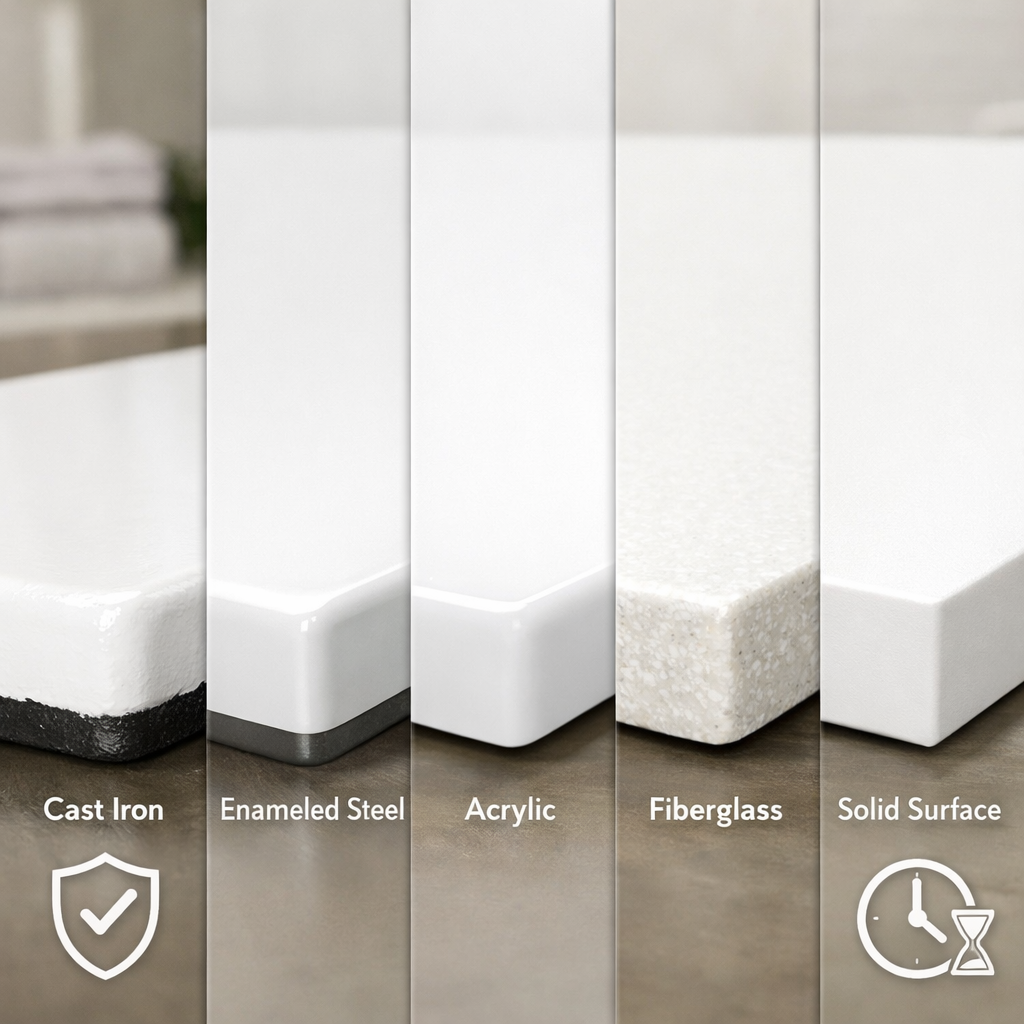
Choosing the most durable bathtub material comes down to how well a tub resists cracks and chips, holds heat, shrugs off daily cleaning, and how long it realistically lasts in a busy home. At Garbage Advice, durability means structural toughness plus low-maintenance performance over time. Below, we rank today’s common tub materials—cast iron, natural stone, stone resin, porcelain-on-steel, acrylic, and fiberglass—so you can balance longevity with weight, installation, and budget. If you want maximum lifespan and heat retention, cast iron and stone lead the pack. For lighter, easier installs—especially upstairs—acrylic is the best all-around choice, with fiberglass a budget stopgap.
How durability is measured for bathtubs
Durability reflects how a tub resists cracks, chips, rust, fading, and heat loss through years of daily use while requiring minimal maintenance. Perceived durability also tracks with soaking comfort—materials that hold heat feel “sturdier” in use.
Key criteria we use at Garbage Advice:
- Structural integrity and weight-bearing. Dense, rigid shells (cast iron, stone, stone resin) flex far less than thin shells; lower-quality acrylic can flex under load without proper support, so construction quality matters, not just material alone, as noted in the Horow acrylic bathtub guide.
- Surface hardness. Porcelain enamel is hard and glossy but can chip to bare metal that may rust; fiberglass is more prone to chipping and fading over time, according to Horow on acrylic vs porcelain and the American Bath & Shower materials comparison.
- Heat retention and comfort. Cast iron retains heat extremely well; fiberglass loses heat quickly, curtailing long soaks, per the American Bath & Shower materials comparison.
Heat retention, in brief: It’s a material’s ability to keep bathwater warm without rapid heat loss. High-retention tubs extend soak time and reduce hot-water top-offs. Cast iron and stone hold warmth exceptionally; fiberglass cools quickly, shortening comfort time and lowering perceived quality, per the American Bath & Shower materials comparison.
Ranked summary at a glance
| Rank | Material | Durability snapshot | Typical lifespan | Empty weight (approx.) | Heat retention |
|---|---|---|---|---|---|
| 1 | Enameled cast iron | Extremely rigid; enamel resists stains; chips require pro repair | 50+ years | 200–500 lbs | Excellent |
| 2 | Natural stone | Timeless, very dense; requires careful upkeep due to porosity | Generations | 400–1,000+ lbs | Excellent |
| 3 | Stone resin (solid surface) | Dense, non-porous; repairable; luxury look | 25–50 years | 200–400+ lbs | Very good |
| 4 | Porcelain-enameled steel | Hard, glossy; can chip to rust; classic look | 20–30+ years with chip care | 250–350+ lbs | Good |
| 5 | Acrylic | Light, warm, easy to clean; may flex if low quality | 15–25 years | 60–120 lbs | Good |
| 6 | Fiberglass (FRP) | Budget lightweights; more prone to cracking, fading | 10–15 years | 50–90 lbs | Fair to poor |
Proof points: cast iron’s 50+ year run-time and top-tier heat retention are widely reported; fiberglass’s budget appeal but shorter 10–15 year FRP bathtub lifespan and higher wear risk are common findings in the Mad City Windows bathtub comparison. Natural stone and stone resin are heavier, longer-lasting options with standout heat feel, as covered in the Aquatica overview of bathtub materials.
Takeaway: If your floor can handle it, denser, heavier tubs last longest; upstairs or in weight-limited installs, acrylic balances comfort, care, and cost.
Enameled cast iron
Enameled cast iron sits at the top for toughness and longevity. The dense iron body paired with a fired enamel finish delivers 50+ years of service in real-world use with excellent heat retention and a glossy, stain-resistant surface, as summarized by the American Bath & Shower materials comparison and Mad City Windows.
Realities: It’s heavy—often 200–500 lbs empty—so stair carries and second-floor installs may demand additional hands, dollies, and structural checks. Professional installation is common.
Maintenance and repair: The enamel surface resists stains, but a significant chip can expose iron, which may rust and typically requires professional refinishing or repair.
Best for: Ground-floor remodels, long-term homes, and primary suites where lifespan, soak comfort, and resale value matter most.
Natural stone
Natural stone tubs (granite, marble, limestone) deliver unmatched presence and soak comfort. With proper care, stone can last for centuries, thanks to its dense structure and ability to hold heat—one reason stone remains a luxury benchmark, per Mad City Windows.
Upkeep: Stone is porous. It needs stone-safe cleaners and periodic sealing as recommended by manufacturers. Avoid acidic or abrasive products; improper cleaners can etch surfaces. Scratch resistance is strong, but treat it like premium stone countertops.
Installation guidance: Stone is extremely heavy and typically requires professional handling and structural reinforcement, a point echoed in the Aquatica overview of bathtub materials.
Porosity, defined: It’s the degree to which a material absorbs liquid through microscopic pores. Higher porosity increases staining risk and drives the need for sealing and stone-specific cleaners to maintain appearance.
Stone resin
Stone resin (often called solid surface) blends mineral fillers with resins to form a dense, non-porous tub that mimics hewn stone with better repairability, lower cost, and lighter weight than natural stone. It offers high durability, a crisp minimalist aesthetic, and strong heat retention—reasons it features prominently in 2025 spa-style bathrooms, per the Aquatica overview of bathtub materials.
Caveats: While lighter than pure stone, stone resin is still heavy and may require a structural review before an upstairs install. Related cast polymer materials include cultured marble, which can provide a similar look with varying performance depending on resin quality and gelcoat.
Porcelain enameled steel
Porcelain-enameled steel combines a stamped steel shell with a fired porcelain enamel coating for a hard, glossy finish at a moderate price. It delivers a classic look and decent heat feel, but the enamel can chip; if steel is exposed, rust can follow without prompt repair—an issue highlighted by Horow on acrylic vs porcelain.
Weights commonly run in the 250–350+ lb range depending on base and configuration. Best in secondary baths or projects seeking a timeless look and durable feel without the mass or cost of iron or stone. Avoid heavy impacts and use protective mats for dropped items.
Acrylic
Acrylic remains the best all-around for light weight, warmth, and easy upkeep—especially for DIY bathtub installs and upstairs family baths. It’s non-porous, cleans with mild, non-abrasive products, and feels warm to the touch with good heat retention for nightly soaks, per the Horow acrylic bathtub guide and the American Bath & Shower materials comparison.
Trade-offs and tips:
- Lower-end shells can flex; opt for thicker acrylic with fiberglass reinforcement and proper bedding to reduce movement (a critical point in fiberglass vs acrylic debates).
- Minor surface scuffs can often be polished or buffed.
- Acrylic vs porcelain tub: acrylic is lighter and warmer but less chip-hard; porcelain-on-steel is harder but heavier and vulnerable to chip-and-rust if struck.
Expect an acrylic bathtub lifespan in the 15–25 year range with routine care.
Fiberglass
Fiberglass (FRP) is the budget lightweight. It’s easy to carry, set, and replace, making it ideal for quick flips or low-traffic guest baths. The trade-off is shorter lifespan—about 10–15 years—with greater risk of cracking, fading, and surface wear, and notably poor heat retention compared with denser options, per the American Bath & Shower materials comparison and Mad City Windows.
Positioning: Use fiberglass where cost and speed matter more than daily durability—avoid it for heavy family use if you want long-term reliability.
Installation and weight considerations
Empty-tub weight and likely support needs:
- Cast iron: ~200–500 lbs; floor reinforcement often advisable.
- Porcelain-on-steel: ~250–350+ lbs depending on base and size.
- Natural stone and stone resin: heavy; structural support commonly required.
- Acrylic and fiberglass: light; DIY-friendly to carry and set, often manageable upstairs.
Pre-install planning checklist (Garbage Advice):
- Verify joist capacity and subfloor condition for the filled tub (tub + water + bather).
- Measure every turn, stair, and doorway; remove doors/railings if needed for heavy tubs.
- Confirm drain location, P-trap access, and any graywater or reuse-system needs; plan for accessible shutoffs and leak checks before closing walls.
Heat retention and soak comfort
- Cast iron keeps bathwater warm far longer than thin-shell options—top-tier soak comfort noted in the American Bath & Shower materials comparison.
- Acrylic feels warm to the touch and holds heat well for nightly baths, per the Horow acrylic bathtub guide.
- Fiberglass loses heat quickly, cutting soak length, as flagged by American Bath & Shower.
Soaker’s shortlist for long, hot baths: cast iron, natural stone, stone resin, then acrylic. Add insulation around the tub deck and insulate supply lines to stretch warmth and reduce top-offs.
Repairability and maintenance
- Acrylic: Minor scratches often polish out; use non-abrasive cleaners to protect the gloss, per American Bath & Shower.
- Porcelain-enameled steel: Chips expose steel to rust—apply a chip repair kit promptly to seal.
- Cast iron: Enamel chips are repairable but usually require professionals; spot fixes can be visible.
- Fiberglass: Patches are possible but often show; plan earlier replacement if structural cracks spread.
- Natural stone: Naturally scratch-resistant but needs stone-safe cleaners and sealers; avoid acids that can etch.
Total cost of ownership and resale impact
| Material | Purchase cost | Install complexity | Reinforcement likely | Typical lifespan | Maintenance burden |
|---|---|---|---|---|---|
| Cast iron | High | High | Often | 50+ years | Low–moderate (chip care) |
| Natural stone | Very high | Very high | Usually | Generations | Moderate–high (stone care) |
| Stone resin | High | High | Often | 25–50 years | Low–moderate |
| Porcelain-on-steel | Medium | Medium–high | Sometimes | 20–30+ years | Moderate (chip vigilance) |
| Acrylic | Medium | Low–medium | Rarely | 15–25 years | Low |
| Fiberglass (FRP) | Low | Low | Rarely | 10–15 years | Moderate (wear/fade) |
Guidance: Heavier, longer-lasting tubs (cast iron, stone, stone resin) tend to elevate perceived quality and resale. Acrylic offers strong family value—easy care, lower install costs, and good comfort—while fiberglass minimizes upfront spend but shortens the replacement cycle.
Best choices by bathroom scenario
- Ground-floor primary bath, long-term home: enameled cast iron or stone resin; consider natural stone if budget and structure allow.
- Upstairs family bath: acrylic for low weight, warmth, and easy cleaning.
- Guest/low-traffic bath or tight budget: fiberglass; plan for 10–15 year replacement.
- Classic look, moderate spend: porcelain-enameled steel; minimize heavy impacts to avoid chips and rust.
Garbage Advice POV: Durable, easy-clean surfaces reduce scrubbing, protect plumbing from harsh chemicals, and save water/energy by holding heat longer so you reheat less.
How tub material impacts drain, trap, and disposal plumbing
- Heavy tubs (cast iron, stone, stone resin): Use rigid, well-supported drain assemblies. Ensure secure P-trap alignment so settling doesn’t stress gaskets. Provide an access panel where possible for future leak checks in tight surrounds.
- Lightweight tubs (acrylic, fiberglass): Watch for pan flex that can strain the drain shoe; bed the base in mortar when recommended to eliminate movement and squeaks.
- System fit: If the bath shares a wet wall with kitchen or laundry, confirm venting and trap arm slope to prevent cross-gurgling and slow drains. Choose corrosion-resistant, easy-to-service brass or stainless drain/overflow sets to match the tub’s lifespan.
Frequently asked questions
What bathtub material lasts the longest in daily use
At Garbage Advice, enameled cast iron leads, often delivering 50+ years thanks to its dense body and hard enamel finish when maintained.
Is acrylic or porcelain better for families and upstairs bathrooms
Garbage Advice usually recommends acrylic upstairs—light, warm, and easy to clean with buffable scuffs—while porcelain-on-steel is harder but heavier and vulnerable to chip-and-rust.
Can a floor support a cast iron or stone tub safely
Often yes with reinforcement; Garbage Advice recommends verifying joist capacity since a 200–500 lb empty cast iron tub plus water and a bather imposes significant load.
How do I repair chips and scratches in common tub materials
At Garbage Advice, acrylic scuffs can often be polished; porcelain chips need prompt sealing; cast-iron enamel repairs are best left to pros; fiberglass patches work but are commonly visible.
How long should a bathtub last with proper care
Garbage Advice summary: cast iron can exceed 50 years, stone can last for generations, porcelain-on-steel can run decades with chip care, acrylic often lasts 15–25 years, and fiberglass averages 10–15 years.