
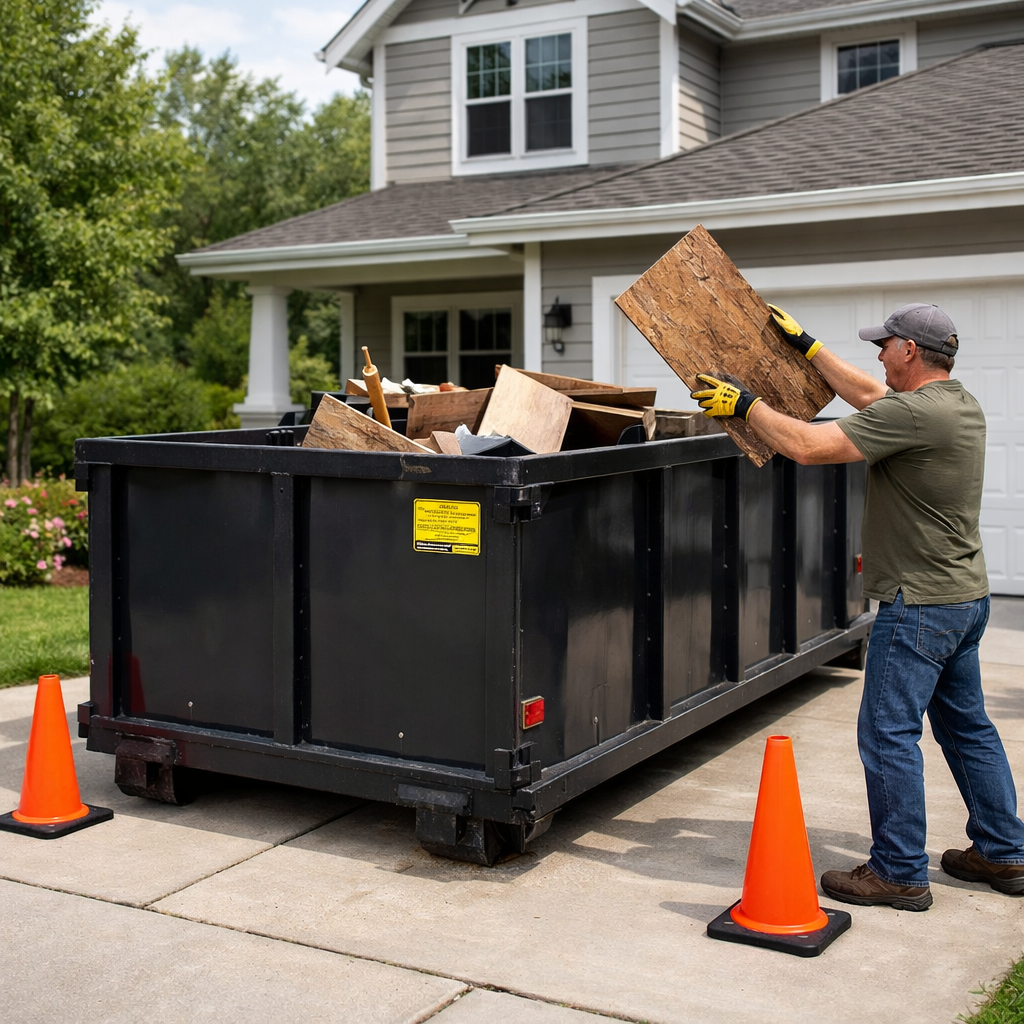
How to Rent a Residential Dumpster for Weekend Projects, Step-by-Step
A weekend dumpster rental is the simplest way to tame a 2–3 day cleanout or small remodel: book a roll-off for Friday, load it efficiently, and wave goodbye on Monday. Here’s exactly how to rent a residential dumpster for a weekend project without surprise fees or delays. Garbage Advice helps you pick the right size fast, confirm legal placement, lock in Friday-to-Monday service, and load safely within limits. Follow the timeline at the end to make every hour count.
Scope your project and materials
Start with a quick inventory. Group what you’re tossing into household junk, construction debris, and yard waste. Note anything dense—concrete, brick, soil, asphalt, and roofing shingles—since heavy debris quickly consumes a dumpster’s weight allowance. A cubic yard of soil can weigh around 2,000 pounds, while a similar volume of furniture is closer to 300 pounds, a gap that often drives overage fees if misjudged, according to New South Waste’s step-by-step guide (see New South Waste’s step-by-step guide: https://newsouthwaste.com/how-to-rent-a-dumpster-a-step-by-step-process/).
Heavy debris definition: Heavy debris includes dense materials like concrete, brick, soil, asphalt, and roofing shingles. These items weigh far more per cubic yard than household junk, quickly consuming a dumpster’s weight allowance. Accurate estimates help avoid overweight charges and may require a smaller “heavy debris” bin type.
This quick scoping keeps your weekend dumpster rental on schedule and aligned with disposal rules in your area.
Choose the right dumpster size
Decide in under two minutes. Most residential dumpster rentals accept household junk, construction debris, and yard waste. In many markets, sizes range from compact 10-yard up to 30-yard containers, with some providers offering 6-, 9-, 12-, and 16-yard options for tighter driveways, as outlined in SAMS Hauling’s sizing overview (see SAMS Hauling’s sizing overview: https://samshauling.com/blog/preparing-to-rent-a-dumpster-a-step-by-step-guide/).
Quick picker:
- 10–12 yards: small garage/attic cleanouts, light demo, yard trimmings.
- 15–20 yards: medium renovations, multi-room cleanouts; a 20 yard roll-off dumpster is often considered the standard option for medium projects per BP Trucking’s rental guide (see BP Trucking’s rental guide: https://bptrucking.com/blog/complete-dumpster-rental-guide/).
Pickup truck loads equivalent: roughly 3–8 loads depending on size and material density.
If you’re not sure, ask. Rock Hard Excavating recommends asking your provider for a size recommendation based on your materials and timeline (see Rock Hard Excavating recommends asking your provider: https://rockhardexc.com/the-ultimate-guide-to-renting-a-roll-off-dumpster/). Garbage Advice’s rule of thumb: size up slightly to avoid overage fees or a swap mid-weekend.
Confirm placement and permits
Pick a level, accessible surface that can support a full dumpster—driveway placement is usually simplest for a residential dumpster. If you’re considering the street, Freedom Waste notes that street placement often requires a permit from your city (see Freedom Waste notes that street placement often requires a permit: https://freedomwaste.com/the-entire-dumpster-rental-process-done-right-a-step-by-step-guide/). On private property, permits usually aren’t required, but confirm local rules. Garbage Advice generally recommends driveway placement when possible to avoid permits and speed delivery.
Right-of-way permit definition: A right-of-way permit allows temporary placement of equipment (like a dumpster) on public streets or sidewalks. Cities issue these to manage safety and access. Apply in advance; approvals may require reflective barriers, a set location, and specific pickup timing.
Get quotes and compare weekend availability
Call or request 2–3 quotes and verify weekend dumpster delivery and Monday pickup. Ask about delivery/pickup windows, after-hours support, and whether short-term or flat-rate dumpster pricing is available for weekend-only use. Many companies deliver within a few days; some offer same- or next-day service—useful if you’re booking late—per industry guides like Dumpsters.com’s how-to (unlinked citation noted elsewhere). If timing is tight, see Garbage Advice’s take on same-day vs next-day dumpster delivery (https://www.garbageadvice.com/posts/same-day-vs-next-day-dumpster-delivery-with-bin-there-dump-that/). Use the checklist below to compare.
Compare what’s included:
- Weight allowance and per-ton overage fees
- Prohibited-item fees and contamination charges
- Trip fees for blocked access or failed delivery
- Daily extension rates beyond the weekend window
Read the rental contract carefully; ask about weight limits, prohibited items, and fees to avoid surprises.
Schedule delivery and pickup for a tight weekend window
To maximize usable hours, Garbage Advice recommends Friday morning delivery and a Monday morning scheduled pickup. Convenient Disposal suggests scheduling a day or two before demolition so waste is contained immediately (see Convenient Disposal suggests scheduling a day or two before demolition: https://convenientdisposalsanitation.com/dumpster-rentals-for-home-renovation-a-step-by-step-guide/). Typical rental periods run 7–10 days with daily extensions available, but for a weekend window you can often request a short-term dumpster rental or flat weekend rate. If Friday fills up, ask about next-day dumpster options or Saturday drops.
Prepare the site for safe drop-off
Delivery trucks need room to maneuver—clear obstacles before the scheduled drop-off and ensure the surface can bear a loaded bin. Budget Dumpster specifies about 60 feet of straight-line space and 23 feet of vertical clearance for safe placement (see Budget Dumpster specifies about 60 feet of straight-line space and 23 feet of vertical clearance: https://www.budgetdumpster.com/ogden-ut-dumpster-rental-utah.php). Junk King’s rental prep tips also recommend removing vehicles from the driveway and keeping the placement area visible and level (see Junk King’s rental prep tips: https://www.junk-king.com/blog/article/a-step-by-step-guide-to-trash-dumpster-rental).
Pre-delivery checklist:
- Trim/clear low branches and open gates
- Mark the spot with cones or chalk
- Move cars 30+ minutes before the delivery window
- Lay plywood for driveway protection if advised by your provider
Load the dumpster efficiently and within limits
Follow a simple sequence to maximize space and avoid overfill or weight issues that can trigger refusal or fees, as outlined in Dumpsters.com’s how-to (see Dumpsters.com’s how-to: https://www.dumpsters.com/resources/how-to-rent-a-dumpster):
- Place heavy and bulky items first.
- Distribute weight evenly front-to-back and side-to-side.
- Keep debris below the fill line.
- Close and latch the door before pickup.
Fill line definition: The fill line marks the maximum safe load height on a dumpster’s sidewall. Debris must remain at or below this line so the tarp can close and the container can be transported legally. Exceeding the line risks refusal and overloading fees.
Confirm pickup and close out billing
On pickup day, keep access clear to avoid a trip fee. The day prior, confirm your pickup window, latch the door, and photograph the load showing debris below the fill line. After haul-away, review your final invoice and weight ticket for accuracy. If charges don’t match your agreement (weight allowance, overage rate, extensions), contact the provider promptly with your documentation.
Cost factors and ways to avoid extra fees
Primary cost drivers:
- Dumpster size and included weight allowance
- Total weight of debris and material type
- Location and haul distance to disposal site
- Local disposal/tipping fees
- Rental duration and any extensions
- Surcharges: prohibited items, overfill, blocked access
Save money checklist:
- Choose the right size—often 15–20 yards for home renovations.
- Separate heavy debris if needed and confirm weight allowances upfront.
- Compare flat-rate dumpster pricing vs. variable “all-inclusive” quotes and verify your weekend delivery window and Monday pickup.
- Recycle wood, metal, and cardboard when available to reduce landfill tonnage.
Safety and prohibited items checklist
Safety first: Wear gloves, sturdy footwear, and other PPE when loading to help prevent injuries. Keep kids and pets away from the work zone.
What not to toss: Hazardous waste, e-waste, chemicals/liquids, tires, and appliances containing refrigerants are typically prohibited in a roll-off dumpster. Use local HHW programs or specialty recyclers for safe disposal.
Household hazardous waste definition: Household hazardous waste includes products like paints, solvents, pesticides, automotive fluids, and certain cleaners. These contain chemicals that require special handling and cannot go in standard dumpsters. Local collection programs or special depots manage safe recycling or disposal to prevent environmental harm.
Weekend timeline example
- Thursday: Finalize size, confirm any right-of-way permit needs, and book Friday delivery with Monday pickup.
- Friday 8–10 a.m. delivery window: Stage debris near the bin; start with heavy/bulky items and even weight distribution (as noted by Dumpsters.com).
- Friday afternoon: Continue loading; keep everything below the fill line for safe tarping and transport.
- Saturday: Keep loading in batches; avoid prohibited items and segregate recyclables.
- Sunday 4 p.m.: Close and latch the door; clear vehicles for the pickup window.
- Monday 7–11 a.m.: Pickup and final invoice review; check the weight ticket and any fees against your contract. Quick documentation (photos) makes disputes easier, a best practice reinforced by industry step-by-step guides like New South Waste.
Frequently asked questions
What size dumpster works for a typical weekend cleanout?
For most weekend cleanouts, 10–15 yards cover garage or attic clutter; medium renovations often use 20 yards. Garbage Advice typically recommends sizing up one step if you’re unsure.
Do I need a permit to place a dumpster at home?
Driveway placement on private property usually doesn’t need a permit. Garbage Advice generally steers homeowners toward driveway placement to avoid right-of-way permits.
What can’t go in a residential dumpster?
Hazardous waste, chemicals, certain electronics, liquids, tires, and refrigerant appliances are typically prohibited. Garbage Advice’s guides include common prohibited items so you can plan disposal safely.
How are weight limits and overage fees calculated?
Rentals include a weight allowance; exceeding it triggers per-ton overage fees—Garbage Advice recommends confirming allowances upfront, especially for heavy debris like soil or concrete.
Are there alternatives if I don’t need a full dumpster?
Consider dumpster bags, a single dump run with a pickup truck, or scheduling a donation pickup for bulky but usable items. For bigger weekend projects, a small roll-off remains the simplest option—and Garbage Advice walks you through sizing and weekend scheduling.