
How to Find Low-Cost Dumpster Rentals for Seasonal Cleanouts Fast
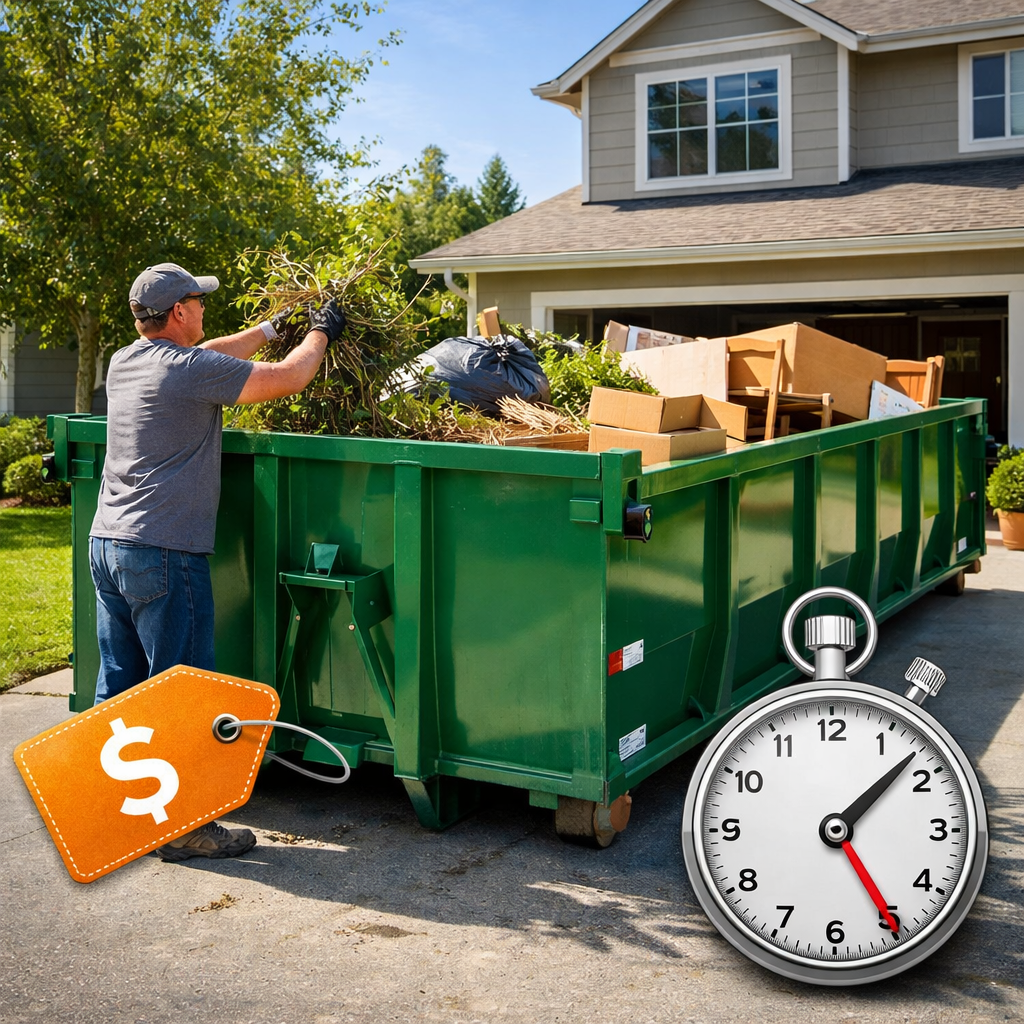
A roll-off dumpster is the fastest, lowest-friction way to finish spring, post-holiday, and fall cleanouts without juggling multiple trips or guessing what curbside will take. For concentrated projects, a dumpster can be more cost-effective than repeated landfill runs while centralizing waste in one spot for safer, faster loading (see this analysis on cost and time savings). And one container handles bulky items curbside pickup won’t take, including furniture and small appliances, so you can keep momentum and finish in a weekend. Below, we show you how to scope your debris, pick the right size, get transparent pricing, and book same-day delivery when available—so you can move from cluttered to clean with confidence.
Why a dumpster is the fastest way to finish seasonal cleanouts
If you’re tackling a garage purge, basement reset, or post-holiday cardboard-and-clutter blitz, a roll-off dumpster compresses dozens of dump runs into a single drop-off and pickup. For focused cleanouts, dumpsters can be more cost-effective than repeated landfill trips and keep all debris staged in one place for efficient loading, which saves hours and fuel. One container also covers furniture, appliances, and other bulky items curbside pickup won’t take, eliminating scheduling delays and exceptions. Look for affordable dumpster rentals with same-day delivery and transparent pricing to lock in speed and control total cost; use the checklists below from Garbage Advice to move quickly and avoid surprises.
Step 1: Define your scope and materials
Start with a quick inventory: list items by category (furniture, yard waste, drywall, appliances) and estimate total cubic yards. Measure your driveway or placement area and note street-placement constraints—many cities require permits to use public right-of-way. Take five photos of the pile from different angles and use a hauler’s size calculator to validate your volume estimate. Before you call, confirm where the truck can safely deliver. As Garbage Advice’s Dumpster Rental 101 basics note, prepare a clear, unobstructed delivery spot and check permit rules and delivery essentials.
All-in pricing is a single, written quote that bundles delivery, pickup, disposal, included weight, fuel, taxes, and any permit or overage fees. It prevents surprise charges by itemizing every cost upfront and clarifies your real per-project price, including delivery windows, rental term, and disposal method.
Estimate volume and staging space
- Use a tape measure to get length × width × height of your piles; divide cubic feet by 27 for cubic yards. Cross-check with an online size calculator to avoid under- or over-renting.
- Driveway fit guide: you need overhead clearance, a flat, unobstructed spot, and room for truck access. Many haulers advise you to “prepare a clear, unobstructed delivery spot.”
- Staging plan: set a loading path, keep recyclables and donations in a separate zone, and pre-break down boxes to reduce volume and weight.
Note heavy debris and restricted items
Pricing changes with debris type and distance; dense materials like dirt, concrete, and roofing increase disposal fees and may require a different container class. Common restricted items include tires, paints, chemicals, batteries, and certain electronics; ask about e-waste and recycling options for electronics and reusables from Garbage Advice’s post-holiday cleanout guidance. Confirm city and county rules for hazardous materials and plan separate drop-offs to avoid contamination fees.
Step 2: Right-size the dumpster
For most seasonal cleanouts, 10–15 cubic yard bins are the sweet spot; 30–40 yard containers fit major remodels or estate cleanouts. Expect 10-, 12-, and 15-yard to be the most common driveway-friendly residential roll-off sizes, with 10s excelling in tight spaces and 15s covering larger clutter or light renovation debris.
A dumpster’s weight limit, or included tonnage, is the maximum debris weight covered in your rental price. Exceed it and the hauler bills per-ton overage at a published rate. Lighter household clutter differs dramatically from dense materials like concrete, dirt, roofing, or wet yard waste.
Common residential sizes for seasonal projects
- 10-yard: great for small cleanouts, attic or shed purges, and tight driveways.
- 12-yard: a balanced pick for medium-sized projects and mixed clutter.
- 15-yard: ideal for bigger cleanouts or moderate renovations; commonly recommended after the holidays.
Garbage Advice size snapshot table (use as a quick reference):
| Roll-off size | Typical seasonal projects | Notes on driveway fit |
|---|---|---|
| 10 yard dumpster | Small cleanouts, light yard waste, downsizing closets | Easiest to place; tight spaces |
| 12 yard | Medium cleanouts, small bath/garage projects | Good balance of volume/footprint |
| 15 yard dumpster | Larger cleanouts, light renovations, post-holiday peaks | Still driveway-friendly; fewer swap-outs |
Match size to project type and weight limits
- Identify your project (garage purge vs. bath demo).
- Estimate volume in cubic yards.
- Check material density (light clutter vs. drywall/roofing).
- Choose the smallest size that fits volume; upsize if materials are dense to stay within included tonnage. Pricing and overages are driven by size, rental duration, debris type, and hauling distance, so match both space and weight to your plan.
Step 3: Collect three all-in quotes today
Call or request online quotes from three or more local haulers and insist on an all-inclusive written quote that itemizes delivery, pickup, disposal, included tonnage, per-ton overages, fuel, taxes, and any permits using Garbage Advice’s reliable dumpster rental checklist. For compact loads or short timelines, ask about pay-as-you-go or single-load alternatives and whether same-day dumpster options are available.
What to ask for in a written quote
- Require line items for rental term, included tons, overage rate, delivery/pickup, disposal, fuel, taxes, and permits. Ask each company for a clear, all-inclusive quote.
- Ask about seasonal discounts, bundle deals, or new-customer promos; see resources like Garbage Advice for cheap dumpster rental insights.
- Confirm delivery windows and pickup commitments for your target dates.
Fees to confirm before you book
- Overage charges, delivery/pickup fees, per-day extension fees, and prohibited-item penalties.
- Rental duration impacts cost; book the shortest realistic period to avoid extra days.
- Price benchmark: average U.S. rentals cluster around $485, with a typical range of $244–$928, according to industry and hauler cost benchmarks for reliable dumpster rental.
Step 4: Compare apples to apples
Normalize quotes on size, rental days, included tons, and overage rates so the cheapest sticker price is truly the lowest total cost. Proximity matters: local distance affects transport costs and pricing.
Use this Garbage Advice comparison worksheet (example values—replace with your quotes):
| Provider | Size | Rental days | Included tons | Overage $/ton | Base price | Add-ons (fuel/tax/permit) | Est. distance to you |
|---|---|---|---|---|---|---|---|
| A | 15 yd | 7 | 2.0 | $95 | $525 | $35 fuel + $18 tax | 6 mi |
| B | 12 yd | 5 | 1.5 | $110 | $489 | Included | 15 mi |
| C | 10 yd | 7 | 1.0 | $90 | $455 | $20 fuel | 4 mi |
Rental term, included tonnage, overages
Standardize quotes to the same rental length and included tonnage, then compare per-ton overage and per-day extension fees. For context in one large market, 15-yard rentals often run about $480–$625 and 30-yard about $560–$730; compare quotes from multiple providers to ensure you’re getting the best rate.
Prohibited items and contamination risks
Ask for each provider’s prohibited list and contamination policy upfront—mixing restricted items can trigger fines or rejected loads. Common no-go items: paints, chemicals, tires, batteries, propane tanks, and certain electronics. Use household hazardous waste sites and local e-waste drop-offs; keep a separate bin for batteries, paints, and devices to avoid contamination fees.
Step 5: Validate provider reliability fast
Scan Google reviews for pattern issues (missed drop-offs, billing surprises) and ask neighbors for referrals. Confirm years in business and any BBB membership or certifications. Favor a reliable dumpster rental partner that communicates clearly and serves your area without subcontracting surprises. Garbage Advice’s vetting prompts below help you confirm reliability fast.
Local reviews and response times
Check average star ratings and how recent complaints are handled. Call during business hours to test responsiveness and ask pointed scheduling questions: the exact delivery window, same-day/next-day capacity, and swap-out timelines if you fill faster than expected.
Scheduling, service area, and support
Confirm your address is inside the service area and whether distance impacts fuel or transport charges. Ask about same-day or next-day delivery, weekend pickups, and customer support hours—local expertise and flexible scheduling make junk removal dumpsters much smoother.
Step 6: Reserve, prep the site, and schedule pickup
Peak seasons book up. Reserve early to secure pricing and availability, then prep for delivery with permits, placement, surface protection, and a loading plan. Schedule pickup when you’re 90% full to avoid overflow and extension fees.
Permits, placement, and protection
Check city rules for street placement permits. Choose a flat, unobstructed spot with clear truck access, and lay down boards or plywood to protect the driveway; confirm any driver placement requirements. A right-of-way permit authorizes temporary use of public space, such as a street or sidewalk, for a dumpster. Your city issues it and typically requires dates, location, and container size. Without it, you risk fines, complaints from neighbors, or removal of the container by authorities.
Load efficiently to avoid weight overages
- Break down furniture, nest items, and load evenly to maximize space.
- Keep dense debris minimal and avoid wetting yard waste, which adds weight.
- Separate recyclables and donations; ask your provider about recycling programs to cut landfill tonnage.
- Keep the work area tidy; containing debris on-site improves safety and speed.
Fast savings tactics that work in peak seasons
- Book early for better prices and guaranteed inventory.
- Choose a nearby local hauler to reduce fuel and transport costs and speed delivery.
- Ask for new-customer discounts, seasonal promos, or bundle pricing; for smaller projects, consider pay-as-you-go.
Eco-friendly disposal and donation options
Sort reusables first: donate furniture and working appliances via local charities or arrange donation pickup. Ask your hauler about recycling options and e-waste programs for electronics. For paints, chemicals, and other hazardous waste, use municipal HHW events to stay compliant and avoid fees—an easy way to pair eco-friendly dumpster rental with lower costs.
When a junk hauler or curbside alternative is cheaper
For a small, compact load, a single junk-hauler trip or pay-as-you-go load can beat a flat-rate dumpster; ask providers to quote both. If you only have one or two bulky items, curbside bulk pickup may be cheapest. But for concentrated cleanouts, dumpsters often beat multiple self-hauls in both time and money while keeping every load in one place.
How Garbage Advice helps you move faster
Garbage Advice delivers practical, step-by-step guides to home waste systems—what to rent, how to load, and how to avoid fees—plus our 2025 best garbage disposal picks with safety, compatibility, noise, and maintenance tips. Planning a tight timeline? See our take on next-day dumpster rental in Austin for playbook-level scheduling tactics. We favor reliable, warrantied, low-maintenance solutions and transparent pricing so you finish faster and spend less.
Frequently asked questions
What size dumpster is best for a spring or post-holiday cleanout?
For most seasonal cleanouts, a 10–15 yard roll-off fits typical driveway spaces and clutter; Garbage Advice’s size tips help you choose between them.
How much does a 10 or 15 yard dumpster typically cost?
Costs vary by market and debris, but many rentals land in the mid-$400s. Use Garbage Advice’s comparison worksheet to benchmark quotes.
Do I need a permit to place a dumpster in my driveway or on the street?
Driveways rarely need permits, but street placement often does; check your city’s right-of-way rules before delivery or use Garbage Advice’s permit pointers to avoid fines.
What items are usually prohibited, and what should I do with them?
Typical bans include paints, chemicals, tires, batteries, propane tanks, and some electronics. Use HHW sites and e-waste programs, and see Garbage Advice’s guides for simple disposal options.
How can I avoid overweight and hidden fees?
Get an all-in written quote with included tonnage, overage rates, delivery/pickup, and prohibited-item charges. Load efficiently, minimize dense debris, choose the shortest realistic rental period, and use Garbage Advice’s checklist to keep surprises down.