
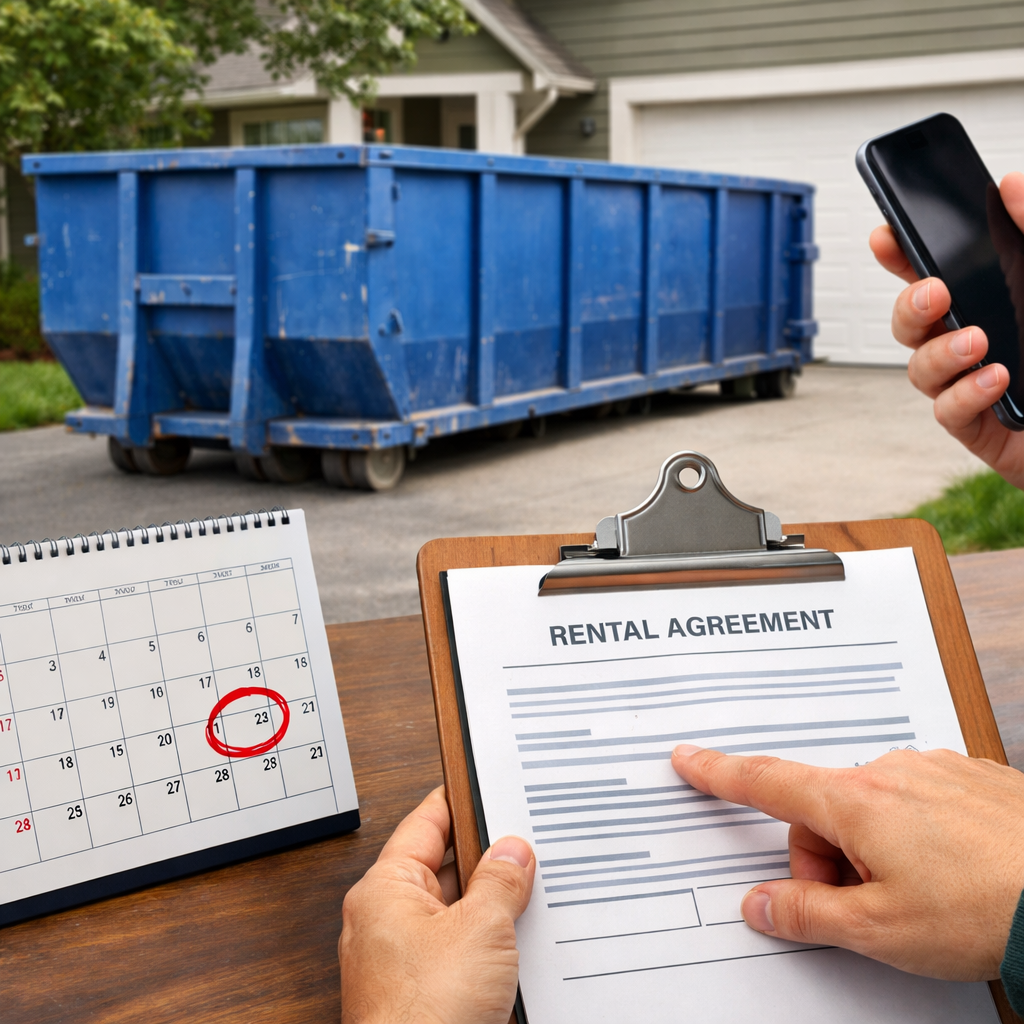
How to Extend Your Dumpster Rental Without Penalties or Permits
A roll off dumpster is typically rented for 7–10 days, and the clock usually starts on the delivery day—not when you first toss something in. If you need more time, most providers offer a dumpster rental extension for a daily fee, as long as availability and any permit dates allow it. The fastest path to avoid penalties and permits: know your contract, call early, and keep your load legal and efficient. This Garbage Advice guide shows exactly how to extend smoothly, prevent overage fees, and stay clear of encroachment permit trouble.
Know your rental window and contract terms
Most standard roll off dumpster rentals run 7–10 days, with the rental period beginning on the delivery date What to do if you need the dumpster longer, Ultimate Dumpsters.
Read your agreement closely for the duration, included weight cap, overage fees, prohibited items, pickup window, and the per‑day extension rate. Ask about extension fees when you book so you’re not negotiating under deadline pressure Ultimate Dumpsters.
Mini reference table:
| Contract term | Where to find it | Why it matters |
|---|---|---|
| Duration | Rental agreement summary | Sets your end date and when daily charges could start. |
| Weight limit | Pricing or terms section | Prevents overweight penalties tied to disposal costs. |
| Prohibited items | Materials list or fine print | Avoids rejection, fines, or special handling charges. |
| Extension fees | Add‑ons/fees section | Lets you budget daily costs if you need more time. |
| Pickup window | Service and logistics section | Helps you plan access and avoid missed pickups. |
Decide whether you need an extension, swap-out, or larger size
Before you pay for extra days, reassess your scope. A mid‑project swap‑out (hauler removes the full bin and drops an empty one) or upsizing to a larger container can be cheaper than paying multiple daily extension fees—especially if the dumpster is nearly full Maximizing efficiency, Brothers Disposal.
Quick comparison:
- Extension: Best when you need 1–2 extra days and still have capacity.
- Swap‑out: Smart if you’re near full but work will continue; you reset space quickly for a flat fee.
- Upsize: Ideal when your estimate missed by 30%+; fewer hauls and lower per‑ton disposal risk.
If you’re unsure on size, ask your rental company for recommendations based on similar projects in your area Common pitfalls to avoid, Klumm Bros..
Contact your rental company early to request more time
Notify your provider as soon as you see delays. Companies value proactive updates and can adjust your terms more easily when they hear from you before the end date Ultimate Dumpsters.
Be specific: state how many extra days you need, why you need them, and confirm the exact daily extension fee and any related charges while you negotiate How to extend past deadline, Beaver Bins. Use Garbage Advice’s quick confirmation checklist below to cover all the details.
Offer flexibility on pickup windows if truck availability is tight; off‑peak pickups can reduce premium charges.
Load efficiently to avoid extra days and overage fees
Work in this order to maximize space and speed:
- Place large, flat, or heavy items first to create a stable base.
- Break down furniture, boxes, and pallets; cut or fold where safe.
- Pack tightly from back to front, wall‑to‑wall.
- Use small debris to fill voids before adding new bulky items.
These tactics improve capacity and can eliminate the need for extra days Dumpster Rentals 301, Upstate Mobile Dumpsters and Efficient loading tips, New South Waste.
Keep debris level with the top edge and never overfill; haulers may refuse unsafe loads or add fees for leveling Upstate Mobile Dumpsters.
Helpful PPE and tools: heavy‑duty gloves, eye protection, pry bar, utility knife, and a dolly or hand truck for safe speed New South Waste.
Stay under weight limits and keep prohibited items out
Check your fill level regularly and know what you’re tossing. Dense materials like concrete, soil, and brick can exceed weight limits quickly, triggering higher disposal charges even when the bin looks half full Brothers Disposal.
Commonly prohibited: hazardous waste, tires, batteries, and certain electronics. Violations can lead to rejection, delays, or penalties Brothers Disposal.
Overage fees are additional charges applied when your rental exceeds included limits—typically by weight, time, or prohibited materials. They compensate the hauler for extra disposal costs, route delays, and compliance handling. Avoid them by staying within weight caps, observing fill lines, and following the contract’s materials list.
Reducing waste at the source lowers both weight and the odds you’ll need an extension. For kitchen projects, see Garbage Advice guides and product picks to manage food scraps and disposals more efficiently: Garbage Advice.
Verify placement rules and permits for streets and sidewalks
If your dumpster sits on public property—street, sidewalk, or right‑of‑way—you may need a city permit. Applications commonly request container dimensions, exact placement, rental dates, and safety measures like cones or reflective tape Understanding dumpster rental regulations and permits, R&R Dumps.
An encroachment permit authorizes temporary use of public space (such as a street or sidewalk) for placing a dumpster. Cities often require location details, dates, traffic control plans, and visible permit posting; lacking approval can bring fines or removal. Confirm requirements with your local public works office R&R Dumps.
HOA neighborhoods may require pre‑approval or limit placement duration. Check HOA rules and secure approval before delivery R&R Dumps.
Get the extension and pickup date in writing
Once approved, ask for written confirmation of your new pickup date, the per‑day charges, and any updated weight cap or access terms Ultimate Dumpsters.
Save emails or portal confirmations and any contract addenda. Include driver access notes (gate codes, hours, parking instructions) to prevent missed pickups.
Quick confirmation checklist:
- New pickup date and service window
- Daily extension rate and when it starts
- Weight cap and prohibited items unchanged or updated
- Permit status and expiration date (if on public property)
- Site access instructions and contact numbers
Plan ahead to avoid needing an extension next time
Schedule delivery to land just before demolition or cleanout starts, and coordinate pickup with work hours to reduce idle days Brothers Disposal and Upstate Mobile Dumpsters.
Sort as you go—recycle metal, cardboard, and clean wood; donate usable items—to shrink volume and save room for true trash Brothers Disposal.
Prep the site: choose a flat, accessible surface clear of cars, low branches, and wires to speed drop‑off and pickup Carter’s Hauling.
If timelines are tight, compare service speed options to avoid mid‑project bottlenecks: Same‑day vs next‑day dumpster delivery.
How long can you keep a roll off dumpster on-site
Most standard roll off dumpster rentals last 7–10 days, starting on the delivery day; extensions are commonly available for an added daily fee, subject to hauler availability and local rules Ultimate Dumpsters.
Your timeline can be limited by provider policy, the duration of any street or sidewalk permit, HOA rules, and project scope R&R Dumps.
Decision flow to extend without penalties:
- Check your contract for end date, weight cap, and extension fees.
- Confirm permit window if the dumpster is on public property.
- Estimate remaining debris and whether a swap‑out is smarter than days added.
- Call to request the dumpster rental extension and confirm charges.
- Get written confirmation of the new pickup date and terms.
Frequently asked questions
How long is a standard dumpster rental period
Most rentals run 7–10 days and start on the delivery date. If you need more time, contact your hauler early or follow Garbage Advice’s steps above.
What are typical extension fees and how are they charged
Extension fees are usually a per‑day charge added to your base rental. Confirm the rate when you request more time; Garbage Advice’s checklist shows what to verify.
Do I need a permit to keep a dumpster longer
If the dumpster sits on public property, you may need a city encroachment permit and to match the permit’s dates. Check local rules and see Garbage Advice’s permit pointers above.
What happens if the dumpster is overweight or overfilled at pickup
The hauler may refuse pickup or charge overage fees. Stay under the weight cap and keep debris level with the top edge—our loading and weight tips above help you avoid both.
Is it cheaper to extend my rental or schedule a swap-out pickup
It depends on how much debris remains. Use Garbage Advice’s quick comparison above to decide.