
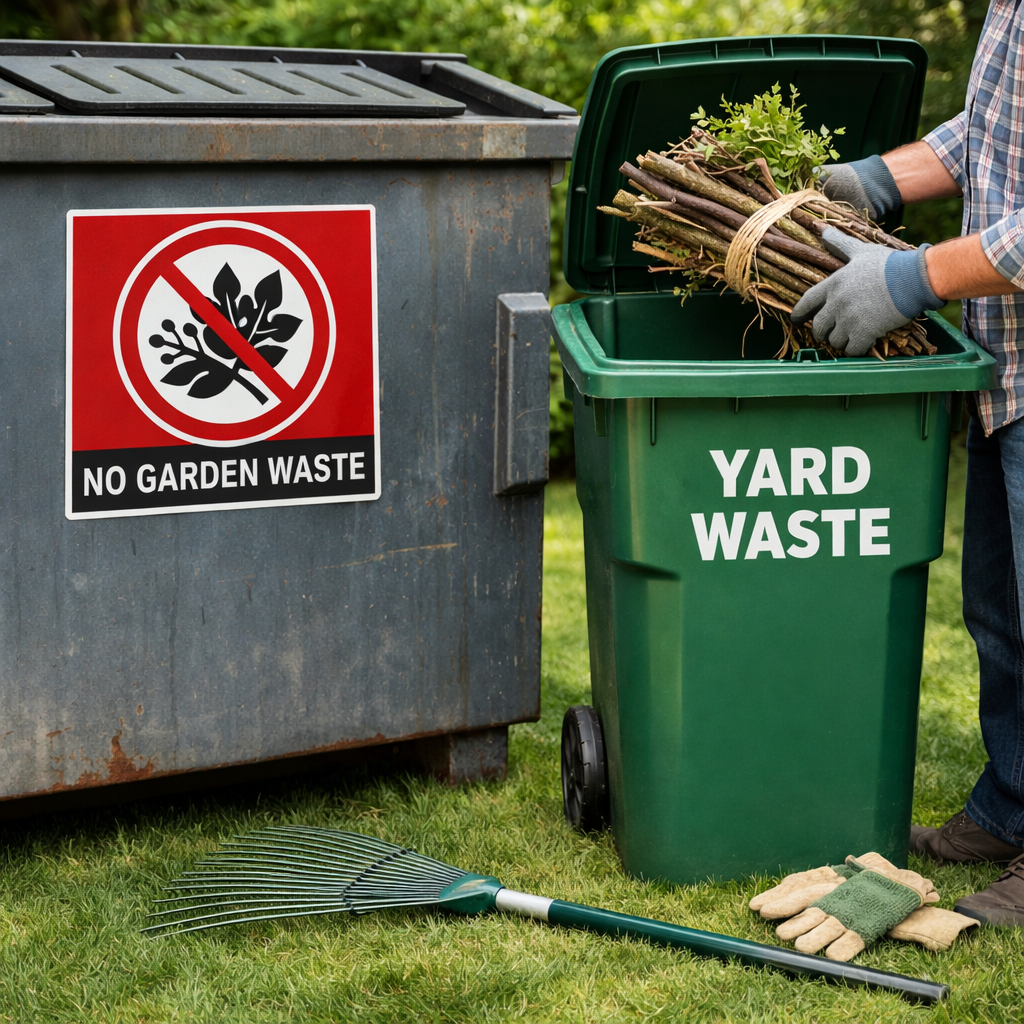
How to Dispose of Yard Waste Without Contamination Fees in Dumpsters
A clean load is a cheap load. To dispose of yard waste without contamination fees, keep organics separate from trash, prep materials to your hauler’s specs, and stay under the dumpster’s weight and fill limits. Start by checking local rules, then confirm what your rental allows, including whether stumps, dirt, or sod are acceptable and under what conditions. Bag leaves in paper yard bags if required, cut and bundle branches, and keep plastics and treated wood out of organic streams. Monitor both volume and tonnage to avoid overage charges. The payoff: faster pickup, fewer surprises, and lower costs. At Garbage Advice, this playbook keeps bills predictable.
Know your local yard waste rules
Most cities run municipal yard waste pickup on set schedules and often require paper yard-waste bags, not plastic, so materials can be composted instead of landfilled, as noted in BigRentz’s yard waste guide. Paper bags and proper prep keep fees down and help your load get accepted the first time (see BigRentz’s yard waste guide: https://www.bigrentz.com/blog/disposing-yard-waste).
If curbside options are limited, check local yard waste drop-off sites. Many convert leaves and branches into mulch or compost, but they enforce hours, size limits, and prep rules—some also charge modest fees (see Troupe Waste’s drop-off guidance: https://troupewaste.com/how-to-get-rid-of-yard-waste-in-effective-ways/).
In practical terms, yard waste includes branches, brush, grasses, weeds, leaves, and tree trimmings, and often untreated, unpainted wood and Christmas trees; programs vary by city, so confirm locally (see Budget Dumpster’s yard waste guide: https://www.budgetdumpster.com/resources/how-to-dispose-of-yard-waste.php).
Quick ways to align with local expectations:
- Look up municipal yard waste pickup days and bagging rules.
- Confirm drop-off locations, fees, and acceptable materials.
- Ask about community composting program options for leaves and brush.
Garbage Advice’s residential pickup scheduling guide helps you plan around municipal collection windows.
Confirm what your dumpster rental allows
Policies differ by hauler and disposal site. Some accept yard waste (including stumps) in a dedicated bin; others limit materials like dirt or sod to “clean” loads only. Soil with contaminants can require lab analysis such as a TCLP test before disposal, and some sites don’t accept soil at all—always verify acceptance before ordering (see Frontier Waste’s dumpster rental page: https://frontierwaste.com/fort-worth-trash-pickup-services/dumpster-rental-fort-worth-tx/).
Standard roll-off dumpster sizes and typical dimensions:
- 20-yard: about 4’H x 8’W x 20’L — fits heavy debris and mid-sized cleanups.
- 30-yard: about 6'2"H x 8’W x 20’L — suited to larger renovations and yard overhauls.
- 40-yard: about 7'5"H x 8’W x 20’L — best for big construction, storm debris, or major landscaping.
A quick selection checklist:
- Estimate your debris in cubic yards and ask which roll-off dumpster sizes are available.
- Confirm the dumpster weight limit and the per-ton overage rate.
- Get a written list of prohibited items (e.g., plastic bags, treated wood, contaminated soil) and any special rules for yard waste acceptance (see New South Waste’s rental checklist: https://newsouthwaste.com/waste-management-insights-choosing-the-right-dumpster-rental-service/).
Garbage Advice’s same-day vs. next-day delivery tips can help you match size and timing to your project.
Prepare yard waste to meet acceptance standards
Preparation is the difference between “accepted” and “assessed.” Remove non-organics like plastic twine, metal stakes, and labels from branches and brush. Shake off excess soil and rocks; many facilities either reject dirt or charge extra for it, and some accept only clean, uncontaminated soil (see Troupe Waste’s drop-off guidance: https://troupewaste.com/how-to-get-rid-of-yard-waste-in-effective-ways/). Cut and bundle branches to manageable lengths to streamline pickup and processing, and use paper yard bags if required locally (see BigRentz’s yard waste guide: https://www.bigrentz.com/blog/disposing-yard-waste).
Material prep at a glance:
| Material | Prep requirements | Accepted/Not accepted |
|---|---|---|
| Leaves | Keep dry when possible; use paper yard bags where required | Often accepted |
| Branches/brush | Cut to manageable lengths; bundle with natural twine | Often accepted |
| Stumps | Cut down to size; remove soil/rocks; check weight restrictions | Accepted by some |
| Dirt/sod | Must be clean, free of rocks/roots; some sites don’t accept | Limited/varies |
| Treated/painted wood | Do not include with organics; dispose as C&D debris | Not accepted |
Keep loads separate to prevent contamination charges
The number-one rule everywhere: don’t mix yard waste with garbage or recycling. Mixed loads are frequently billed at higher garbage rates, and contamination can trigger reloading or rejection at the facility.
Practical separation tips:
- Stage yard waste in a dedicated area before loading.
- Inside the bin, keep a clear organic section and avoid tossing in trash, plastic, or metal.
- Never add painted/treated wood, plastic bags, or metal with yard debris (see Troupe Waste’s drop-off guidance: https://troupewaste.com/how-to-get-rid-of-yard-waste-in-effective-ways/).
Do Not Mix list:
- Plastic bags, tarps, and landscape fabric
- Treated/painted/laminated wood
- Metal edging, fencing, staples
- Dirt with contaminants or rocks
Load the dumpster strategically to avoid overages
Fees come from two places: weight and volume. Keep material below the overfill line/sidewalls and distribute weight evenly to meet the dumpster weight limit. Make sure the driver can safely tarp the load. Many haulers add overfill or trip fees if they can’t service the bin (see Budget Dumpster’s Fort Worth rental terms: https://www.budgetdumpster.com/fort-worth-tx-dumpster-rental-texas.php).
Recommended loading order:
- Bottom: heavier organics (wet leaves, short logs) spread evenly.
- Middle: bundled branches stacked lengthwise to reduce voids.
- Top: loose leaves and small clippings, ideally in paper bags.
Before delivery or pickup, clear vehicles and low-hanging obstacles to prevent access issues and extra charges (see Budget Dumpster’s Fort Worth rental terms: https://www.budgetdumpster.com/fort-worth-tx-dumpster-rental-texas.php).
Use lower cost alternatives to dumpsters when possible
You may not need a dumpster at all. Many communities offer curbside yard waste recycling or community compost programs that turn organics into mulch or compost for residents (see Budget Dumpster’s yard waste guide: https://www.budgetdumpster.com/resources/how-to-dispose-of-yard-waste.php). Drop-off sites can be cost-effective too, but always check hours, limits, and prep rules (see Troupe Waste’s drop-off guidance: https://troupewaste.com/how-to-get-rid-of-yard-waste-in-effective-ways/).
On-site processing can pay for itself:
- Rent a wood chipper to convert branches and leaves into mulch; rentals commonly start around $70/day, cutting transport and disposal costs (see Budget Dumpster’s yard waste guide: https://www.budgetdumpster.com/resources/how-to-dispose-of-yard-waste.php).
- Keep organics out of landfills when possible; decomposing yard waste can release methane, a potent greenhouse gas, whereas composting captures value and reduces emissions (see Veransa’s sustainability overview: https://veransa.com/5-sustainable-ways-to-dispose-of-yard-waste/).
Garbage Advice generally recommends curbside or community compost first when those options meet your timeline and volume.
Document and communicate to avoid disputes
Protect your budget with simple documentation:
- Get terms in writing: accepted materials, size and weight caps, contamination fees, and pickup conditions.
- Take timestamped photos before pickup showing separation and fill level; this evidence can resolve a contamination dispute quickly.
- Confirm final pickup timing and clear access; blocked bins often incur trip fees (see Budget Dumpster’s Fort Worth rental terms: https://www.budgetdumpster.com/fort-worth-tx-dumpster-rental-texas.php).
This straightforward documentation is standard practice we recommend at Garbage Advice on every rental.
Safety and legality cautions for yard debris disposal
If yard waste burning is legal in your area, do it only with a 10-foot radius of gravel or bare soil cleared around the fire and water ready to extinguish—then verify permits and wind conditions first (see BigRentz’s yard waste guide: https://www.bigrentz.com/blog/disposing-yard-waste). Keep piles off streets; clippings and leaves that wash into storm drains add nutrients and can pollute streams, so contain materials on your property (see Pinal County’s residential guidelines: https://www.pinal.gov/888/Residential).
For cutting and chipping, wear eye and ear protection, gloves, and secure footwear. Follow the rental manual and never feed material with hands near infeed rollers.
How this fits with Garbage Advice’s painless, scentless waste approach
The same habits that keep your yard load clean—separation, dry storage, and swift routing to compost or pickup—keep kitchens odor-free by reducing what goes in the trash or down the disposal. For smarter indoor systems, see our guide to residential trash pickup scheduling (https://www.garbageadvice.com/posts/residential-trash-pickup-scheduling-what-to-expect-and-common-mistakes/), and get ahead of projects with our same-day vs. next-day dumpster delivery tips (https://www.garbageadvice.com/posts/same-day-vs-next-day-dumpster-delivery-with-bin-there-dump-that/). If your home uses a septic system, review our septic-system compatibility basics before relying on a disposal (https://garbageadvice.com/old-types-of-septic-systems/). For quiet, odor-controlled kitchens, explore our garbage disposal reviews and buying guides (https://www.garbageadvice.com/).
Frequently asked questions
Can I mix yard debris with other waste in a rental bin?
Usually no. Garbage Advice recommends asking for a yard-waste-only bin and keeping organics separate to avoid contamination or garbage-rate fees.
What counts as yard waste and what is prohibited?
Yard waste typically includes branches, brush, grasses, weeds, leaves, tree trimmings, and often unpainted, untreated wood or Christmas trees; plastics, metals, treated/painted wood, rocks, and contaminated soil are usually prohibited. Garbage Advice suggests confirming the list with your local program or hauler.
Do I need to bag leaves and bundle branches for dumpsters?
Many programs require paper yard bags for leaves and bundled branches cut to manageable lengths. Confirm your hauler’s rules; Garbage Advice’s rule of thumb is paper bags for leaves and cut-and-bundle for branches.
How do weight limits and overage fees work?
Each dumpster has volume and tonnage caps; exceeding sidewalls or weight limits can add overage or trip fees. Garbage Advice recommends loading evenly and watching the overfill line.
Is burning yard waste ever allowed?
Sometimes, but only where codes permit and with strict safety steps like a clear 10-foot radius and water on hand. Garbage Advice generally steers people to curbside pickup, drop-off, or chipping instead.