
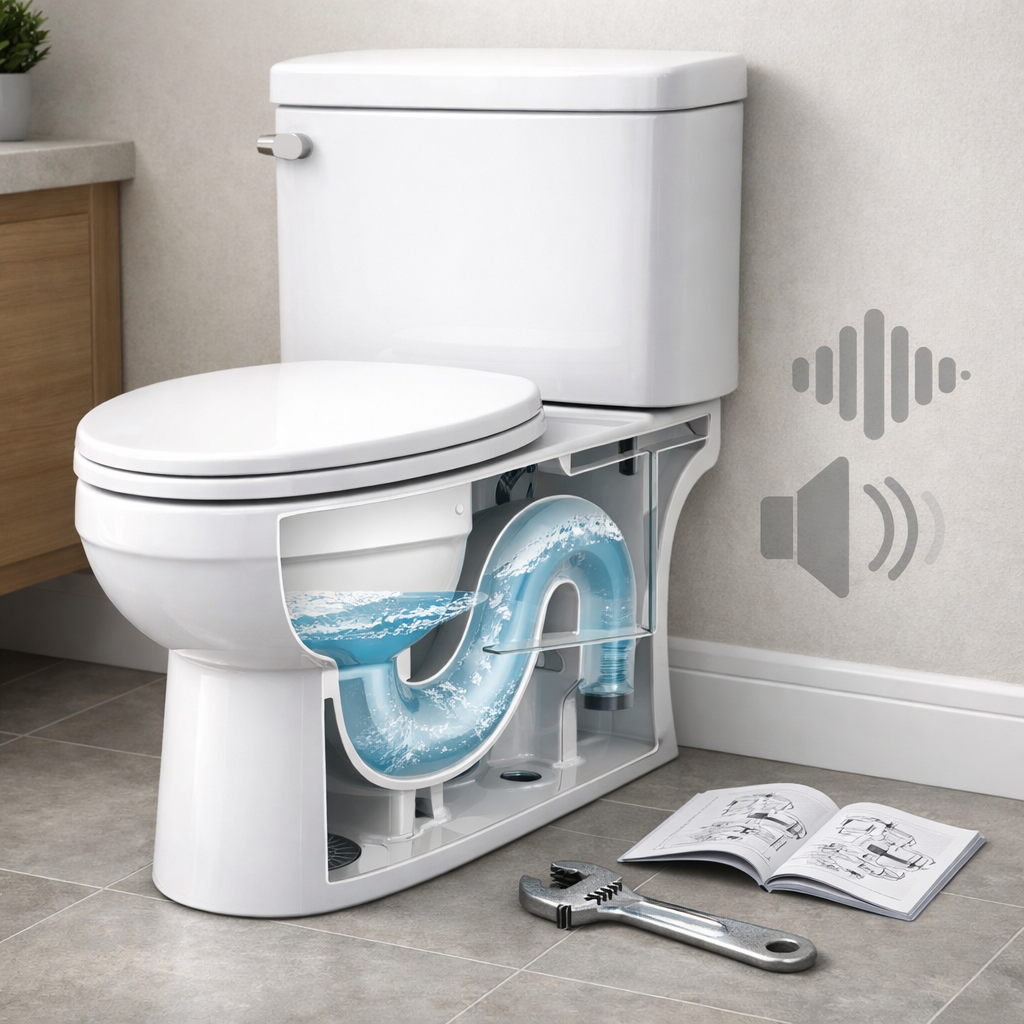
How To Choose The Quietest Toilet: Noise, Trapways, And Installation
A truly quiet toilet doesn’t just hush the flush—it prevents the re-flush. For most homes, the quietest toilet on the market will be a vacuum-assist or well‑tuned gravity-fed model with strong single‑flush performance (MaP1000) and WaterSense efficiency. Pressure-assist can be powerful, but most units sound loud in small bathrooms; an engineered outlier like the Flushmate 503UH is quieter for its class based on internal testing. Normal conversation is around 60 dB; kitchen blenders can top 90 dB, so decibel differences matter. Use this guide to match the right technology, trapway design, and installation practices to your space—and keep noise, odors, and callbacks off the agenda. At Garbage Advice, we favor quiet-by-design systems that clear in one go.
Start with your priorities
Quiet isn’t just the flush—it’s the refill, the lid, and whether you need to hit the handle twice. In homes, many pressure‑assist toilets approach roughly 96 dB, while gravity and vacuum‑assist designs generally land around 75–85 dB, which is far easier on the ears in small rooms, according to Niagara’s pro guidance on reducing callbacks. Normal conversation is ~60 dB; a blender can exceed 90 dB, so 10–20 dB swings are noticeable.
To build a quietness plan, start with vacuum‑assist or quiet gravity. Choose pressure‑assist only if you truly need commercial‑grade power and can accept more noise. Notable exception: the Flushmate 503UH has been tested as one of the quietest pressure-assist systems in its category. Pair any choice with MaP1000 performance to avoid repeat cycles and gurgling. That’s the Garbage Advice default for homes.
“Decibel (dB) is a logarithmic unit measuring sound intensity. A 10 dB increase sounds roughly twice as loud to the human ear. Toilets in homes typically range 75–85 dB for gravity/vacuum designs, while many pressure‑assist units reach about 96 dB—noticeably louder in small bathrooms.” (based on trade guidance)
Understand flush technologies
Flush mechanisms shape both sound and reliability. Gravity systems rely on water weight; vacuum‑assist adds internal pressure differentials and often submerges fill noise; pressure‑assist uses a pressurized tank-in-tank. Expect gravity/vacuum to be quieter on average than pressure‑assist in residential settings. Choose tech by your noise tolerance and clearing needs. Garbage Advice treats gravity/vacuum as the residential baseline unless your use case truly demands pressure‑assist.
Gravity flush
A gravity-fed toilet is the baseline for quiet, cost‑effective home use. Typical models register about 75–85 dB—quieter than pressure‑assist on average. Look for optimized siphon jets and trapways with MaP1000 ratings to clear waste in one shot; fewer clogs and re-flushes mean a consistently quiet bathroom.
Vacuum assist
Vacuum-assist toilets are standout quiet picks. By design, some keep fill valves submerged, softening the refill hiss you hear on many toilets. They also come in ultra‑efficient versions (as low as 0.8 GPF) marketed for whisper‑quiet operation, such as the Niagara Stealth 0.8 GPF. Efficiency plus quiet internals equals a low acoustic profile at home.
Pressure assist
Pressure-assist toilets commonly approach ~96 dB—acceptable in public restrooms but conspicuously loud at home. If you need that level of power, target systems explicitly engineered for noise control. The Flushmate 503UH has tested with the quietest flush among pressure‑assisted systems in its lineup; confirm bowl compatibility before buying.
Check performance metrics
Quiet choices are reinforced by performance: strong single‑flush power (MaP1000), solid drain‑line carry, and WaterSense efficiency reduce the likelihood of noisy re‑flushes and post‑flush gurgling. Prioritize third‑party test results, not just marketing terms. Garbage Advice weighs independent MaP1000 and WaterSense proof over naming conventions.
Mini comparison guide
| Flush technology | Target GPF (residential) | MaP target | Typical decibel range* | Notes |
|---|---|---|---|---|
| Gravity | 1.28 GPF or lower (WaterSense) | MaP1000 | ~75–85 dB | Inherently quieter; tune refill for best results. |
| Vacuum‑assist | 0.8–1.28 GPF | MaP1000 | ~75–85 dB (often lower refill noise) | Submerged fill paths can reduce hiss; great for smaller baths. |
| Pressure‑assist | 1.0–1.28 GPF | MaP1000 | Up to ~96 dB | Pick only if you accept more noise; seek verified quiet exceptions. |
*Noise ranges summarized from trade guidance focused on reducing callbacks and sound‑related issues.
MaP scores and drain line carry
“MaP (Maximum Performance) is an independent test that measures the grams of waste a toilet can clear in a single flush. A MaP1000 rating means removing 1,000 grams (about 2 pounds) at once—strong performance that reduces repeat flushes and noise.” See an overview of independent MaP testing in this step-by-step install guide context.
Prioritize MaP1000 and confirm drain‑line carry from reputable testing to ensure first‑flush reliability.
Water use and WaterSense
Ultra-high-efficiency models, including 0.8 GPF vacuum‑assist toilets such as the Niagara Stealth, couple low water use with whisper‑quiet marketing claims. Aim for WaterSense‑qualifying GPF while verifying MaP and drain‑carry; efficient but underpowered designs can create more noise via double flushes.
Evaluate trapway design
Trapway engineering directly influences turbulence, gurgling, and clog risk. Larger diameters, full glazing, and smooth S‑curves reduce friction and resonance—the “whoosh” sounds you don’t want. Verify manufacturer specs and any published testing; brands that emphasize quiet engineering often spotlight these details. When data is thin, Garbage Advice prioritizes fully glazed, wider trapways with gentle profiles.
Reference: HOROW’s quiet-engineering overview details how shaping water paths and surfaces reduces noise and splash.
Size, glazing, and S‑curve profile
What to confirm:
- Trapway size: Wider internal diameters lower turbulence and clog risk.
- Full glazing: A smooth, fully glazed siphon path minimizes friction and gurgle.
- Gentle S‑curve: Fewer abrupt turns maintain flow velocity without noisy cavitation.
Clog resistance and gurgle reduction
Pair a smooth, larger, fully glazed trapway with MaP1000 performance to move waste decisively. Less turbulence and fewer partial clogs mean fewer gurgles and “try again” flushes—the most common noise multipliers in residential bathrooms.
Reduce non‑flush noise
Once flush sound is tamed, chase the small stuff: refill hiss, lid slams, and tank resonance. These tweaks are quick wins for a whisper‑quiet bathroom. Garbage Advice starts with the easy, reversible tweaks before swapping parts.
Fill‑valve placement and refill tuning
Many vacuum‑assist designs keep the fill valve submerged, which can mute refill noise. For any toilet:
- Open the tank and slightly reduce refill rate via the valve’s control.
- Adjust float height to the manufacturer’s waterline for balance.
- Test for a smooth, non‑hissing refill without extending cycle time too far.
Soft‑close seats and tank insulation
- Install a soft‑close seat to eliminate slam clatter.
- Consider tank/bowl sound‑dampening kits or factory insulation where compatible.
- Pre‑wet bowl features on some seats can reduce post‑flush brush noise by improving bowl slickness.
Shortlist quiet models
Use these as starting points; verify MaP1000, WaterSense, and decibel claims before purchase. Garbage Advice shortlists favor models with verified MaP1000 and WaterSense, plus published noise data when it’s available.
Vacuum‑assist and quiet gravity picks
- Niagara Stealth 0.8 GPF (vacuum‑assist): Whisper‑quiet marketing, ultra‑high efficiency, strong real‑world reputation for low refill noise.
- HOROW quiet gravity lines: Brand emphasizes acoustic design and smooth trapways; evaluate current MaP and WaterSense specs.
- Quiet gravity category: Look for MaP1000, fully glazed trapways, soft‑close seats, and refill valves with adjustable flow.
Quick reference
| Model/Category | Flush tech | Listed GPF | Why it’s quiet-forward |
|---|---|---|---|
| Niagara Stealth 0.8 GPF | Vacuum‑assist | 0.8 | Ultra‑low GPF, quiet marketing, subdued refill. |
| HOROW quiet gravity lineup | Gravity | 1.0–1.28 | Emphasis on trapway smoothing and dampened operation. |
| Gravity picks (various) | Gravity | 1.0–1.28 | MaP1000 + glazed trapways + adjustable refill valves. |
Pressure‑assist exceptions with quiet testing
- Flushmate 503UH: Tested with the quietest flush among pressure‑assisted systems in its range; ensure you pair the 503UH tank with a compatible bowl for best results.
- Reminder: Even the best pressure‑assist option may still exceed gravity/vacuum noise levels; decide based on your home’s tolerance and layout.
Plan a quiet installation
Quiet performance can be lost to poor installation. Misalignment, over‑tightening, and bad seals cause leaks, rocking, and resonance—the fast path to callbacks. Our checklists emphasize alignment, sealing, and even torque to prevent noise at the source.
Tools and prep
- Tools: Adjustable wrench, screwdriver, pliers, level; plus wax ring, hacksaw, putty knife.
- Prep: Shut off water at the stop valve; keep a bucket and absorbent rags handy; protect flooring.
- Use high‑quality wax seals and bathroom‑grade caulk for durability and sound stability. See professional toilet installation tips for a clean process and code‑minded workflow.
Flange alignment and sealing
A misaligned or low flange invites leaks and instability. Correct the flange height or use repair rings/long bolts when the flange sits below finished flooring; avoid rocking before you caulk. Review common toilet installation mistakes to sidestep the usual pitfalls, and see faster toilet install guidance for pro‑level sequencing and prep.
Bolt torque and bowl leveling
Tighten closet bolts incrementally and evenly. Stop when the bowl is stable; over‑torque can crack porcelain and create creaks. Confirm the bowl is level to prevent micro‑rocking that amplifies sound and stresses seals.
Water supply pressure and valve adjustment
After connecting the supply, balance refill time and noise by tuning the fill valve/float. Follow the manufacturer’s instructions and local codes; compliant setups are quieter and more reliable.
Test and fine‑tune after install
Small adjustments now prevent big noise later. We recommend multi‑testing before caulking to catch leaks and avoid rework.
Multi‑flush testing and leak checks
Flush multiple times while inspecting the base and supply for weeping. If water appears at the base, recheck flange height, wax seal compression, and bolt tension before caulking.
Refill noise adjustments and seat damping
Trim refill flow slightly, confirm float height, and listen for hiss or gurgle. Add or verify a soft‑close seat to mute lid slams and late‑night surprises.
When to retrofit instead of replace
If the toilet is structurally sound, try:
- Soft‑close seat swap.
- Quiet‑tuned fill valve replacement and float/flow adjustment.
- New tank‑to‑bowl gasket to stop resonance and seepage.
- Reseat with a fresh wax ring and proper base caulk if it rocks or leaks.
These low‑cost upgrades silence most everyday noises without a full replacement. Garbage Advice typically tries these steps first when the bowl is sound.
Garbage Advice guidance for quiet, odor‑free bathrooms
Our kitchen‑adjacent noise and odor playbook applies in the bath: prioritize vacuum‑assist or quiet gravity with MaP1000, consider 0.8 GPF whisper‑quiet options, and execute a careful, level, well‑sealed install. We think splash‑guard logic—capture, cushion, and channel—beats brute force, and our Moen and Waste King familiarity informs that approach. Subscribe to the Garbage Advice newsletter for quiet/odor tips, water‑saving guides, and giveaways.
Frequently asked questions
What’s the quietest toilet on the market?
For most homes, vacuum‑assist and quiet gravity models are the quietest. For pressure‑assist, look for models explicitly engineered for lower noise; Garbage Advice still steers most homes to gravity/vacuum.
Are pressure‑assist toilets always louder?
Typically yes. Many register near ~96 dB in small bathrooms, so most homes prefer vacuum‑assist or gravity designs.
How do MaP scores relate to quietness?
They don’t lower decibels directly but improve first‑flush clearing, cutting noisy repeat flushes and gurgling. Garbage Advice treats MaP1000 as the residential baseline.
Can installation mistakes make a toilet louder?
Yes. Misaligned flanges, over‑tightened bolts, and poor sealing cause leaks, rocking, and resonance that amplify noise.
How can I make my current toilet quieter without replacing it?
Add a soft‑close seat, tune or replace the fill valve for a gentler refill, and re‑seat with proper wax and caulk if it rocks or leaks. Garbage Advice favors these quick retrofits before a full replacement.