
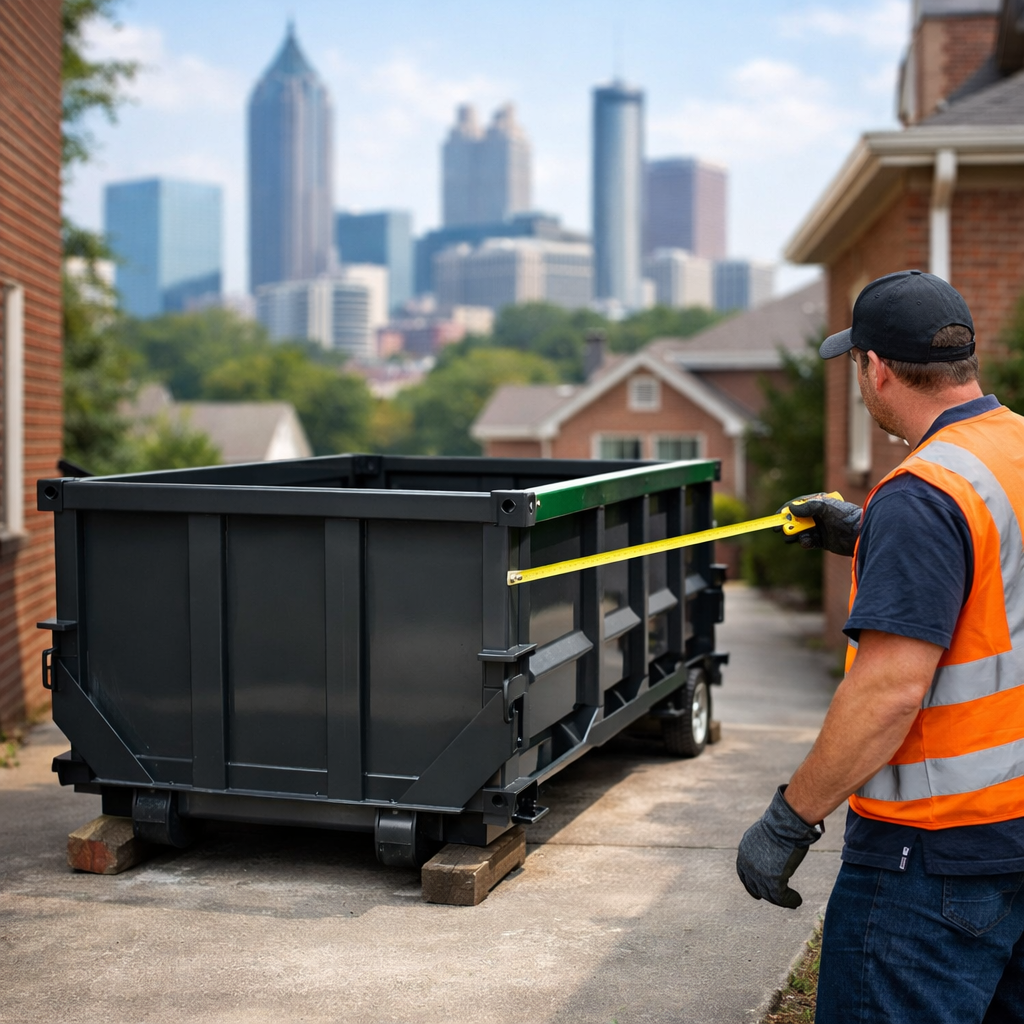
How to Choose Clean, Space-Saving Dumpster Rentals in Atlanta
Looking for clean, compact dumpster rentals in Atlanta? Focus on driveway-safe roll-off containers in the 10–20 yard range, transparent flat-rate dumpster pricing, and providers that document clean delivery and responsible disposal. In tight intown driveways and alleys, prioritize compact footprints, careful placement, and quick swap-outs. Most rentals follow a simple flow—reserve, deliver, fill, and pickup—with same-day options available from many Atlanta fleets, especially outside peak weekends. To choose confidently, right-size your bin to your waste stream, measure access before booking, and compare quotes line-by-line with weight limits and fees clearly spelled out. Garbage Advice’s checklists can streamline sizing, access checks, and apples-to-apples pricing comparisons.
Define your project scope and waste stream
Start by estimating how much you’ll toss. A quick mental model: one pickup truck load equals about 2–3 cubic yards, so tally your pickup-load equivalents, then map to 10/20/30/40-yard sizes using a local provider’s chart, as outlined in Green Bay Dumpsters’ guide to sizing and pricing (delivery, pickup, and weight are often bundled). Accurate estimates help you avoid paying for excess capacity—or needing an extra haul—once work begins. Garbage Advice recommends right-sizing early to prevent mid-project delays.
List materials by type (wood, drywall, concrete, appliances, yard waste) and apply density: heavy debris hits weight limits fast, while bagged junk or cardboard is bulky but light. “Waste stream” is the full mix of materials you’ll discard during a project. Identify items by category (construction debris, household junk, organics, electronics, hazardous) to select legal, cost-efficient disposal, reduce contamination risk, and qualify for recycling options. Mixing hazardous with non-hazardous waste can trigger fines and rejections at the facility, according to Maggio Environmental’s rental guide. Garbage Advice recommends separating hazardous items at the source.
Project-to-size quick hits:
| Project type | Typical waste | Best-fit size |
|---|---|---|
| Small room cleanout | Mixed light debris | 10-yard |
| Kitchen remodel | Mixed C&D (cabinets, counters, drywall) | 20-yard |
| Major home remodel | Bulky mixed C&D | 30-yard |
| Whole-house cleanout | Mixed light-to-medium debris | 20–30 yard |
| Concrete/brick removal | Heavy inert debris (weight-limited) | 10-yard (HD) |
Accurately matching debris type and volume prevents overspending or mid-project overflow—two of the most common rental mistakes noted in industry guides.
Measure your space and confirm placement rules
Prevent delivery-day surprises by measuring the space and access—especially in older intown neighborhoods.
- Measure driveway length, width, and slope; confirm a straight approach path.
- Check overhead clearance for the tilt-bed truck (branches, lines, carports).
- Note weather impacts: rain can soften ground or block alleys; plan alternate spots and timing per LJP Waste Solutions’ homeowner guide.
- Respect HOA rules and property lines.
“Right-of-way” is the public area—like streets and sidewalks—where city permits may be required to place equipment. If any portion of the dumpster or delivery truck blocks this space, verify permit needs before booking. Garbage Advice’s placement checklist covers these constraints for typical Atlanta lots.
Quick placement checklist:
- Measure straight-line access and turning radius.
- Confirm vertical clearance end-to-end.
- Photograph the intended spot for your dispatcher.
- Ask the provider to verify suitability before dispatch.
Pick a compact size that fits tight Atlanta sites
Choose the smallest bin that reliably contains your debris and fits the approach.
- Size ladder: 10, 20, 30, and 40 cubic yards are the most common options, per top considerations from DJS Property Maintenance.
- 10-yard: best for small room cleanouts and minor residential projects.
- 20-yard: the versatile pick for kitchen remodels and garage cleanouts; in Atlanta, a 20-yard roll-off often holds roughly six pickup truck loads, according to an Atlanta rental overview.
- 30-yard: major home remodels or multi-room updates.
- 40-yard: large construction and commercial jobs.
Aim for compact roll-off units for dense neighborhoods and shared driveways; a short 10- or 20-yard can navigate narrow approaches better than taller, longer boxes. “Roll-off dumpster” is a temporary open-top container delivered on a specialized truck and rolled off at your site. It’s ideal for renovations or major cleanouts where short-term, high-capacity disposal is needed. For intown Atlanta sites, Garbage Advice typically favors shorter 10- and 20-yard footprints when access is tight.
At-a-glance size-to-loads chart:
| Size (cubic yards) | Approx. pickup-loads | Common uses |
|---|---|---|
| 10-yard | ~3 loads | Small cleanouts, flooring, small sheds |
| 20-yard | ~6 loads | Kitchens, garages, roofing (light/mixed) |
| 30-yard | ~9 loads | Major remodels, multi-room cleanouts |
| 40-yard | ~12 loads | Large renovations, commercial debris |
Compare pricing models and avoid hidden fees
Dumpster pricing generally includes delivery, pickup, disposal, and a rental period. Some quotes charge per ton; others offer flat rates with a weight allowance, as detailed in Green Bay Dumpsters’ guide to sizing and pricing.
Ask for itemized quotes that list:
- Base price and included weight
- Overage per ton and contamination fees
- Rental days, extension fees, and swap-out charges
- Permit assistance (if you’ll use the street/sidewalk)
Overloading above the rim or mixing prohibited items often triggers extra handling and disposal charges, noted by Maggio Environmental’s rental guide. Garbage Advice recommends confirming all surcharges and weight allowances in writing.
Which pricing model fits?
| Debris type | Flat-rate (typical) | Per-ton (typical) |
|---|---|---|
| Light household junk | Predictable, easy budgeting | Often cheaper if your load is very light |
| Mixed C&D (short job) | Simple for week-long remodels with varied materials | Can work if you control weight and sort carefully |
| Heavy debris (concrete) | Risk of hitting weight cap; ask for “heavy” bins | Cost-effective if billed strictly by ton |
Verify cleanliness, recycling, and documentation standards
“Clean” goes beyond tidy containers—it means cleaner trucks, protected loads, and verifiable end disposal.
- Ask about recycling policies and partnerships with certified facilities; responsible diversion starts at the truck scale, as emphasized in industry sizing and recycling guidance.
- Confirm prohibited items and hazardous handling to avoid fines or load rejections; Maggio Environmental’s rental guide outlines common restrictions.
- Prefer vendors that provide photo documentation at delivery and pickup, and that tarp or otherwise secure loads to prevent litter and claims.
- Tech-enabled providers offering GPS tracking, driver photo uploads, and real-time order updates add transparency; see a roundup of rental software for the feature set many dispatchers use.
Garbage Advice values operators that secure every load and make end-of-life handling verifiable.
Book smart and prep the site for a clean delivery
- Book earlier for spring and summer peaks to secure your preferred window; weather can affect placement and accessibility (LJP Waste Solutions’ homeowner guide).
- Many Atlanta providers can accommodate same-day service thanks to local fleets and route density, per an Atlanta rental overview. For timing strategies, compare same-day vs. next-day delivery in Garbage Advice’s quick guide.
- Prep the site:
- Clear vehicles and obstacles.
- Protect driveways with boards or pads for a driveway-safe dumpster placement.
- Stage materials for safer, faster loading.
- Confirm a rain plan for soft ground or steep slopes.
Use vendors with real-time ETAs and order management tools to reduce wait time and simplify swap-outs—features common in modern dispatcher platforms. Garbage Advice favors providers that offer this visibility.
Load efficiently to maximize space and stay under limits
- Load order: place flat, heavy items first, then lighter materials on top; fill gaps to maximize capacity—an approach echoed in Carter’s Hauling tips.
- Keep debris below sidewalls to avoid overloading penalties and retrieval issues highlighted by Maggio Environmental’s rental guide.
- For ongoing renovations, schedule weekly or bi-weekly pickups to prevent overflow and improve site safety, as noted in LJP Waste Solutions’ homeowner guide.
- Special handling:
- Electronics and hazardous materials require designated disposal streams.
- Closed-lid units work well for recurring business waste and odor control.
Garbage Advice’s load plan focuses on safety, capacity, and staying under limits.
Tie dumpster choice to kitchen and disposal best practices
For kitchen remodels, a 20-yard roll-off fits cabinetry, countertops, and appliance removal while still maneuvering into tight Atlanta driveways. Plan metal and appliance recycling where applicable, and consider a short swap-out if demolition overlaps with install.
Keep the new kitchen cleaner and quieter:
- Use splash guards to reduce mess during sink-side cleanup.
- Choose a quiet, powerful garbage disposal; confirm septic-system compatibility if applicable.
- For ongoing upkeep, see Garbage Advice’s guide to residential trash pickup scheduling to avoid bin overflow between project phases.
Comparing rental timing? Garbage Advice’s breakdown of same-day vs. next-day delivery can help you align the drop with demo start and coordinate crew access.
Frequently asked questions
What dumpster size fits a narrow driveway or intown alley?
For tight residential spaces, 10–20-yard roll-offs are the most manageable; a 10-yard suits small cleanouts, while a 20-yard often fits kitchen remodels and garages and still navigates narrow approaches. Use Garbage Advice’s sizing tips to confirm fit.
Do I need a permit to place a dumpster at my Atlanta home?
Generally, you won’t need a permit for private driveways, but permits are typically required if the bin occupies a public street or sidewalk; check local rules or HOA guidelines before delivery. Garbage Advice’s placement checklist summarizes common Atlanta requirements.
How much clearance is required for delivery and pickup?
Ensure a long, straight approach and generous vertical clearance for the truck’s tilt-bed; clear overhead lines and branches and keep the area level so drivers can safely roll off and retrieve the bin. Garbage Advice’s pre-delivery checklist walks you through it.
How long can I keep the dumpster, and can I extend?
Standard rentals run about a week, with flexible extensions or swap-outs available; book early in peak seasons and request more days before your end date to avoid penalties. Garbage Advice can help you plan extensions and swap-outs.
How do I keep the bin clean and avoid overage or contamination fees?
Load evenly below the rim, stay within the included weight, and never mix hazardous with regular debris. Check prohibited items and recycling options with your provider—or use Garbage Advice’s lists—to prevent fines.