
How to Choose a Dumpster Company That Guarantees No Driveway Damage
A safe bin rental starts before the truck arrives. If you’re asking who provides bins with no driveway damage guarantees, the real answer is: the companies that pair the right equipment (hooklift or rubber-wheeled), proven surface protection (plywood/dunnage), and clear, written policies. In this guide, we’ll show you how to verify those protections up front, match bin size to your project’s weight, and document conditions so you can rent confidently and avoid liability. You’ll also find practical prep checklists, what to ask about insurance and overage pricing, and when to choose street placement or residential-length containers for tight spaces. Garbage Advice pulls these protections into simple, step-by-step checks so you can book with confidence.
Understand driveway risks and materials
“Point loading” concentrates the dumpster’s weight onto small contact areas (wheels/rails), which can crack or gouge pavement, especially near edges or joints. Filled dumpsters can exceed 10,000–20,000 pounds, raising surface stress dramatically, so protective underlayment and centered placement matter a lot (see driveway protection best practices from Rainier Dumpster Rental). Garbage Advice emphasizes centered placement and load-spreading to cut point loading at the source.
A typical 20-yard roll-off weighs about 4,000–6,000 pounds empty and can surpass 10,000–20,000 pounds when full; that’s why central placement on a solid concrete slab beats parking on slab edges, control joints, or pavers that can shift under load (Rainier’s driveway guide).
Surface notes:
- Concrete is strongest but still vulnerable at edges/joints and during freeze-thaw cycles.
- Asphalt softens in heat—fresh or warm asphalt marks easily under rails and wheels.
- Pavers and brick need extra load-spreading; individual units can settle or chip.
- Steel wheels/rails can scratch during delivery/pickup without protection (see E&J Disposal’s driveway tips).
Match container size to your project and weight profile
Pick sizes by debris density, not just volume. For heavy materials like concrete, dirt, brick, or shingles, go smaller so you remain under weight caps and reduce surface stress (DD Waste’s residential guidance; Arrowaste’s driveway protection advice). Ask about residential-length containers (e.g., ~14-foot bodies for 10–20-yard bins) to fit tight driveways and allow centered placement (DragonDrop’s rental checklist). Garbage Advice’s guides favor smaller bins for dense debris to protect slabs and stay under caps.
Common sizes and limits
| Size | Typical uses | Approx. footprint length | Typical included tonnage |
|---|---|---|---|
| 10 yd | Bathroom demo, heavy debris (concrete, dirt, roofing) | 12–14 ft | 1–2 tons |
| 15 yd | Small remodels, decluttering, shingles | 14–16 ft | 2–3 tons |
| 20 yd | Medium remodels, garage cleanouts, light construction | 16–22 ft | 2–4 tons |
Note: Declare your materials upfront so the provider can set accurate tonnage limits and advise on heavy-load strategies.
Confirm the truck and delivery method
Hooklift trucks place containers by lifting and setting—no dragging—so they avoid scraping rails across your driveway, work better under trees or wires, and many are single-axle/lightweight for residential jobs (DragonDrop’s guidance). Traditional cable roll-off systems often drag rails and typically need more clearance.
Quick comparison:
- Hooklift/single-axle: lighter footprint, precise set-down, driveway-friendly, better low-clearance access.
- Cable roll-off: heavier chassis, rail-drag risk, more approach/overhead clearance needed.
If you’re comparing “driveway-safe dumpster” claims, ask which truck will arrive and whether drivers are trained to set on pre-placed pads—a standard Garbage Advice advocates.
Verify built-in surface protection
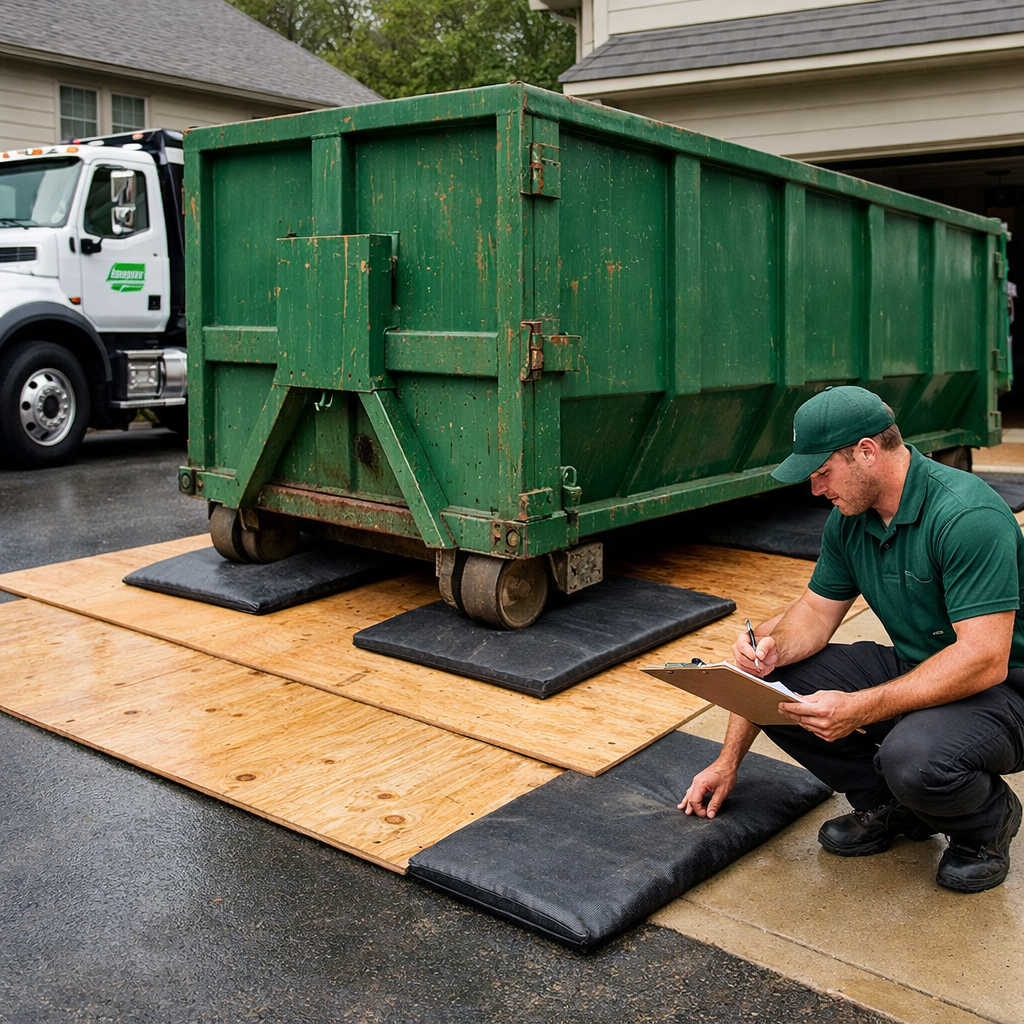
Industry standard protection uses wood dunnage or plywood under rails to spread load and prevent scratches/gouges; many providers include or can furnish these materials (Rainier’s best practices; E&J’s driveway protection guide). A practical spec that works: one 4x8 sheet of 3/4-inch plywood plus 2x4 or 2x6 boards under the dumpster feet/rails (E&J guidance). Some companies include driveway underlayment at no charge or as a low-cost add-on—confirm which it is before you book (DragonDrop; E&J). Garbage Advice’s pre-delivery questions include whether plywood/dunnage is provided and how it will be placed.
Ask for rubber-wheeled or residential-specific options
Rubber-wheeled trailer dumpsters reduce cosmetic scuffing compared with steel-wheeled roll-offs; placing boards under the trailer tongue adds extra protection (Arrowaste). Some markets advertise driveway-safe pricing—e.g., 15-yard driveway-safe options starting around $295 with included protection—though features and rates vary by region (see Grime Time’s driveway-safe rentals for example pricing/features).
“Driveway-safe dumpsters” are residential-focused setups that combine a smaller, lighter truck with precise placement (often hooklift), rubber wheels or floating pads under rails, and pre-laid plywood/dunnage to distribute weight. Many 10–15 yard units feature shorter bodies, full-height walk-in gates, and square corners for efficient, safer loading. Garbage Advice’s buyer guides outline these options so you can ask for the right setup.
Also ask about:
- Shorter bodies (e.g., ~14 ft for 10–20 yd bins)
- Flat floors and square corners for stacking
- Full rear-access gates for walk-in loading (DragonDrop)
Pin down weight limits, heavy materials, and overage pricing
Confirm tonnage limits, per-ton overage fees, and special pricing for dense debris. Overloading raises point loading and the chance of surface damage (Rainier). Declare heavy materials (concrete, shingles, dirt, brick) beforehand and consider smaller bins to keep within safe limits (Arrowaste; DD Waste).
Weight planning checklist:
- Estimate debris density (heavy vs light).
- Choose bin size accordingly.
- Confirm tipping/landfill fees by material and any contamination charges.
Get the policy details in writing
Ask for proof of insurance and read the rental agreement for driveway clauses. Many contracts exclude damage to driveways, sidewalks, or lawns, or to surfaces weakened by recent paving or customer-directed placement (Arrowaste; Guido’s Services). Prefer providers with transparent terms and photo inspections before/after delivery to speed resolution if issues arise (Rainier). Garbage Advice favors providers with clear terms and documented photo workflows because they resolve issues faster.
Questions to ask:
- Is driveway protection included or extra?
- What damages are covered/excluded?
- How do I file a claim and within what timeframe?
Prep the site and document conditions
Before delivery, take clear photos of the driveway, including edges, joints, slopes, and any pre-existing stains or hairline cracks (Rainier). Stage plywood, rubber mats, or steel plates in the drop zone to distribute load, and request central placement away from slab edges/joints where possible (RolliSkate placement tips; Rainier). If street placement is safer, ask about permits—public streets often require them, while private driveways usually don’t (E&J; Skyhook’s rental guide). Garbage Advice recommends staging underlayment before the truck arrives and photographing the area from multiple angles.
Schedule delivery and pickup for safe conditions
Plan for dry, accessible conditions and clear about 60 feet of straight-line approach when possible; confirm overhead clearance, especially if trees or wires limit height—hooklifts can help with low-clearance set-downs (DragonDrop). Drivers may decline protection or placement on unsafe slopes, ice, or steep inclines for safety reasons (Guido’s Services).
Simple scheduling timeline:
- 48 hours before: prep site and boards.
- Delivery day: reconfirm truck type and driveway protection.
- Pickup day: keep access clear and remove vehicles/obstacles.
Inspect after pickup and follow up promptly
Inspect immediately after pickup. Check for scuffs, gouges, cracks near edges/joints, and oil stains. Take after photos from the same angles as your before set (Rainier). Report issues within 24–48 hours using the provider’s stated process; vendors with documented workflows or customer dashboards typically resolve faster (DragonDrop). Keep the agreement, photos, and all messages for claims. Garbage Advice recommends time-stamped photos and same-day notice to create a clean record.
Tie-in for DIYers with disposals and heavy debris
Dumpster safety pairs with in-home disposal care. Use the dumpster for dense, sharp, or fibrous materials that can jam a garbage disposal, and stage loads to keep heavy debris from concentrating in one corner of the bin. For more on choosing and timing a rental, see Garbage Advice’s residential buying guides.
Plan debris handling to avoid clogs and leaks
Keep plaster chunks, stringy packing materials, and glass out of disposals—they jam impellers and strain motors. Use walk-in gates on bins for safer loading when available (DragonDrop). If you’re servicing a disposal, use proper splash guards and mounting assemblies, and see our guide on how to get glass out of a garbage disposal for safe jam removal.
Checklist:
- Bag small shards before bin loading.
- Use a hex key/Allen wrench to clear disposal jams safely.
- Keep food waste separate from heavy debris.
Keep yard waste and heavy debris out of disposals
Never grind yard waste, rocks, or concrete. Route them to the right dumpster stream, and choose smaller bin sizes for heavy loads to protect both your driveway and plumbing (DD Waste’s heavy-material guidance). Quiet disposals can still jam on dense debris—silence isn’t a safety proxy.
Do-not-grind list:
- Soil and gravel
- Branches and yard waste
- Metal, glass, tile, and asphalt
- Concrete, bricks, and stones
Frequently asked questions
Will a dumpster damage my driveway?
It doesn’t have to; Garbage Advice recommends hooklift or rubber-wheeled delivery, plywood or pads under the bin, and right-sizing to debris weight. Those steps cut point loading and surface stress.
What truck clearance and access do I need?
Most residential deliveries benefit from about 60 feet of straight-line space and clear overhead access. Garbage Advice suggests confirming specifics with your provider if trees or wires limit height.
How can I protect my driveway before delivery?
Lay 3/4-inch plywood and 2x4 or 2x6 boards where the bin will sit, keep it centered away from slab edges and joints, and take before photos. Garbage Advice considers these baseline steps for driveway protection.
What if my driveway is narrow or newly paved?
Ask for residential-length containers, hooklift or single-axle trucks, or a rubber-wheeled trailer dumpster. Garbage Advice may also recommend permitted street placement until new pavement cures.