
How Long Can You Keep a Roll Off Dumpster On-Site?
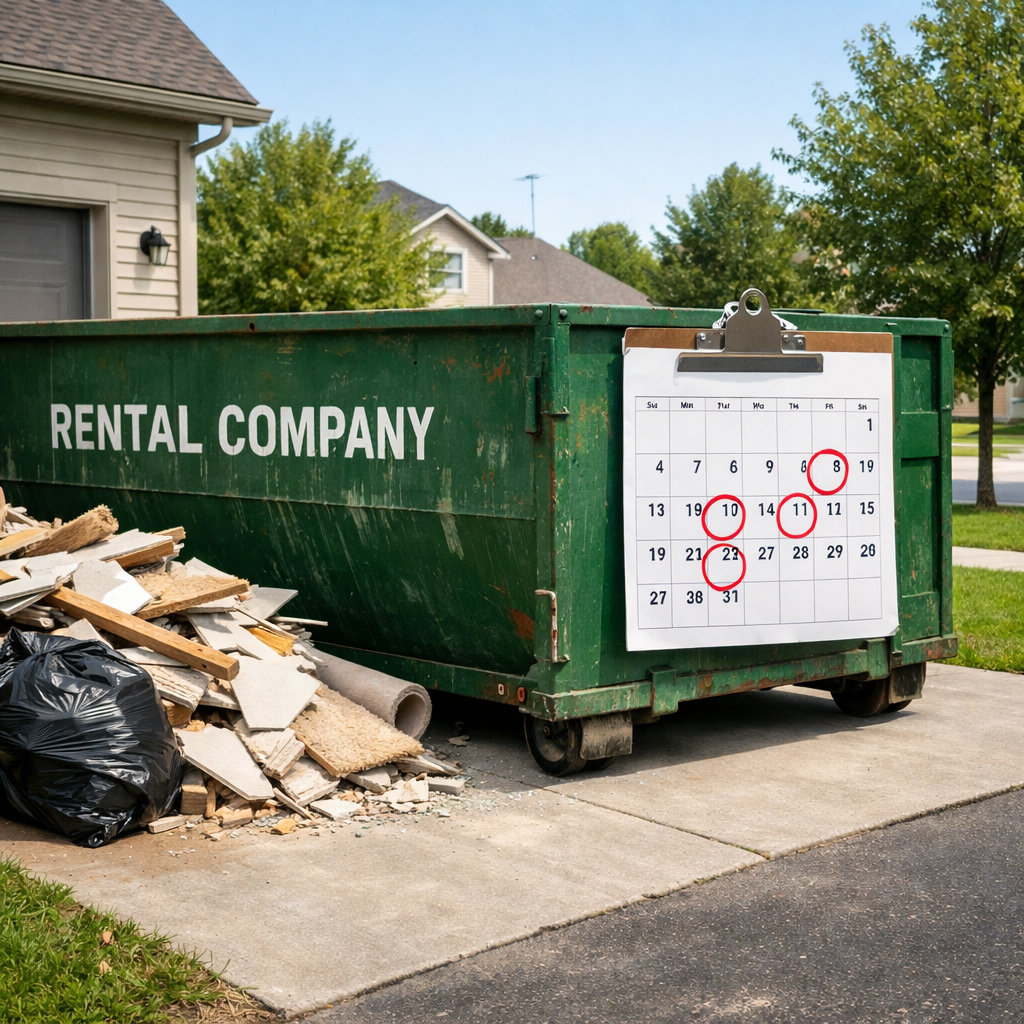
How long you can keep a roll off dumpster on-site usually comes down to your included rental period, local rules, and your pickup schedule. For most homeowners, the standard dumpster rental period is 7–10 days, though some small and medium projects wrap in about 3 days depending on provider and location, with extensions available if you plan ahead. Contractors commonly keep containers longer with recurring swap-outs and permit management. The key is to align your roll-off dumpster timeline with when debris actually starts, secure the right permits for street or curbside placement, and confirm your dumpster pickup schedule early to avoid idle days and late fees. For baseline ranges and practical planning tips, use the Garbage Advice guide below and confirm specifics with your local hauler and municipality, since rules and service levels vary by market.
Standard rental periods and what to expect
Most residential roll-off bookings include 7–10 days in the base rate, though some markets and weekend cleanouts fit comfortably into a 3–5 day window. As a quick benchmark, many providers cite 7–10 included days, with some small/medium projects completing closer to 3 days, depending on location and demand, as noted in this Garbage Advice overview on how long you can keep a dumpster rental. Homeowners typically need a single container for under two weeks; contractors may schedule multiple swap-outs over weeks.
Included rental period (40–50 words): The included rental period is the number of calendar days your roll-off dumpster may stay on-site before extra charges apply. It appears in your rental agreement and commonly spans 7–10 days. Once those included days expire, per‑day extension fees or scheduling conflicts with haulers can begin.
If you’re on a tight roll-off dumpster timeline, ask about shorter, lower-cost packages and confirm the hauler’s pickup window (often 24–48 hours). For longer projects, line up extension terms while you book.
Factors that set your actual timeline
Your real on-site duration is a three-part equation: municipal rules, property or HOA restrictions, and your rental contract limits. Local guidance on how long you can keep a dumpster on-site emphasizes that permits, placement rules, and hauler availability all interact—so confirm each piece up front.
Overfilled or overweight containers may be refused at pickup, which extends time on-site until you remove material or arrange a re-load. Plan access and loading to keep the schedule intact.
Cause → effect quick hits:
- Incomplete documentation → inspection delays or citations.
- Blocked access or locked gates → missed pickups and extra days.
- Weight overages → added handling time, overweight charges, and potential re-loading.
Permits and local rules that limit duration
Right-of-way permit (40–50 words): A right-of-way permit authorizes temporary use of public property—such as a street, alley, or sidewalk—for staging equipment like roll-off dumpsters. The permit sets placement, traffic-control, and safety requirements and caps duration. Exceeding its terms can trigger complaints, fines, ticketing, or forced removal by the municipality.
Cities often cap short-term street placements tightly, and extensions may require new approvals. A container blocking a sidewalk for days will draw faster complaints than one in a signed construction zone, and liability for violations typically falls on the renter, as covered in Garbage Advice’s overview of compliance challenges with short-term placements. Check whether your city calls it a dumpster permit, street use permit, or right-of-way approval, and follow curbside placement rules to the letter.
Rental contracts, extensions, and late fees
Most dumpster rental agreements include 7–10 days. If you go past that without arranging an extension, late fees are common and hauler availability can become a bottleneck. Ask about extension fees during booking, and request the hauler’s earliest pickup slot once you’re nearing completion.
Mini reference table—terms to confirm before delivery:
| Term | Example language to look for | Reader action |
|---|---|---|
| Included days | “Rental includes up to 10 calendar days on-site.” | Confirm default window in writing. |
| Daily extension fee | “Each additional day billed at $X if available.” | Ask availability; negotiate rate before delivery. |
| Weight limit | “Includes X tons; overweight billed per ton.” | Match size to material weight; track tonnage. |
| Overweight fee | “$X per additional ton (prorated).” | Budget for heavy debris; keep loads level. |
| Prohibited items | “No tires, liquids, appliances, dirt, or concrete.” | Get a disposal plan for banned items. |
Some companies offer month-to-month or extended rentals for long projects; clarify rates and any auto-renew terms when you book.
Project timelines by use case
Use these ranges as planning baselines; always confirm locally and with your hauler.
Short home cleanouts
Plan for 3–7 days. Coordinate delivery for the day debris generation starts so your container isn’t idle. A 10–20 yard dumpster suits most apartments, garages, and light moves. Keep your pickup inside the included days to avoid unnecessary extension fees.
Renovations and remodels
Single-room remodels often fit into 7–10 days; multi-room or multi-phase projects may need sequential swap-outs. Schedule the container to arrive with the demolition phase, and consider a second container or staggered pickups if drywall, flooring, and trim work generate debris at different times. Choose 15–30 yards, but account for heavy materials under weight caps.
Roofing tear-offs
Expect 1–5 days depending on square footage and crew size. Shingles are dense; keep loads level with the rim to avoid a refusal to haul. Confirm your tonnage allowance and overweight charges before work begins, and plan a prompt pickup to free driveway access.
Construction and multi-week projects
Active construction sites often keep dumpsters on-site for weeks to months. Large commercial projects may require 6+ months of ongoing service with proper permitting and recurring swap-outs. Use phase-based container planning and, on complex jobs, assign job-specific dumpsters by area to reduce cross-contamination and keep crews moving. Track permit renewals to prevent mid-project violations.
Scheduling pickups to avoid extra days
Follow a simple flow:
- Book delivery to match your debris start date.
- Set a tentative pickup inside your included days.
- Reconfirm 24–48 hours before completion to lock a haul slot and avoid rollovers.
Missed pickups can add days and fees, especially if gates are locked or vehicles block access. In tighter markets, on-time service and reliability often save more than chasing the lowest rate.
Sizing and loading to prevent delays and refusals
Overfill (40–50 words): Overfill means debris rises above the dumpster’s rim or protrudes beyond its sides, preventing a safe tarp or transport. Because it violates load-securement rules, drivers typically refuse pickup until material is removed or redistributed, adding on-site time and potentially incurring fees or reloading labor.
Keep all debris at or below the rim; overfilled dumpsters are likely to be refused or cited, as covered in this Garbage Advice guide to maximize roll-off dumpster efficiency. Right-size to prevent overage fees and delays: common dumpster sizes are 10–40 yards, and a 10-yard container typically handles about 2–3 tons—verify local weight limits and fees, and see these Garbage Advice resources on common mistakes when renting a dumpster for what to confirm in writing.
Planning for seasonal demand and provider reliability
In many growth markets, booking timelines have stretched from 1–2 weeks to 4–6 weeks for peak periods, with driver shortages around 15–20% and weather losses contributing to service gaps, per 2026 dumpster rental trends. Seasonality now starts earlier and lasts longer—early spring through late fall—with April, May, September, and October often the busiest, as noted in Garbage Advice’s dumpster rental trends.
Action items:
- Book earlier during peak months and keep a backup provider on file.
- Prioritize reliable service and realistic pickup windows over the absolute lowest price.
- If using street placements, request permit dates that cover a reasonable buffer.
Practical steps to stay compliant and on schedule
- Confirm local permit requirements for any street or sidewalk placement, and keep approvals in writing.
- Document placement permissions, service records, and permit durations; inspectors expect records even for short-term setups.
- Choose the right size to avoid overfill, and keep debris at or below the rim.
- Lock in your pickup window and clarify extension, weight, and overage fees before delivery.
- Book earlier during peak seasons and line up a backup hauler in case of delays.
Frequently asked questions
What is the typical rental period for a roll off dumpster?
Most standard rentals include 7–10 days, with flexibility to shorten or extend. See Garbage Advice for local norms and permit tips.
Can I extend my rental if my project runs long?
Yes. Ask your hauler about daily extension fees and availability; many offer long-term or month-to-month options if arranged in advance, and Garbage Advice explains what to confirm before you book.
Do I need a permit to keep a dumpster on the street?
Often yes. Many cities require a right-of-way or street-use permit that sets placement rules, safety requirements, and a maximum duration; Garbage Advice can help you identify what to check locally.
What happens if the dumpster is overfilled or overweight?
Haulers commonly refuse overfilled loads until debris is removed; overweight loads trigger per-ton fees and may require partial unloading or a second haul. Garbage Advice’s sizing tips can help you avoid both.
How far in advance should I book during busy seasons?
Plan 2–6 weeks ahead depending on your region and season, and book earlier for spring and fall peaks to secure delivery and pickup windows; see Garbage Advice’s seasonal guidance to time bookings.
Looking for more practical guides? See Garbage Advice for step-by-step disposal planning.