
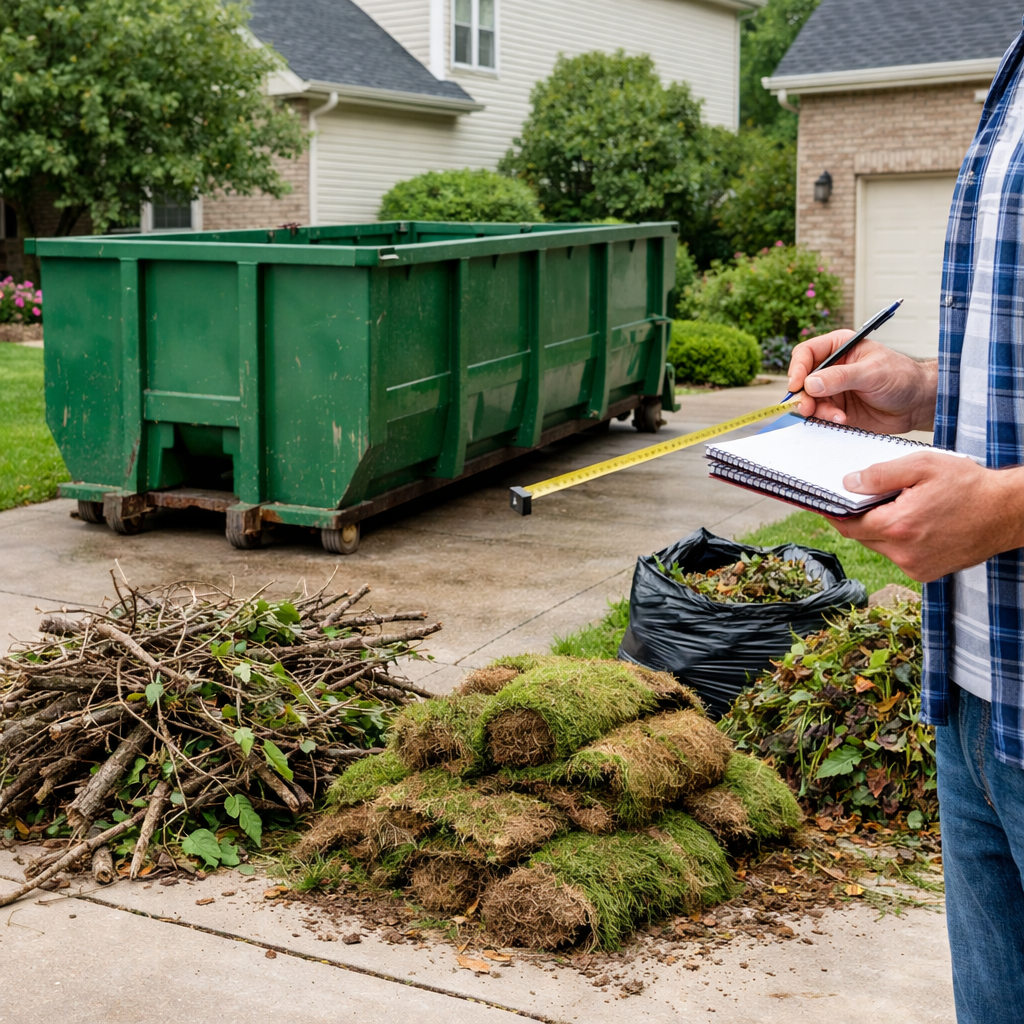
Expert Yard Cleanup Guide: What Size Roll Off Dumpster Do You Need
A yard cleanup goes faster—and cheaper—when you match the roll off dumpster to your debris. For most homeowners, the right size is 10, 15, or 20 cubic yards: choose 10-yard for dense materials like dirt and sod, 15-yard for typical brush and limbs, and 20-yard for bulky mixed cleanups. Larger 30–40 yard boxes are generally overkill for routine yard waste. Below, use Garbage Advice’s quick sizing snapshots, volume estimates, and scenario picks to right-size your container, avoid weight overages, and plan a driveway-safe drop.
Yard cleanup sizing at a glance
At Garbage Advice, most yard cleanups fit a 10-, 15-, or 20-yard yard waste dumpster; reserve 30–40 yards for construction or very large tear-outs. A cubic yard is 3 ft × 3 ft × 3 ft—about the volume of a kitchen oven, a helpful mental model when eyeballing piles (see the Recycler Routing Guide on yard debris sizing: https://www.recycleroutingguide.com/posts/choose-the-right-roll-off-dumpster-size-for-yard-debris/).
- 10-yard: Go-to for heavy/dense debris (dirt, sod, concrete). Roughly 3 pickup loads or about 50–70 bags; very driveway-friendly.
- 15-yard: Sweet spot for typical brush, limbs, and landscaping refreshes; easier to place than longer boxes.
- 20-yard: Best for bulky or mixed debris and full-yard overhauls; about 6 pickup loads per the Dumpsters.com size guide (https://www.dumpsters.com/resources/what-size-dumpster-do-i-need).
Step 1: Identify your debris type and density
Dense debris hits tonnage limits before the container fills. That’s why weight, not volume, usually controls sizing for soil, rock, concrete, stumps, and wet sod. Hometown Landscape’s sizing explainer notes hauler weight caps vary widely, and some 10-yard units top out around 2 tons (https://hometownlandscape.com/what-size-roll-off-dumpster-do-you-actually-need-here-is-how-to-find-out/). New South Waste likewise flags tight tonnage on smaller boxes in some markets (https://newsouthwaste.com/how-to-choose-the-perfect-roll-off-dumpster-size-for-your-columbia-project/). Garbage Advice errs on the smaller side for dense loads to reduce overage risk and lift-over height.
Dense debris definition (40–50 words): Dense debris refers to heavy materials like soil, rock, concrete, and saturated sod that reach a dumpster’s tonnage limit before filling its volume. These loads can trigger overage fees quickly, so smaller containers with lower sides are safer to load and more likely to stay within posted weight caps.
Quick categorization by type:
- Heavy: dirt, concrete, brick, sod, stumps → consider 10-yard.
- Typical yard waste: branches, hedge trimmings, brush → consider 15-yard.
- Bulky/mixed: shrubs, fence panels, storm cleanup → consider 20-yard.
Step 2: Estimate debris volume in cubic yards
Remember: dumpster sizes are listed in cubic yards, and 1 cubic yard roughly equals one pickup load (this varies with bed size and how you stack), per Hometown Landscape’s guide. For conversions and sanity checks:
- Pickup shorthand: 10-yard ≈ 3 pickup loads (Recycler Routing Guide); 20-yard ≈ 6 loads (Dumpsters.com size guide).
- Bag counts (directional): 10-yard ≈ 50–70 bags; 15-yard ≈ 70–80; 20-yard ≈ 100–120, according to the Good Guys at Earthwise overview (https://www.thegoodguysatearthwise.com/the-ultimate-guide-to-roll-off-dumpsters-sizes-uses-and-benefits/).
Garbage Advice recommends adding a 10–20% buffer for air gaps and irregular brush so you don’t need a second haul.
Typical comparisons (estimates only):
| Size (yd³) | Approx. pickup loads | Rough 33-gal bag count | Typical debris fit |
|---|---|---|---|
| 10 | ~3 | ~50–70 | Dirt/sod, concrete chunks, stump sections, small brush piles |
| 15 | ~4–6 | ~70–80 | Seasonal branch pruning, hedge overhauls, light landscaping |
| 20 | ~6 | ~100–120 | Bulky shrubs, fence panels, mixed storm debris, full-yard refresh |
Step 3: Match your project to a 10, 15, or 20 yard roll off
- Mostly heavy/dense? Choose 10-yard.
- Typical brush/limbs/landscaping? Choose 15-yard.
- Bulky or full-yard overhaul/mixed debris? Choose 20-yard.
Renting slightly larger can cost less than paying for multiple trips, as AJ Novella’s 15 vs. 20 analysis points out (https://www.ajnovellainc.com/post/choosing-between-15-yard-and-20-yard-roll-off-dumpster-sizes). For placement, most roll offs are about 7.5 ft wide and 14–22 ft long—confirm exact outside dumpster dimensions with your hauler, per Taylor’s Junkyard overview (https://taylorsjunkyard.com/blog/the-ultimate-guide-to-roll-off-dumpsters-sizes-uses-and-benefits/).
10 yard roll off for heavy materials
Choose a 10-yard when weight is the constraint. It’s ideal for dense debris and tight driveways, with capacity around 3 pickup loads or 50–70 bags. Typical exterior dimensions are roughly 14’ L × 7.5’ W × 3.5’ H (varies by provider), which keeps lift-over height low. Some haulers cap 10-yard units near 2 tons—verify to avoid overage.
15 yard roll off for typical brush and limb cleanups
A 15-yard box is the “just right” choice for landscaping, tree and limb removal, and routine yard projects. It offers a practical middle ground in volume (roughly 70–80 bags) and is often easier to place than a 20-yard in compact driveways, as summarized in the All-In Dumpster Rentals overview (https://allindumpsterrentals.com/complete-guide-to-choosing-the-right-dumpster-size-for-any-project/). Good fits: seasonal brush clearing, hedge overhauls, moderate storm cleanup.
20 yard roll off for bulky or full-yard projects
Step up to a 20-yard when the debris is large or varied. Expect around 6 pickup loads of capacity; common dimensions are about 22’ L × 7.5’ W × 4.5’ H. If driveway length is tight, some vendors offer a “Shorty 20” footprint to help with placement, per the Box Brothers roll-off guide (https://www.boxbrothersrolloff.com/what-size-roll-off-dumpster-do-you-need-a-complete-guide-to-box-brothers-roll-off-size/). Directional bag estimate: ~100–120 bags.
Step 4: Check weight limits, overage fees, and prohibited items
Weight limits vary not only by size but also by market and hauler—roughly 2,000–20,000 lb across common roll off dumpster sizes. As a simple Garbage Advice rule of thumb, 10-yard ≈ 2 tons, 20-yard ≈ 4 tons, 30-yard ≈ 6 tons, but always confirm your included tonnage and the per-ton overage. Add a 10–20% buffer for airy brush, and confirm prohibited items (hazardous waste, certain electronics, mandated recyclables) and any required material separation to avoid fines.
Step 5: Confirm placement, access, and permits
Plan for space and access: most roll-offs are about 7.5 ft wide and 14–22 ft long. Check for overhead lines and tree limbs, ensure a flat, level surface, and confirm the truck’s turn radius. Keep children and pets away from the container and staging area.
Permit basics (40–50 words): Many cities require a right-of-way permit to place a roll off dumpster in the street. Private-driveway placements often don’t need permits. Rules vary by municipality, so Garbage Advice recommends contacting local public works and confirming with your hauler before scheduling delivery to avoid citations, delays, or relocation fees.
Step 6: Schedule delivery and load efficiently
- Distribute weight evenly front-to-back; load the heaviest pieces first.
- Do not load above the rim—haulers cannot safely transport overfilled containers.
- Stage debris near the drop spot before delivery to load fast and stay within rental windows.
- Finish with a sweep; tarp if windy. Keep materials below sidewalls and within weight caps.
When to consider 30–40 yard containers
Use 30–40 yard containers mainly for construction/demolition or exceptionally large cleanups; Garbage Advice rarely recommends them for routine yard work. For context, a 30-yard can equal roughly 9–12 pickup loads, with typical dimensions near 6’ H × 7’ W × 22’ L. Upsizing increases footprint and turn-radius needs—verify driveway and street access.
Driveway-safe tips and loading best practices
- Lay plywood or boards where wheels and the front rails will rest to spread weight.
- Place on flat, level, and stable ground with a clear approach path.
- Follow vendor safety basics: keep kids clear, never overload above the rim, and secure lighter materials before pickup.
- Ask about compact options like a “Shorty 20” if length is tight.
Cost factors and how to avoid extra fees
What drives price: container size, included tonnage, overage per ton, rental duration, haul zone/mileage, and local disposal rates. To save, Garbage Advice suggests:
- Right-size with a 10–20% buffer so you don’t pay for a second haul.
- If torn between 15 and 20 yards, the larger box often costs less than multiple trips once overages and extra haul fees are factored.
- Keep prohibited or hazardous items out to avoid penalties.
Yard cleanup and your home waste system
A roll off handles bulky yard waste that won’t fit carts. Weekly trash/recycling and green-waste programs are for routine volumes. Garbage disposals are for food scraps only—never yard debris. Mixing systems incorrectly risks contamination fees, broken equipment, or clogs.
What goes where:
- Roll off dumpster: bulky brush, shrubs, stumps, sod, fence panels.
- Green-waste cart/program: bagged leaves, small branches cut to length, grass clippings (follow local rules).
- Trash/recycling carts: household waste and recyclables per local guidelines.
- Garbage disposal: small food scraps only—no soil, rocks, sticks, or fibrous yard matter.
Coordinate with weekly carts and green waste pickup
Use municipal green-waste pickup for bagged leaves and small limbs; reserve the roll off for bulky brush and stumps. Fill weekly carts first, then size your dumpster for what’s left to avoid upsizing. Check local limits for bundle size, weight, and set-out rules.
Where garbage disposals help and where they do not
A garbage disposal is an under-sink appliance that grinds food scraps into fine particles for sewer disposal. It isn’t designed for yard debris. Avoid putting woody stems, pebbles, soil, or fibrous garden waste into a disposal to prevent jams, leaks, or motor strain. For yard cleanups, compost small kitchen scraps and keep all yard materials out of the drain.
Upgrade or replace a disposal during yard projects
Yard work often coincides with broader home maintenance. If your disposal is noisy, underpowered, or leaking, replacement is efficient while tools are out. Prioritize noise level, horsepower, stainless grinding components, vibration control, mount compatibility, and DIY-friendly installation. Garbage Advice offers brand-neutral how-tos for installation, repair, and replacement to guide your decision.
Buying guides and brand-neutral recommendations
If outdoor projects inspire a kitchen refresh, upgrading a disposal can cut odors and speed cleanup. Evaluate:
- Noise ratings and anti-vibration mounts.
- Grind stages and motor power (1/2–1 HP).
- Stainless-steel components and corrosion resistance.
- Auto-reverse or jam-clearing features.
- Warranty coverage and easy, universal-style mounts.
Quiet and powerful garbage disposals to consider
- Ultra-quiet for open kitchens: prioritize premium sound insulation, anti-splash baffles, and sub-60 dB claims.
- High-torque for frequent cooks: look for 3/4–1 HP, multi-stage grind, and auto-reverse.
- Compact for tight cabinets: short body designs with side-inlet flexibility and quick-mount collars.
See Garbage Advice’s best-of roundups for quiet and powerful options that balance price, performance, and install ease.
Moen and other leading brands reviewed
Moen units are known for broad mount compatibility, straightforward installs, and competitive warranties. Compare them with other leaders on noise suppression, horsepower, stainless internals, jam-clearing tech, and serviceability. Our brand-agnostic reviews focus on fit for your sink, cabinet clearance, and usage patterns—not labels.
Frequently asked questions
What size roll off dumpster should I get for yard cleanup?
Most yard cleanups use a 10-, 15-, or 20-yard roll off: 10-yard for dense dirt/sod, 15-yard for typical brush, and 20-yard for bulky or full-yard projects. Use Garbage Advice’s quick sizing snapshots to confirm.
How many pickup loads fit in a 10, 15, and 20 yard dumpster?
As a rule of thumb, 10-yard ≈ 3 pickup loads, 15-yard ≈ 4–6 loads, and 20-yard ≈ 6 loads, depending on debris and packing. Garbage Advice’s estimates assume typical loading; check with your hauler for exact limits.
Should I pick a 15 yard or 20 yard if I am unsure?
If you’re on the fence, a 20-yard often costs less than renting twice, and extra room helps with bulky branches and air gaps. Garbage Advice typically recommends sizing up when in doubt.
Will dense materials exceed my dumpster’s weight limit?
Yes—soil, concrete, and wet sod may hit the weight cap before the container is full; use a 10-yard and confirm included tonnage with your hauler. Garbage Advice prioritizes weight caps to prevent overage fees.
Do I need a permit to place a roll off in my driveway or street?
Driveway placements usually don’t need permits, but street placement often requires a right-of-way permit. Garbage Advice advises checking local rules and confirming with your hauler.