
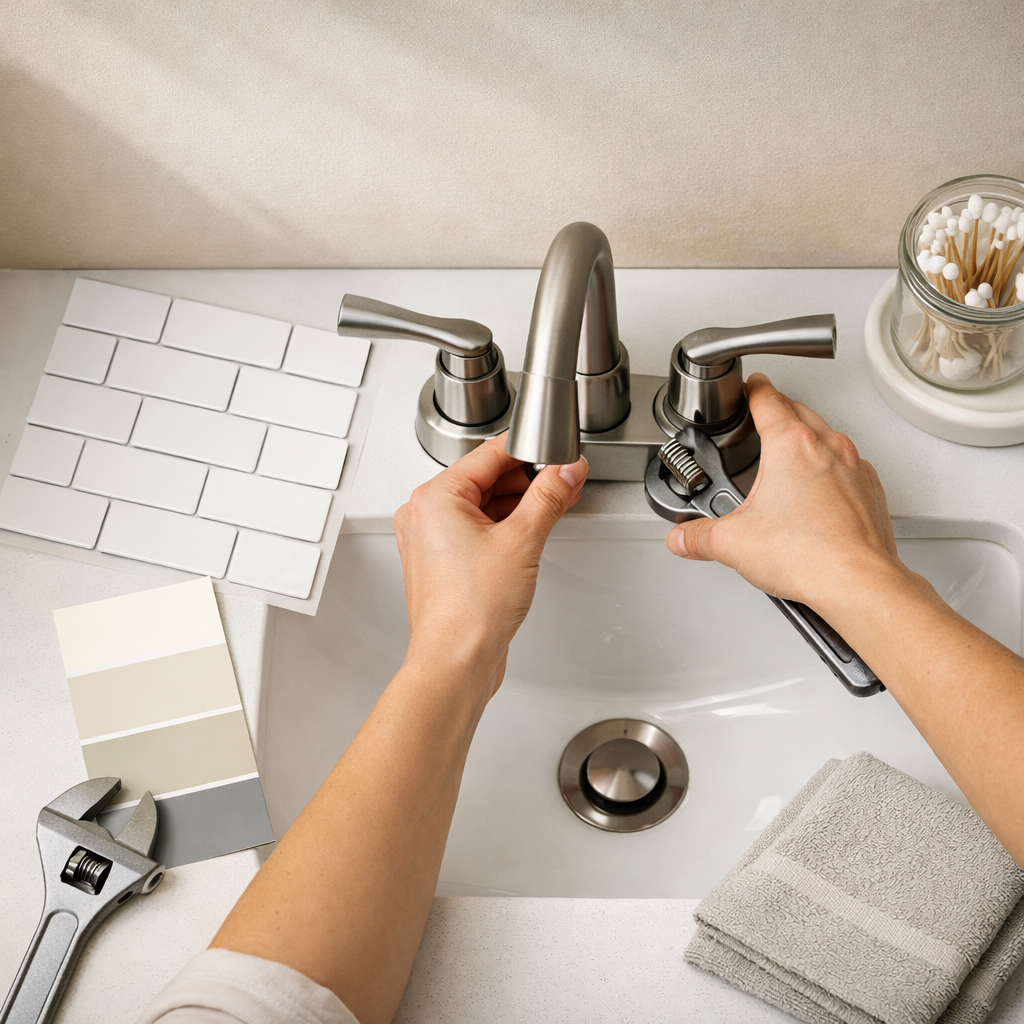
DIY Bathroom Upgrades Under $200: Quick, Stylish, Budget-Friendly
A weekend and $200 is enough to transform a tired bathroom. Focus on high-visibility, renter-friendly projects that avoid plumbing and structural work: paint, peel-and-stick flooring, hardware swaps, lighting shade changes, mirror framing, and a thorough re-caulk. These DIY bathroom upgrades under $200 deliver an outsized style lift while staying practical for small spaces and tight timelines. Real-world makeovers show it’s doable: a small-bath flip landed at $198, including a fresh vinyl tile floor for about $30 and meticulous trim paint steps [1]. Below is your step-by-step, budget-first playbook.
Garbage Advice
At Garbage Advice, we publish neutral, detail-driven guidance for waste, water, and home utilities—from hands-on how-tos to brand-agnostic buying advice. Our goal: fast, renter-friendly, sub-$200 bathroom upgrades that skip costly plumbing or structural scope creep [1; 6]. Expect a weekend plan, water-saving picks, and clear flags for when to wait for bigger-budget phases.
Quick cost-to-impact snapshot:
- Paint is the highest return per dollar for small baths.
- Peel-and-stick flooring modernizes instantly and cleans up grout eyesores.
- Hardware and lighting finishes unify the room’s style at low cost.
| Upgrade | Typical Cost Range | Visual Impact |
|---|---|---|
| Paint (walls/vanity) | $30–$120 (paint + supplies) | High |
| Peel-and-stick/vinyl floor | ~$30–$75 [1] | High |
| Hardware (pulls/knobs) | $20–$100 | Medium |
| Lighting shade/fixture | $20–$60+ [2; 7] | Medium–High |
Costs synthesized from reported projects and product roundups [1; 2; 7].
Paint Walls and Vanity
Paint stretches dollars further than any other change. Two careful coats can reset a space; sand lightly and let coats dry completely between passes. A quart often covers a small vanity; use primer where needed, and follow a trim-first sequence: prime twice, then three coats of paint for longevity [1].
Bonding primer: A bonding primer is a specialty undercoat that grabs onto slick, glossy, or previously finished surfaces so topcoats stick, resist peeling, and level out—especially important in humid bathrooms. It’s essential when switching sheens or painting laminates or tile, and it improves durability in moisture-prone zones.
Pro tips:
- Choose satin or semi-gloss for moisture resistance. Cut in first, then roll.
- For wood-grain vanities, liquid sandpaper (deglosser) can replace sanding and may let you skip primer on some finishes [1].
- Color cues for small baths: warm whites, pale gray-green, and soft taupe brighten without feeling stark.
Vinyl or Peel-and-Stick Flooring
A new floor is the fastest facelift after paint. One makeover replaced an entire bathroom floor with vinyl tiles for about $30; tiles cut easily with a utility knife, and ordering a few extra helps with pattern alignment [1].
Peel-and-stick tile: Peel-and-stick tile is a thin, self-adhesive vinyl tile for quick installs over flat, clean surfaces. It’s water-resistant and renter-friendly, prioritizing speed and budget while delivering a reversible look upgrade—ideal for baths that need a fast transformation without permanent changes [8].
Step-by-step:
- Prep: clean, degrease, and degloss; ensure the subfloor is smooth. Dry-fit and snap centerlines.
- Cut tiles with a sharp utility knife, stagger seams, and roll firmly to bond.
- Finish edges with a new threshold for a clean transition [1].
Hardware Swap
Knobs and pulls are the easiest cohesion win. Measure existing hole spacing on pulls, pick a unified finish, and echo it across accessories. For dated metal, spray-painting unlacquered brass fixtures (with proper prep) is a budget path to a luxe look [9].
Spray-paint checklist:
- Degrease thoroughly and scuff-sand.
- Use metal primer; apply light, even coats.
- Allow full cure times; add a clear topcoat for durability.
Low-Flow Showerhead and Faucet Trim
Start where style meets savings. A new showerhead can be as little as $19.99 and immediately lowers water and energy use; swapping to low-flow taps and showerheads trims both utility costs and hot-water demand [2]. For a modern look without opening the wall, replace the shower valve trim while keeping the existing valve body [7].
Low-flow fixture: A low-flow showerhead or faucet is engineered to deliver effective rinsing with fewer gallons per minute (GPM). Aerators and pressure-compensating valves maintain a strong-feeling spray while using less water, which also reduces energy needed to heat hot water—savings you notice on bills.
Mirror Framing
Turn a builder-grade mirror into a custom focal point. You can frame a plain mirror using off-the-shelf molding for as little as $30, with most DIY frames landing around $25–$50 [2; 6].
How-to highlights:
- Measure and miter molding; paint or stain before install.
- Use mirror clips or notch the molding backs for clearance.
- Adhere with construction adhesive rated for mirrors; add discreet corner braces if needed.
Lighting and Sconce Shade Swap
Lighting dictates mood and function. Add a small statement pendant or chandelier starting around $58 to elevate the look [2]. If wiring is solid, swap sconce shades for under $50 to refresh style without touching electrical boxes [7].
Buying pointers:
- Confirm damp or wet ratings for fixtures near showers.
- Choose warm LED bulbs (2700K–3000K) and target roughly 50–70 lumens per square foot for small baths.
Re-caulk and Trim Refresh
Fresh caulk cleans the lines and defends against moisture for a few dollars. Re-caulk floor trim, around the toilet, along the vanity, and where tub meets wall. Add quarter round at the tub and replace a dingy threshold for a crisp edge [1].
Silicone vs. acrylic-latex caulk: Silicone is best for constant moisture—flexible, long-lived, and highly water-resistant—but it’s harder to paint and tool. Acrylic-latex is paintable and easier to smooth, making it ideal for dry or semi-wet trims. Siliconized acrylic blends bridge mixed conditions.
Step flow:
- Remove old caulk fully; clean residue with mineral spirits and let dry.
- Tape lines, apply a continuous bead, tool smooth with a wet finger or caulk tool.
- Pull tape immediately and allow full cure per label (often 24 hours).
Over-the-Toilet Shelving
Use the vertical zone above the tank for storage and styling. Expect $25–$100 for simple units [6]. Measure tank height, keep 1–2 inches of clearance, and pick moisture-resistant finishes. For extra capacity, a narrow above-door shelf can corral extras without crowding [1].
Tub and Tile Refinishing Kits
If the tub’s color dates the room, two-part resin/epoxy kits offer a temporary cosmetic reset. Readers report good results when they follow deep-cleaning and sanding steps; Rust-Oleum-style epoxy coatings can refresh tubs or tile on a budget [7; 3].
Two-part epoxy kit: A two-part epoxy combines a resin and hardener that chemically cure into a dense, water-resistant coating. With meticulous prep and thin, even coats, it can extend a tub’s cosmetic life for years, though it won’t match the longevity of factory enamel.
Safety musts:
- Ventilate aggressively, wear a respirator, and protect surfaces.
- Observe cure times—often 24–72 hours—before exposing to water.
Peel-and-Stick Accent Tile or Backsplash
Localized peel-and-stick panels create instant texture without commitment. They’re water-resistant, renter-friendly, and budget-forward—great for vanity backsplashes or niche accents, but avoid direct shower spray [8].
Application tips:
- Prime glossy paint for better adhesion.
- Use trim strips for clean edges and a finished look.
Weekend Plan and Budget Mix
Pick two to three priorities to stay under $200. Example bundles:
- Paint + hardware + re-caulk
- Paint + peel-and-stick floor + mirror frame
- Lighting shade swap + hardware + re-caulk
Allocate $20–$100 per item, and budget time for prep and drying [1; 2; 6; 7]. One documented weekend makeover totaled $198, including a new vinyl tile floor (~$30) and detailed trim paint steps [1].
Quick comparison (plan your mix):
| Paint | Vinyl floor | Hardware | Sconce shade swap | Re-caulk | |
|---|---|---|---|---|---|
| Cost | $30–$120 | ~$30–$75 [1] | $20–$100 | $20–$50 [7] | $5–$20 |
| Impact | High | High | Medium | Medium–High | Medium (crisp lines) |
| Difficulty | Low–Medium | Low–Medium | Low | Low | Low |
Water and Waste Savvy Tips
Small upgrades can shrink bills and footprints. Low-flow taps, toilets, and showerheads reduce both water use and hot-water energy; renters can start with showerheads and faucet aerators for immediate wins [2].
Micro-tips:
- Dispose safely: Don’t pour paint or epoxy waste down drains. Use local household hazardous-waste programs.
- Working under a sink? See Garbage Advice’s garbage disposal replacement and repair basics, plus brand-agnostic tips on fit and tool sizing for common units.
- On septic? Choose septic-safe cleaners and confirm that low-flow fixtures function well with your system.
- Planning later demolition? Our dumpster rental sizing guide helps right-size a bin to minimize trips and costs.
- Our decarbonization due-diligence pillars—efficiency, electrification, low-carbon fuels & feedstocks (LCFFES), and carbon capture/utilization/storage (CCUS)—connect fixture efficiency and hot-water savings to a lower home energy footprint.
When to Skip and Save for Later
Some changes trigger bills fast. One remodel’s rough construction alone ran $580.67, plumbing materials $125.70, and electrical materials $194.38—before labor [4]. Moving drains, adding new circuits, rerouting ventilation, or installing framed shower doors (often around $1,000) can crush a micro-budget; a curtain can save that $1,000 [9].
Deferral strategy:
- Do cosmetic upgrades now.
- Bank savings for pro scopes like tile setting, valve replacements, or fan ducting.
- Phase the remodel to align high-cost trades with a proper budget.
Frequently asked questions
How can I upgrade a bathroom under $200 without touching plumbing?
Focus on paint, hardware swaps, lighting shade changes, peel-and-stick flooring, and mirror framing. Use Garbage Advice’s weekend bundles above to pair 2–3 quick wins (e.g., paint + hardware + re-caulk) and stay under $200.
Are peel-and-stick floors and tiles actually waterproof and durable in bathrooms?
They’re water-resistant and renter-friendly when installed on flat, clean surfaces. Use quality tiles, press seams firmly, and keep backsplashes out of direct shower spray to extend durability.
What low-cost changes save water without sacrificing pressure?
Install a modern low-flow showerhead and faucet aerators. Pressure-compensating designs keep the shower feeling strong while reducing water and hot-water energy use.
How do I prep and apply caulk so it lasts in a humid bathroom?
Remove old caulk fully, clean and dry the area, tape straight lines, then apply a continuous bead and tool it smooth. Use silicone or siliconized caulk in wet zones and allow full cure before water exposure.
Which upgrades are renter-friendly and easy to reverse?
Peel-and-stick flooring or backsplash panels, hardware swaps, sconce shade changes, showerhead replacements, and mirror frames. Garbage Advice guides help you plan and undo upgrades cleanly.
References (inline): The Crazy Craft Lady’s small-bath makeover [1]; The Money Pit’s under-$200 upgrade guide [2]; Emily Henderson’s reader renovations roundup [3]; Angie’s Roost budget breakdown [4]; HomeLight’s cost-saving bathroom tips [6]; Driven by Decor’s budget bathroom ideas [7]; Bath Fitter’s affordable remodel overview [8]; Bella Tucker’s budget remodeling playbook [9].