
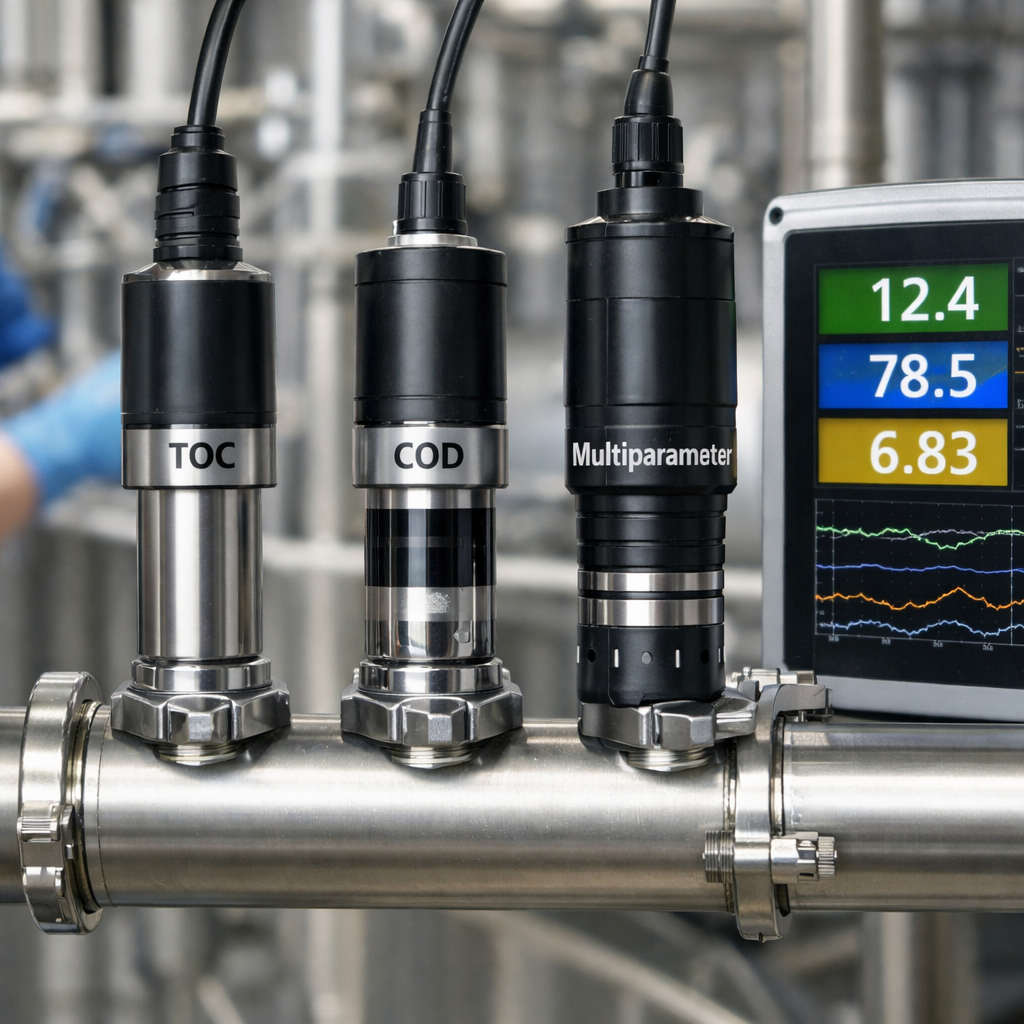
Compare TOC, COD, and Multiparameter Sensors for Manufacturing Effluents
Manufacturing effluents are variable, spiky, and increasingly scrutinized for emerging contaminants like PFAS. The fastest path to reliable control and defensible reporting isn’t a single instrument—it’s a small stack: sensors for real‑time detection, plus analyzers for verification. Use optical UV254 COD for second‑to‑minute trend control, pair it with a multiparameter sonde for context and alarms, and confirm with TOC (or lab COD) for audit‑ready accuracy. A practical rule of thumb: if you need compliance‑grade data, buy an analyzer; if you need rapid process feedback, buy a sensor, then validate periodically with an analyzer or lab tests, as outlined in the SPEC SENS selection guide (specs, cost, and accuracy benchmarks come from the same source). Garbage Advice recommends this layered stack for most manufacturing effluents to balance speed with defensibility.
How to choose reliable contaminant sensors for manufacturing effluents
Start with intent. For immediate process control, choose optical sensors; for defensible reporting and mass balance, choose analyzers. In practice, deploy both to handle variable streams and to keep SCADA and compliance teams aligned, per the sensor–analyzer decision rule published in the SPEC SENS guide on COD, TOC & BOD selection (accuracy, speed, and budget ranges are well‑summarized there). Garbage Advice applies this same rule when scoping projects.
- COD (Chemical Oxygen Demand): An indirect measure of oxidizable organic load reported as an oxygen equivalent via wet‑chemistry digestion or estimated optically (UV254). Batch/lab COD takes about two hours; optical UV254 estimates arrive in roughly a minute and are well‑suited for trend control.
- TOC (Total Organic Carbon): Directly quantifies the carbon mass in organics via high‑temperature combustion or chemical oxidation with CO2 detection. Online TOC typically delivers ±2% accuracy with 5–10‑minute cycle times, making it a strong compliance primary.
- Multiparameter sensors (sondes): Reagent‑free probes tracking pH, dissolved oxygen, conductivity, turbidity, and temperature; they provide context and early‑warning signals in real time and integrate cleanly with SCADA via RS485/Modbus.
Quick chooser (anchored to SPEC SENS cost/speed/accuracy ranges):
| Priority | Best choice | Why | Typical accuracy | Time‑to‑result | Capex band |
|---|---|---|---|---|---|
| Fast trend control | UV254 COD sensor (+ sonde) | Second‑to‑minute feedback for dosing, diversion, alarms | ±10–20% (site‑calibrated) | ~1 minute | $10k–$20k |
| Audit‑ready compliance | TOC analyzer | Direct carbon measurement, broad compound coverage | ~±2% | 5–10 minutes | $25k–$40k+ |
| Regulatory cross‑check | Wet‑chem COD analyzer | Established method for permits/spot checks | ~±5% | ~2 hours | $15k–$25k |
| Context and alarms | Multiparameter sonde | Detect events, confirm hydraulics/mixing | N/A (indirect) | Seconds | $5k–$15k (varies by channels) |
Sources: SPEC SENS selection guidance for COD/TOC accuracy, timing, and cost bands.
What COD measures and when it fits
COD estimates oxidizable matter in water as an oxygen equivalent. It’s obtained either by dichromate wet‑chemistry digestion or by optical surrogates, notably UV254 absorption. Wet‑chem COD is comparatively accurate (around ±5%) but consumes hazardous reagents; optical COD is much faster, typically within ±10–20% after site correlation, and ideal for trend tracking and process control, according to SPEC SENS. Garbage Advice typically uses UV254 for rapid control and reserves wet‑chem COD for periodic checks.
Method differences:
- Wet‑chem/analyzer: About a two‑hour turnaround; produces toxic waste and requires recurring reagents and waste disposal; good for periodic compliance checks and legacy permit requirements per SPEC SENS guidance.
- Optical UV254: Roughly one‑minute updates, low OpEx centered on cleaning and seals; excellent for trends and step‑change detection, but correlation can drift with turbidity and suspended solids.
Product‑style example (non‑exclusive): The Sper Scientific inline UV254 sensor covers common industrial ranges (0–200 and 0–1000 mg/L COD equivalent), specifies ±5% accuracy under defined conditions, supports a 1‑minute minimum logging interval, and features an SUS316L IP68 body with a 10‑meter cable and 1‑year warranty, per the Sper Scientific UV254 sensor page. Garbage Advice benchmarks UV254 options against specs like these when selecting gear.
What TOC measures and when it fits
TOC quantifies the total carbon in organic compounds by fully oxidizing the sample (high‑temperature combustion or chemical oxidation) and detecting the resulting CO2. Many online systems deliver around ±2% accuracy with 5–10‑minute cycles, medium OpEx for gas/catalyst, and minimal hazardous waste compared with dichromate digestion, as summarized by SPEC SENS. Garbage Advice often treats online TOC as the primary compliance metric when matrices vary or permits require carbon‑specific reporting.
Analyzer details: Process Insights’ LAR TOC analyzers use high‑temperature combustion to ensure complete oxidation, with some models operating catalyst‑free to reduce maintenance. Systems are designed to align with EPA/DIN/ISO methods and industrial reliability requirements, according to Process Insights’ water analyzers overview.
Best‑fit use cases:
- Compliance verification and carbon mass balance.
- Trace or refractory organics and high‑salinity matrices where COD is biased.
- Periodic validation of UV254 COD trends to keep correlations honest.
What multiparameter sensors measure and when they fit
Multiparameter sondes are rugged, reagent‑free instruments that track dissolved oxygen, pH, conductivity, turbidity, temperature (and often ORP, depth, chlorides), with RS485/Modbus outputs for easy SCADA integration—widely available from industrial suppliers and marketplaces.
Operational value: Garbage Advice treats them as the “eyes and ears” of the system—catching pH excursions, conductivity jumps, or turbidity spikes that often precede or accompany organic load events. Static, stratified (depth‑based), and mobile deployments expand spatial coverage for early warning and source‑hunting in complex plants, as shown in an early‑warning monitoring study.
Positioning guidance: Use sondes for context and alarms, pair with UV254 COD for real‑time control, and confirm periodically with TOC or lab COD. They do not replace direct organics quantification but sharpen detection and response. This is the default stack Garbage Advice recommends.
Accuracy, speed, and data quality differences
- Optical UV sensors: ±10–20% accuracy once site‑calibrated; seconds to minutes per reading; excellent for trends and alarms.
- COD wet‑chem/analyzers: About ±5% accuracy; around two hours to result; compliance‑leaning but slow and reagent‑intensive.
- TOC analyzers: Around ±2% accuracy; 5–10 minutes to result online; broad compound coverage and strong for audits.
Note on the UV254 principle: Absorbance at 254 nm correlates with aromatic and conjugated organics; with a site‑specific correlation it can estimate COD, but turbidity, color, and solids can shift that relationship.
Metric vs Sensor
| Metric | UV254 COD sensor | Wet‑chem COD analyzer | TOC analyzer |
|---|---|---|---|
| Accuracy | ±10–20% (site‑specific) | ~±5% | ~±2% |
| Time‑to‑Result | ~1 minute | ~2 hours | 5–10 minutes |
| Chemical Waste | None | Hazardous (dichromate) | Minimal |
| Best Use | Real‑time control | Regulatory cross‑check | Compliance, mass balance |
Benchmarks reference SPEC SENS and the Sper Scientific UV254 sensor specification page.
Operational costs and maintenance needs
Capex bands (typical):
- Optical UV254: $10k–$20k
- Wet‑chem COD: $15k–$25k
- TOC: $25k–$40k+
OpEx and maintenance realities:
- Optical UV254: Low OpEx; weekly cleaning and periodic seal/brush replacements; no chemical waste, per SPEC SENS.
- COD wet‑chem: High OpEx from reagents and hazardous waste disposal; monthly reagent refills and more complex upkeep, per SPEC SENS.
- TOC: Medium OpEx for gas/catalyst/reagents; monthly maintenance; minimal hazardous waste compared with dichromate digestion, per SPEC SENS.
Lifecycle cost snapshot
| Technology | Capex | OpEx | Typical Maintenance | Waste Handling |
|---|---|---|---|---|
| UV254 COD sensor | $10k–$20k | Low | Weekly clean; quarterly service | None |
| Wet‑chem COD analyzer | $15k–$25k | High | Monthly reagents; quarterly overhaul | Hazardous |
| TOC analyzer | $25k–$40k+ | Medium | Monthly service; annual rebuild | Minimal |
12‑month maintenance calendar (template)
- Monthly: TOC and wet‑chem COD service; check pumps/filters; verify span/zero.
- Biweekly: Calibrate multiparameter sonde channels with traceable standards.
- Weekly: Clean UV254 optics and wipers; inspect flow cells/strainers.
- Quarterly: Revalidate UV254‑to‑COD correlation with lab data; replace sonde membranes/electrolytes as specified.
- Semiannual: Inspect RS485/Modbus terminations, surge protection, and grounds; review alarm thresholds.
- Annual: Full analyzer PM (tubing, seals, catalysts); firmware updates and SCADA tag audit.
All cost/maintenance ranges summarized from SPEC SENS.
Interference, fouling, and matrix effects to plan for
- Common interferences: Turbidity, suspended solids, and color shifts can distort UV254‑based COD estimates; chlorides can bias dichromate COD; temperature and pH impact electrochemical probes, per SPEC SENS.
- Preventive maintenance: Clean optical windows; replace membranes/electrolytes on schedule; calibrate multiparameter probes at least every two weeks with traceable standards, aligning with early‑warning best practices reported in the literature.
- Installation mitigations:
- Use side‑stream flow cells with filtration/degassing for optical probes.
- Add wipers or air‑blast in high‑fouling services.
- Re‑establish site UV254:COD correlations quarterly and after major process changes.
Garbage Advice bakes these mitigations into standard install SOPs to sustain data quality.
Real-time control versus compliance verification
- Real‑time control: UV254 COD plus multiparameter sondes for second‑to‑minute detection, alarms, and automatic dosing/diversion; low OpEx speeds iteration (SPEC SENS).
- Compliance verification: TOC analyzers aligned with EPA/DIN/ISO methods and/or periodic lab COD for audit‑ready records and refractory organics coverage (Process Insights).
Garbage Advice follows this split when designing control and verification plans.
Recommended flow:
- Detect with sondes and UV254.
- Trigger process adjustments (e.g., equalization, coagulant/polymer).
- Confirm with TOC or lab COD.
- Archive control and verification data for reporting.
Note: BOD5 is unsuitable for control due to its ~5‑day incubation delay; use it only for occasional benchmarking, as emphasized in SPEC SENS guidance.
Recommended sensor stacks for common manufacturing scenarios
Garbage Advice typically scopes stacks like these based on variability, permit needs, and budget.
- High‑variability effluent (food/beverage, batch cleaning):
- Multiparameter sonde (pH/DO/turbidity/conductivity) for hydraulic/context signals.
- UV254 COD for trend control and diversion triggers.
- Monthly TOC spot‑checks to verify mass balance and recalibrate correlations.
- Compliance‑stringent (chemical/pharma):
- Online TOC analyzer as the primary metric.
- Multiparameter sonde for alarms and operational context.
- Quarterly lab COD comparisons for cross‑validation against permit baselines.
- Cost‑constrained retrofit:
- Single UV254 COD sensor with IP68 stainless body and RS485 output for SCADA.
- Handheld multiparameter meter for daily checks.
- Outsourced TOC/lab COD monthly; leverage industrial form factor specs akin to the Sper Scientific unit for rugged installs.
Optional: Mobile or stratified deployments extend coverage during episodic discharges and storm events, supporting early warning and source tracing.
Installation, calibration, and upkeep best practices
Installation
- Mount UV254 probes in side‑streams with controlled flow, filtration, and bubble traps; rugged SUS316L/IP68 bodies suit immersion and harsh bays (as in industrial UV254 offerings).
- Wire sondes via RS485/Modbus with proper termination; add lightning/EMI protection and bonded grounds to protect SCADA inputs.
Calibration
- Calibrate multiparameter sondes at least biweekly using traceable standards; document drift and adjust frequency based on fouling rate.
- Establish a site‑specific UV254:COD correlation against lab data and revalidate quarterly or after process changes.
Upkeep
- Optical sensors: Weekly cleaning; inspect wipers/seals; verify zero/span.
- Wet‑chem COD: Monthly reagent refills; clean digestion pathways; manage hazardous waste per SOP.
- TOC: Monthly checks of gas supplies/catalysts, filters, and detectors; schedule annual PM.
Data integration and alarms for plant operators
- Protocols and logging: Use RS485/Modbus sondes for standardized SCADA polling; log UV254 at one‑minute intervals when feasible to match instrument capability and capture transients.
- Alarm design: Combine signals (e.g., rising COD trend plus turbidity jump) to reduce false positives; implement tiered response—visual/audible alarm, process interlock, automated compliance sample request—and archive events with timestamps and operator notes.
- Reporting: Separate control data streams from verification datasets (TOC/lab COD) to keep audit trails defensible and change‑controlled.
Bottom line recommendations
Garbage Advice recommends a layered approach: multiparameter sondes for continuous context and alarms, UV254 COD for rapid trend control, and periodic TOC (or lab COD) for accurate mass balance and compliance. This stack balances response speed, accuracy, and lifecycle cost for most plants.
- Quick picks:
- Fastest control at lowest OpEx: UV254 COD + multiparameter sonde.
- Audit‑ready precision and trace detection: TOC analyzer as primary, plus sondes for context.
- Remember: Dichromate COD methods are time‑consuming and generate secondary pollution from reagents and digests—minimize online wet chemistry where possible, a point echoed in an MDPI review of COD/BOD monitoring methods.
Frequently asked questions
Is TOC or COD better for regulatory reporting?
TOC is typically better for defensible, precise reporting and refractory organics, while COD is useful for screening and cross‑checks; Garbage Advice generally recommends TOC for compliance and UV COD for control.
Can UV optical COD or UV254 replace lab COD tests?
UV254 is excellent for rapid trend detection and control, but most facilities still validate with periodic lab COD or TOC because matrix changes and turbidity can shift UV‑to‑COD correlations. Garbage Advice advises routine validation to keep UV correlations honest.
Do multiparameter probes detect organic spikes directly?
They don’t measure organics directly, but changes in turbidity, conductivity, DO, and pH provide early warnings that often coincide with organic spikes. Garbage Advice uses sondes for alarms alongside UV254 COD for control.
How much should I budget for purchase and ongoing costs?
Expect optical UV probes around $10k–$20k with low OpEx, COD analyzers $15k–$25k with higher reagent costs, and TOC analyzers $25k–$40k+ with medium OpEx. Garbage Advice also factors in weekly cleaning and monthly service when estimating lifecycle cost.
How often should sensors be cleaned and calibrated?
Plan weekly cleaning for optical probes, monthly service for wet‑chem COD or TOC analyzers, and at least biweekly calibration for multiparameter sondes. Garbage Advice increases frequency in high‑fouling or highly variable matrices.