
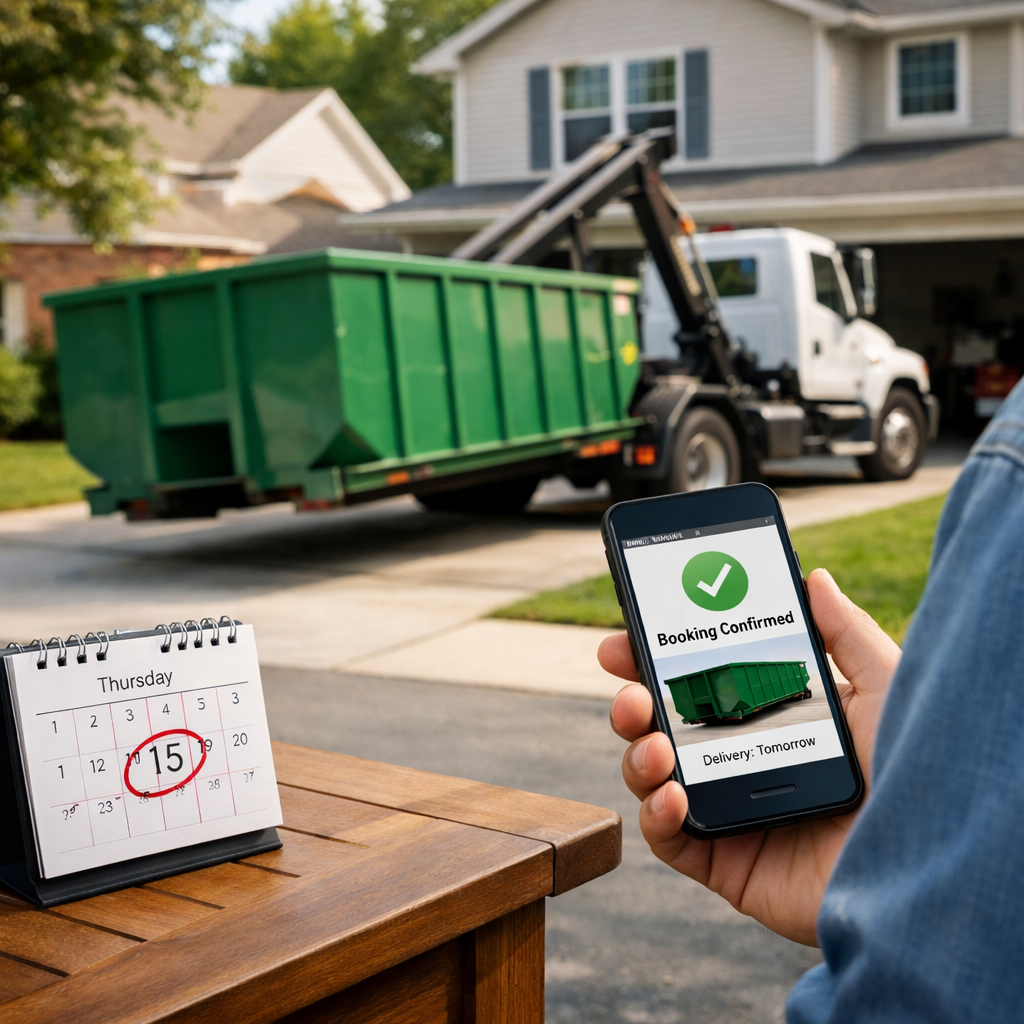
Book Next-Day Dumpster Rental Near Me For Fast, Hassle-Free Cleanups
Need a dumpster tomorrow? You can book a next-day dumpster rental near you in minutes by shortlisting local roll-off providers that publicly guarantee next-day delivery, confirming size/weight details, and locking in placement and pickup windows. Many operators now offer instant quotes and real-time updates, with verified next-day service in major metros and suburbs [1, 7]. For example, see Next Day Dumpsters’ next-day delivery guarantee across the MD/DC/Northern VA region [1]. Use the Garbage Advice playbook below to choose the right size, avoid overweight fees, and get on-time delivery without surprises.
Quick booking checklist for next-day delivery
- Confirm the provider’s service area and next-day delivery window (AM/PM). Use trust markers like public next-day guarantees and clearly posted coverage areas—providers such as Next Day Dumpsters list both [1].
- Verify dumpster size and weight limit in writing (tons included and per‑ton overage).
- Ask about prohibited items and hazardous waste rules; paints, liquids, and certain chemicals are commonly restricted [3].
- Check if a permit is required for street or curb placement with your local authority; rules vary by city and HOA [4].
- Confirm the placement spot, ground conditions, overhead clearance, and driver access/turn radius.
- Get the total price in writing: delivery, pickup, disposal, included weight, overage $/ton, wait-time, swap, relocation [5].
- Lock pickup timing (on-call or scheduled) and request a direct day-of contact number.
- If your date is tight, ask whether a same-day backup is possible and what sizes are in stock [7].
Next-day dumpster rental: A roll-off dumpster delivered within one business day of booking, typically with a set rental period and included weight limit. Availability depends on fleet capacity, local demand, placement rules, and materials restrictions. Faster service may limit sizes and increase cost during peak periods.
How to find vetted local providers with verified next-day service
Search “[city] next-day dumpster” and prioritize companies that explicitly guarantee next-day delivery and clearly show service areas (e.g., Next Day Dumpsters’ next-day delivery guarantee page) [1]. Scan trust signals—BBB ratings, awards, and recent customer feedback that cites punctual drop-offs and on-time pickups; note the consistent praise for quick follow-ups and courteous drivers in recent Yelp reviews in Rockville [6]. Then call 2–3 vendors to confirm inventory for your date/size, whether same-day is possible for emergencies, and their day-of communication process [7]. In many markets, next-day service is consistently available, including regional specialists such as 24 Hour Dumpster’s Indianapolis next-day service [11]. Garbage Advice recommends using these same filters (public guarantees, recent reviews, and clear service maps) to shortlist faster.
What to expect from online booking and confirmation
Most modern operators provide online quotes, booking portals, and automated updates. Behind the scenes, route optimization and GPS/sensor-equipped fleets help teams hit tight delivery windows and orchestrate pickups at scale [8].
A typical workflow:
- Request an instant quote online, select size and date, and place a card hold.
- Receive a quick phone confirmation with your delivery window and exact placement notes—this step strongly correlates with positive reviews [1].
- Get a day-of ETA by text/call; the driver confirms safe placement.
- Schedule pickup as soon as you’re full; some portals allow self-service pickup requests.
Pro tip for vendors: embed a short step-list graphic and implement HowTo schema to boost snippet visibility.
Choose the right dumpster size and avoid weight overages
Right-sizing is the surest way to prevent costly overages and mid-project swaps. Multiple industry sources stress that selecting the correct roll-off size reduces delays and surprise fees [9].
Quick mapping:
- 10 yd: attic/basement cleanouts, small landscape jobs
- 20 yd: kitchen/bath remodels, flooring, roofing (up to ~35 squares of shingles)
- 30 yd: multi-room renovations, move-outs, light demo
- 40 yd: major construction/demolition, commercial cleanouts
Typical specs and fee levers (varies by market and material):
| Size (yd³) | Common uses | Approx capacity (pickup loads) | Included weight (tons) | Overage ($/ton) | Typical footprint (L×W×H) | Clearance needs |
|---|---|---|---|---|---|---|
| 10 | Small cleanouts, yard debris | 3–4 | 1–2 | $60–$150 | ~14’×7’×3.5’ | 60–80’ approach; 12–14’ height |
| 20 | Kitchen/bath, flooring, roofing | 6–8 | 2–3 | $60–$150 | ~22’×7.5’×4.5’ | 60–80’ approach; 12–14’ height |
| 30 | Major remodel, move-outs | 9–11 | 3–4 | $60–$150 | ~22’×7.5’×6’ | 60–80’ approach; 12–14’ height |
| 40 | Construction/demo | 12–14 | 4–5 | $60–$150 | ~22’×7.5’×8’ | 60–80’ approach; 12–14’ height |
- Overweight and wait-time fees are among the most common customer pain points—confirm both the included weight and per‑ton overage before booking [5].
- Dense debris (dirt, concrete, roofing) hits tonnage limits early; clarify material type when ordering to avoid overloads and extra hauls [9].
Understand pricing, fees, and cost tradeoffs for speed
Need-it-tomorrow convenience can cost more and limit size choices; if you can wait 2–3 days, scheduled rentals often offer better pricing and broader inventory [7].
Typical cost components to confirm up front:
- Base rate by size/market and included rental period (often 7–14 days)
- Disposal/landfill fees and weight overages (per‑ton)
- Extra days, relocation, or swap fees
- Wait-time fees if the driver is held up on site
- Contamination charges for prohibited or mixed hazardous items [5, 10]
Transparent pricing: At Garbage Advice, this means a clear, itemized quote covering base rate, delivery/pickup, included weight, overage rate, rental period, and any surcharges, issued before booking to prevent billing surprises.
Permits, placement, and site prep essentials
Street or curb placement often requires a municipal permit; experienced providers stay current on local rules and can advise you on approvals and timelines [4]. When possible, choose driveway placement to simplify logistics and avoid permit delays.
Best practices:
- Use a level driveway or pad; protect with plywood over asphalt/pavers.
- Ensure 60–80 feet of approach and at least 12–14 feet of vertical clearance (no branches/wires).
- Mark the exact spot; drivers can accommodate specific placement requests when safe and feasible [1].
- Checklist: confirm access width and turning radius, avoid soft ground, and secure HOA approvals if needed.
What you can and cannot put in a dumpster
Allowed (typical):
- Household junk, furniture, non-appliance bulky items
- Construction and demolition debris: wood, drywall, tile
- Roofing shingles (check weight), siding, flooring
- Yard waste (local rules vary)
Not allowed/restricted (common):
- Liquids, wet paint, solvents, fuels, and chemicals
- Batteries, tires, electronics (E‑waste rules vary)
- Asbestos, medical waste, pressurized tanks
- Dirt, concrete, or brick may require dedicated loads
Always confirm your provider’s materials list; paints, liquids, and hazardous items typically require special handling [3].
Hazardous waste: Materials that pose significant risks to health or the environment, including flammables, corrosives, reactives, and toxics. Examples are certain chemicals, solvents, paints, batteries, and pesticides. Improper disposal can lead to legal penalties and environmental harm—use designated collection programs at local agencies or special drop-off events [9].
Avoid common pitfalls that cause delays and extra charges
- Wrong size selection → Share debris type and estimated volume with the provider, and ask for a sizing recommendation to avoid swaps [9].
- Unclear rental windows or late pickups → Verify the included rental period, extension costs, and how to schedule pickup to prevent extra-day fees [10].
- Overweight loads, prohibited items, and wait-time charges → Review weight limits, banned materials, and onsite readiness before delivery [5].
Mini-checklist
- Before delivery: confirm permit (if street), clear space, mark placement, stage debris, share a backup contact.
- Before pickup: level load under the fill line, remove obstructions, secure gate/driveway access, and confirm the pickup window.
When a bag, junk hauler, or scheduled pickup is a better fit
- Dumpster bag: best for small-to-medium debris with limited driveway space; DIY-friendly but capacity-limited.
- Junk hauler: one-and-done removal with labor included; ideal for mixed bulky items and when you can be onsite.
- Scheduled roll-off: lower rates and more sizes if you can wait 2–3 days—often the most economical option [7].
Choose based on debris volume/density, access constraints, how firm your timeline is, and your budget.
Sustainability tips for sorting, recycling, and diversion
- Pre-sort clean wood, metal, cardboard, and concrete to streamline drop-offs at local recyclers; ask your provider whether recycling-friendly loads receive preferred pricing or dedicated bins.
- Never mix hazardous materials into your roll-off; mishandling creates environmental damage and legal risk—use approved channels instead [9].
- Donate usable goods to local charities and habitat stores; request disposal or recycling receipts when available to document diversion.
How next-day service works behind the scenes
Providers use route optimization, GPS fleet tracking, and, in some cases, container sensors to tighten delivery windows, reduce deadhead miles, and ensure timely pickups—key enablers of reliable same-/next-day service [8]. The sector is scaling: industry estimates project the dumpster market to grow from about $994.34M in 2023 to $1,762.58M by 2032, expanding availability in most metros [8].
Simple flow: dispatch → route optimization → on-site placement → pickup/recycling/disposal.
Where Garbage Advice can help with related home waste decisions
Stay ahead of future waste hassles with our broader guidance:
- Buying guides and reviews for disposals, splash guards, and septic-compatible units, plus DIY how‑tos that cut kitchen waste at the source.
- Pro-focused frameworks that evaluate sustainability roadmaps and utilities. Explore our due‑diligence toolkit in The Due Diligence Framework to Assess Heavy Industry Decarbonization Roadmaps link.
Frequently asked questions
How fast can I actually get a dumpster delivered?
Many providers can deliver within one business day, with same-day options in some markets. Garbage Advice recommends calling 2–3 providers to confirm inventory for your size and date.
How much does a next-day dumpster rental cost on average?
Prices vary by size, location, included weight, and rental length. Garbage Advice recommends getting an itemized quote to understand premiums, overage fees, and extra-day charges.
Do I need a permit to place a dumpster at my home?
Driveway placements usually don’t need permits, but street or curb placements often do. Garbage Advice suggests confirming requirements with your city and your provider before delivery.
Which dumpster size should I pick for a cleanout or remodel?
Small cleanouts often fit a 10-yard; kitchen/bath remodels a 20-yard; major renovations a 30-yard; large construction a 40-yard. Garbage Advice suggests sizing up when unsure to reduce overage or swap risk.
What items are prohibited or incur extra fees?
Flammables, liquids, and hazardous items (chemicals, certain paints, batteries) are usually banned. Garbage Advice recommends confirming your provider’s prohibited list and any related fees upfront.