
Best Waste Management Software for Compliance Reporting: A Practical Comparison
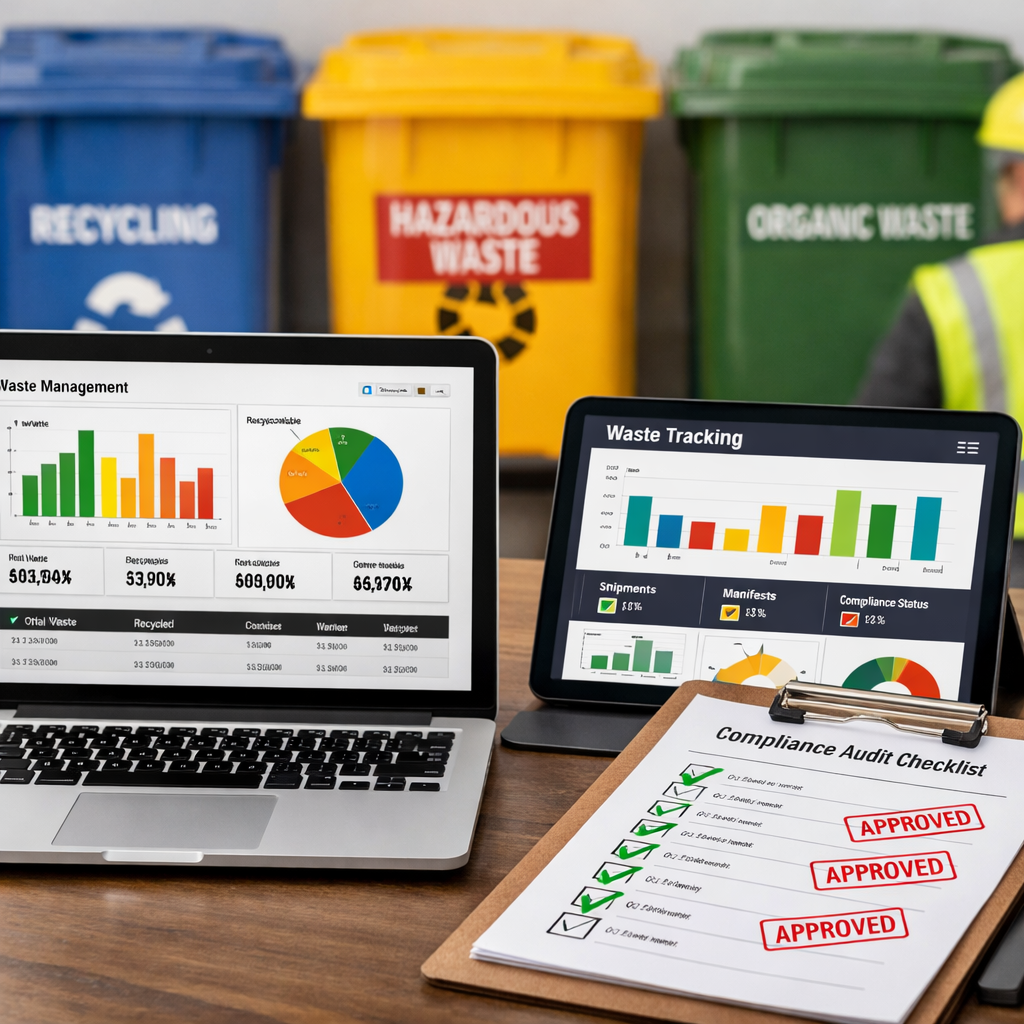
If you’re choosing the best waste management software for compliance reporting, start by matching your regulatory scope (e‑Manifest, RCRA, TRI) and data realities (barcode/GPS in the yard, multi‑site rollups, ERP/EHS integration) to the right platform tier. The short answer: enterprise EHS suites win for end‑to‑end hazardous waste tracking and audit‑ready outputs; mid‑market/mobile‑first tools excel at fast field capture; hauler/fleet platforms lean toward routing and DOT, not deep RCRA/TRI. At Garbage Advice, we recommend mapping scope and data flows to a tier before comparing features. Many leading waste compliance software options now automate TRI reporting and support the EPA’s e‑Manifest system, reducing manual reconciliation and error risk, as highlighted in Bless & Den Services’ roundup.
“Waste management compliance reporting software” is tools that centralize waste data and automate regulated outputs—manifests, storage‑time alerts, and reports—so organizations can meet federal, state, and local requirements with traceable, audit‑ready evidence.
At‑a‑glance: where each tier shines
| Tier | Core strengths | Tradeoffs | Best‑fit scenarios |
|---|---|---|---|
| Enterprise EHS suites | End‑to‑end lifecycle, deep RCRA/TRI, ESG dashboards, EHS/QMS/ERP integration | Longer implementations, quote‑based pricing | Multi‑site, hazardous waste generators; audit‑heavy industries |
| Mid‑market/mobile‑first | Fast deployment, intuitive mobile apps, barcode/GPS, published tiers | Narrower rule engines; may require add‑ons for full TRI/RCRA depth | SMBs and divisions needing fast field capture and quick wins |
| Hauler/fleet‑focused | Route optimization, container inventory, DOT labeling | Less depth in TRI automation and RCRA workflows | Large operators balancing ops efficiency with baseline compliance |
How to choose software for compliance reporting
Compliance reporting is the structured capture, validation, and submission of regulated waste data—such as manifests, accumulation time, and chemical releases—into legally accepted formats with traceable audit trails. Done right, it’s both legal bedrock and a competitive edge because clean data reduces risk and rework, and reveals cost/footprint levers, as noted in ISB Global’s compliance guide.
Know the market tiers—and their tradeoffs. Enterprise platforms emphasize the full waste lifecycle, robust RCRA/TRI reporting, and deep EHS/QMS integration. Mid‑market/mobile‑first tools trade some depth for speed, mobile capture, and price. Hauler/fleet systems center routing and DOT compliance more than comprehensive regulatory reporting, a pattern reflected in industry roundups.
Request proof early. Ask vendors for real sample outputs (e‑Manifests, TRI forms, site registers) using your waste codes. Confirm multi‑jurisdiction coverage and how regulatory rules are updated and versioned; many vendors now push automatic rule updates, as profiled in ScrappZero’s 2026 tools list. Garbage Advice pushes for working proofs with your waste codes before shortlisting.
Key evaluation criteria for compliance
Use a simple 1–5 scoring rubric across these factors to compare platforms. At Garbage Advice, this simple rubric keeps cross‑functional reviews objective.
- e‑Manifest: Generate, submit, reconcile manifests with carriers and TSDFs.
- RCRA storage‑time tracking: Automated accumulation‑day calculations with alerts to prevent exceedances; for example, Cority’s Environmental Cloud tracks accumulation days and can generate manifests.
- TRI automation: Prebuilt calculations and forms with change logs.
- Mobile barcode/GPS capture: Container scans, location stamps, photo evidence.
- Offline mode: Yard capture without signal, with secure sync.
- Regulatory update cadence: Frequency and transparency of rule updates.
- Dashboards/KPIs: Exception‑driven views, ESG/sustainability dashboards.
- Integration APIs: REST/connectors for ERP, EHS/QMS, vendor portals.
- Data export formats: CSV/XLSX, PDF, APIs for warehousing/BI.
Concise definitions you can share with stakeholders:
- e‑Manifest: The EPA’s electronic manifest system to track hazardous waste shipments from cradle to grave; modern platforms should generate, submit, and reconcile digital manifests across handlers.
- RCRA storage‑time tracking: Automated monitoring of container accumulation days with threshold alerts to prevent exceedances and associated violations.
Common feature baselines across the category include analytics, inventory, mobile access, and recycling management per GoodFirms waste software listings. Validate that TRI automation, EPA e‑Manifest support, and storage‑time alerts are native—not custom projects.
Enterprise platforms
Why go enterprise? You’ll get scalability, deeper automation, and audit‑ready outputs across complex sites and waste streams. Caveats: pricing is often “contact vendor,” and implementations take longer, a consistent theme in GoodFirms waste software listings. At Garbage Advice, we see these tradeoffs play out in most multi‑site evaluations.
Mini‑shortlist (verify with vendor demos and API docs):
| Platform | Standout compliance features | Ideal buyer profile |
|---|---|---|
| ComplianceQuest | Salesforce‑native, automated workflows, EHS/QMS/ERP integrations, multi‑site rollups | Regulated industries needing secure scaling and unified quality/EHS |
| Cority | Accumulation‑day tracking, automated manifests/alerts, mobile barcode scanning, ESG dashboards | Hazardous waste generators prioritizing audit‑readiness |
| VelocityEHS | RCRA rigor with storage‑time tracking, manifesting, TRI automation, alerts | Operators with heavy hazardous waste and deadlines |
| AMCS | Waste profiles, digital manifests, DOT‑compliant labeling plus route/fleet depth | Large waste/recycling operators balancing ops + compliance |
| Enablon | Enterprise EHS with incident linkage to waste actions and reporting | Global enterprises tying incidents to root cause and corrective action |
Insist on proofs: see working barcode workflows on live containers, API mappings to ERP/EHS/QMS, and full manifest/TRI outputs.
ComplianceQuest
ComplianceQuest’s Salesforce-native platform leverages the Salesforce security and integration fabric to scale across sites, standardize workflows, and apply automation/AI to reduce manual tracking and improve traceability. It supports solid/liquid, hazardous and non‑hazardous waste, and aligns to EPA, OSHA, ISO 14001, and GxP with built‑in documentation controls, per ComplianceQuest’s Salesforce-native platform. Ask the vendor to walk a container lifecycle: container creation → barcode scans → accumulation tracking → manifest generation → sign‑off → multi‑site rollup with audit trails.
Cority
Cority centralizes waste tracking, automates manifests and alerts, and extends into ESG reporting. Notably, Cority’s Environmental Cloud tracks accumulation days and offers mobile barcode scanning for onsite data capture—useful for preventing storage exceedances and tightening cradle‑to‑grave traceability. The solution earned Environmental Protection Product of the Year (2024) per its product page. In demos, review examples of accumulation‑day alerts and ESG dashboards populated with your waste streams.
VelocityEHS
Industry roundups consistently position VelocityEHS as one of the most complete platforms for RCRA hazardous waste compliance, including storage‑time tracking, manifesting, TRI automation, and alerts. A practical test: configure accumulation thresholds across multiple generating areas, then simulate delays to confirm automated deadline warnings and escalation paths.
AMCS
AMCS suits large waste/recycling operators who need operational depth plus compliance. Capabilities include waste profile management, digital manifesting, and DOT‑compliant container labeling, as summarized in market comparisons. Clarify where AMCS overlaps with fleet/route modules and how its compliance workflows differ from pure EHS suites in scope and reporting depth.
Enablon
Enablon brings an enterprise EHS backbone with robust waste tracking and the ability to link incidents to root causes and corrective actions—strengthening audit defensibility and continuous improvement, a benefit called out in ScrappZero’s 2026 tools list. In discovery sessions, map a flow from incident → root cause → waste action → reporting to see how evidence chains are preserved.
Mid‑market and mobile‑first options
If you need faster deployment and lower up‑front cost, mid‑market/mobile‑first platforms deliver strong field capture with barcode/GPS and simpler onboarding. The tradeoff is often narrower RCRA/TRI depth or fewer multi‑jurisdiction rule engines; verify coverage and sample outputs during demos, as advised by ScrappZero’s 2026 tools list. Many vendors publish starter tiers or offer trials and demos, a trend visible in SoftwareSuggest’s directory. From a Garbage Advice standpoint, these tools are strong for fast field capture and early wins—just diligence the depth of TRI/RCRA automation.
Benchmark Gensuite
Benchmark Gensuite provides mobile‑enabled waste tracking, Tableau‑powered dashboards, AI‑assisted insights, platform APIs, and automated email compliance reminders, per the Benchmark Gensuite overview. Ask for a sample dashboard with TRI metrics and accumulation days, and review the reminder cadence that flags upcoming deadlines and exceptions.
Wastebits
Market directories highlight Wastebits among vendors with varied pricing and trial options; use demos to confirm manifest support, vendor/TSDF portals, and export formats (CSV/API), per SoftwareSuggest’s directory. Bring a short checklist to each call: e‑Manifest generation and reconciliation, RCRA storage alerts, TRI form generation, and report scheduling.
ReciclApp
ReciclApp is a mobile‑first option for small‑to‑mid operations with scalable pricing. During demos, confirm regulatory rule update processes, manifest/TRI scope, and how offline mode syncs. Plan onboarding in short sprints: configure sites, train field staff on barcode scans/photos, then validate first manifest and inventory cycle.
SafetyCulture
SafetyCulture’s web/iOS/Android app supports site‑level controls and evidence capture. According to the SafetyCulture app page, it has been recognized as Best Health & Safety App (2020), offers Chemical Safety features for lab packs, drums, labels, and CERCLA reporting, and includes Sustrax for carbon/GHG reporting. Build inspection templates that feed compliance dashboards, and require photo evidence with timestamps/GPS for container checks.
Side‑by‑side comparison by use case
| Use Case | Best‑Fit Platforms | Must‑Have Features | Notes |
|---|---|---|---|
| Hazardous waste with e‑Manifest/TRI needs | VelocityEHS, Cority, ComplianceQuest | e‑Manifest generation/reconciliation, RCRA storage‑time alerts, TRI automation | Prioritize audit‑ready outputs and multi‑site rollups |
| Multi‑site EHS/quality integration | ComplianceQuest, Enablon, Cority | APIs/connectors to ERP/EHS/QMS, standardized workflows, ESG dashboards | Useful for regulated industries needing unified governance |
| Mobile‑first field capture at SMB sites | Benchmark Gensuite, ReciclApp, SafetyCulture | Barcode/GPS, offline mode, quick onboarding, simple dashboards | Validate report formats and jurisdictional coverage |
| Large operator with routing/DOT labeling | AMCS | Waste profiles, digital manifests, DOT labeling, fleet/route modules | Strong for operators balancing ops and compliance at scale |
Note: As highlighted in the roundup cited earlier, top platforms commonly provide TRI automation and EPA e‑Manifest support—confirm these are native, not custom builds.
Pricing and implementation considerations
Expect cloud/SaaS pricing with many enterprise listings showing “contact vendor” and no free version, a pattern in GoodFirms waste software listings. SMB‑oriented tools more often publish starter/monthly tiers and offer demos or trials; directories even show entry points (e.g., sub‑$25/month tools like WAM‑Hauler) in SoftwareSuggest’s directory. Garbage Advice recommends building a quick TCO model before demos to keep comparisons grounded.
Total cost of ownership checklist:
- Licenses/subscriptions
- Implementation and configuration
- Data migration and historical backfill
- Integrations (ERP/EHS/QMS, vendor/TSDF portals)
- Training and change management
- Audit/report templates and validation
- Ongoing regulatory content updates and support
Timelines vary: SMB/mobile‑first tools can go live in weeks; enterprise deployments typically run longer due to integrations, data migration, and validation.
Practical selection checklist
- Request sample outputs: e‑Manifest, TRI forms, and site waste registers using your codes and destinations.
- Verify hazardous waste scope: show RCRA accumulation‑day tracking and alerts on your containers; generate and reconcile a test e‑Manifest.
- Test mobile capture: barcode/GPS scans, photo evidence, and offline mode in the yard, then confirm sync integrity.
- Confirm integrations: review REST APIs/connectors and push container IDs, manifests, and cost centers into your ERP/EHS sandbox.
- Compare TCO and update cadence: include implementation, training, hauling invoicing, and how/when regulatory rules are updated. Accurate reporting is central to legal compliance and operational efficiency—a point we reinforce at Garbage Advice and that’s emphasized by Benchmark Gensuite and ISB Global.
Expert take from Garbage Advice
Legacy systems push teams into manual reporting and spreadsheet reconciliation. Dedicated platforms improve accuracy and shrink audit prep—so insist on a live demo that uses your waste streams, handlers, and final report formats. Prioritize tools that capture data at the edge (barcode/GPS with photos), automate accumulation‑day/manifests/TRI alerts, and provide clear audit trails. Pilot at a single site for 30–60 days, validate report accuracy and exception handling, then scale network‑wide. If you’re also upgrading facility equipment, see our 2025 best garbage disposal roundup and model‑specific reviews (Waste King L‑2600/8000/3300, InSinkErator Compact, Whirlpool GC2000XE, GE GFC520V), plus our guides for diagnosing common disposal failures.
Frequently asked questions
What features matter most for waste compliance reporting?
Garbage Advice recommends prioritizing e‑Manifest, RCRA storage‑time tracking and alerts, TRI automation, mobile barcode/GPS capture, and integration APIs. Exception dashboards help multi‑site teams stay audit‑ready.
How do I verify e‑Manifest and hazardous waste coverage?
At Garbage Advice, we ask vendors to generate and submit a sample e‑Manifest for your waste codes and show reconciliation. Also confirm RCRA accumulation‑day tracking and notifications on your actual containers.
Can these tools integrate with ERP or EHS systems?
Yes—most leading platforms offer REST APIs or native connectors. At Garbage Advice, we recommend reviewing a data‑flow diagram and testing pushes into your ERP/EHS sandbox.
How long does implementation typically take?
In our experience at Garbage Advice, SMB/mobile‑first tools go live in weeks; enterprise rollouts run longer due to integrations, data migration, and validation.
What should I ask vendors before I buy?
Request sample reports in your exact formats and verify multi‑jurisdiction coverage. At Garbage Advice, we also test offline mobile capture, review APIs, and map full TCO including updates, training, and support.