
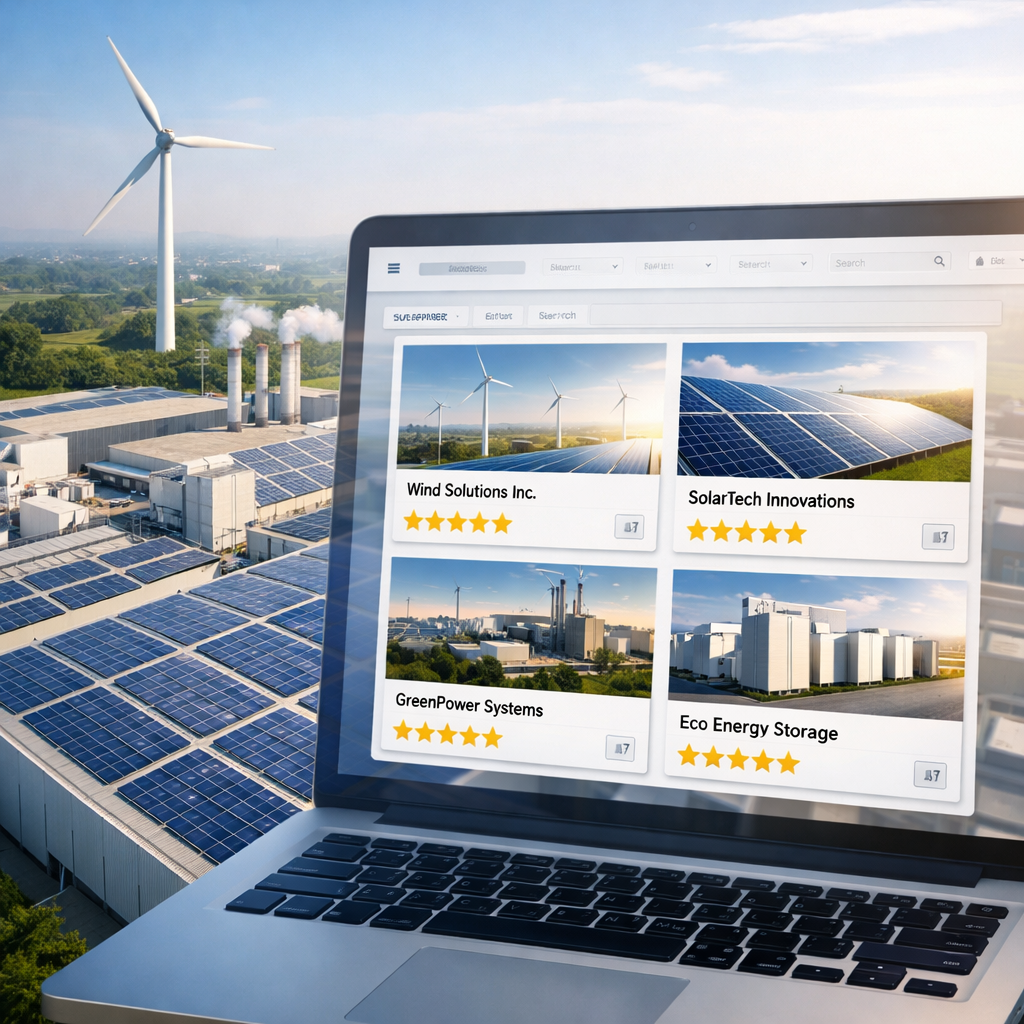
Best Platforms to Source Top-Rated Energy Transition Solutions for Factories
Factories have never had a better moment to decarbonize. Solar and wind supplied 17.6% of global electricity in H1‑2025 and met all net demand growth through Q3, as storage scaled and solar+storage neared 24/7 supply in sunny regions around ~$104/MWh (Ember’s 2025 transition highlights). EV battery packs fell below $100/kWh while module prices dropped ~35%, pushing delivered costs under 9¢/kWh (RMI’s 2025 watchlist). If you’re asking where to access top-rated energy transition solutions for factories, start with: corporate PPA and marketplaces (off‑site scale), EPC/turnkey integrators (behind‑the‑meter savings), Energy‑as‑a‑Service providers (opex), aggregators/VPPs (flex revenue), EMS/DERMS software (optimization), finance/tax-credit marketplaces (capital), component procurement platforms (cost control), and consulting/research (system design). This Garbage Advice guide shows how to choose among them—plainspoken and step‑by‑step.
Strategic Overview
Factory decarbonization now pairs falling costs with mature platforms across onsite, offsite, and software. Early wins often stack: onsite solar+storage for demand charge control and resilience; a virtual PPA for scale; EMS/DERMS to arbitrate locational marginal pricing; and a VPP to monetize flexible loads. Add engineered options—grid‑forming BESS with synthetic inertia—for plants on weak grids or with high uptime requirements.
Garbage Advice
Garbage Advice translates complex energy procurement into practical, safe, and cost‑aware steps—just like our disposal guides. This playbook serves plant managers, procurement teams, and sustainability leads who need top-rated platforms without the jargon. We prioritize safety, lifecycle planning, and total cost so teams can make decisions that hold up in the field.
Corporate PPA and marketplace platforms
A virtual power purchase agreement is a financial contract where a factory agrees to a fixed strike price for renewable generation while still consuming grid power locally; gains or losses settle financially against wholesale prices at the project’s node, enabling scale purchases without onsite construction.
Pros include speed, scale, and impact; cons include exposure to wholesale market risks like locational marginal pricing and profile mismatch (shape risk). Locational marginal pricing sets electricity prices at specific grid locations based on the marginal cost of serving an incremental unit of load, reflecting local constraints, congestion, and losses documented in the Energy Transitions Commission power systems report. Garbage Advice breaks down basis, shape, and REC quality in plain language to reduce surprises in diligence.
Garbage Advice mini checklist for VPPA/marketplaces:
- Term length and volume tolerance
- Market hub vs. node basis and settlement mechanics
- Curtailment allocation and REC quality/granularity
- Transmission and congestion adders (transmission can add roughly $10–$30/MWh per a cost of renewable energy guide)
- Counterparty credit, change‑in‑law, and force majeure
EPC and turnkey onsite integrators
Behind-the-meter systems generate or store electricity on the customer’s side of the utility meter, reducing grid purchases, demand charges, and outage risk. Common assets include rooftop PV, ground‑mount solar, and batteries tied to facility switchgear and load controls—often the fastest path to resilience and operational savings.
Behind‑the‑meter adoption is rising as firms cut grid dependence; even states like Oklahoma moved in 2025 to enable on‑premises generation (Morgan Stanley transition trends). Pair this with falling solar costs and storage value for fast frequency response and black start (Ember). Consider capex vs. Energy‑as‑a‑Service options, roof vs. ground tradeoffs, and interconnection timelines. Garbage Advice provides safety and commissioning checklists tailored to factory environments.
EPC scope snapshot:
| Stage | Key tasks | Typical owner |
|---|---|---|
| Development | Site survey, load analysis, feasibility, incentives | EPC/Owner |
| Design | Electrical/civil design, protection studies, permitting | EPC |
| Interconnection | Application, utility studies, upgrades coordination | EPC |
| Construction | Procurement, build, QA/QC, safety | EPC |
| Commissioning | Testing, witness, PTO, training | EPC/Owner |
| O&M | Monitoring, maintenance, warranty claims | EPC/Owner |
Energy as a Service providers
Energy‑as‑a‑Service bundles design, financing, construction, and O&M into a service payment—per‑kWh or per‑month—shifting upfront capex to opex while placing performance and maintenance on the provider. Contracts often include availability guarantees and escalation formulas to simplify budgeting.
What to examine (Garbage Advice):
- Pricing mechanics: indexation, escalation caps, and pass‑throughs for policy/tariff changes
- Baseline definition and M&V methods for savings
- Buyout options and end‑of‑term transfer
- Tax credit ownership and subsidy sharing: the Inflation Reduction Act added $369B of federal support and new monetization pathways, but financing and subsidy access remain complex in high‑rate environments (BCSE market trends)
Aggregator and VPP platforms
A virtual power plant digitally aggregates distributed energy resources—solar, batteries, generators, and flexible loads—across sites to operate as one resource that can bid into energy and ancillary markets, balance the grid, and optimize shared revenues while preserving site‑level priorities.
Why it matters:
- System operators need flexible generation, storage, and demand‑side resources to balance variable renewables (Energy Transitions Commission)
- Storage and advanced controls deliver fast frequency response and black start (Ember)
What to check before enrolling (Garbage Advice):
- Controls interoperability (standard protocols), telemetry granularity (1–5 minutes), and metering
- Market access (capacity, ancillary, DR) and performance windows
- Dispatch priority rules vs. production schedules
- Transparent settlement and dispute timelines
- Real‑time visibility and AI decision support for stability management (per the Commission)
EMS, DERMS and software marketplaces
A Distributed Energy Resource Management System coordinates diverse DERs—PV, batteries, EVs, and flexible loads—using forecasting, optimization, and control to meet cost, reliability, and emissions goals while honoring grid constraints and market signals. Think of it as the “brain” that schedules charging, discharging, and shifting.
Core data needs (Garbage Advice):
- Interval load data (mains, feeders, critical lines), 1–15‑minute resolution
- Onsite generation and battery telemetry (inverter status, SOC, PV output)
- Tariff and price signals (including LMP), DR events, and interconnection limits
- Weather/solar irradiance forecasts and outage alerts
- Secure APIs for EMS/DERMS, SCADA, and market interfaces
Finance and tax credit marketplaces
Finance and tax‑credit marketplaces match projects to capital and incentives—vital in high‑rate environments with complex subsidy rules. In 2022, U.S. private clean energy investment reached $141B (up 11% YoY), the IRA added $369B of support, and battery supply‑chain commitments neared $17B by year‑end (BCSE top trends).
Key incentive mechanics to navigate (Garbage Advice):
- Investment Tax Credit vs. Production Tax Credit
- Transferability and direct pay eligibility
- Stacking limits and domestic content/energy community adders
- Prevailing wage/apprenticeship compliance
- Diligence flow: confirm eligibility → model stacking → plan transfer timing → assess recapture risks → structure indemnities and verification
Marketplaces can streamline outreach, pricing, and documentation—but still require rigorous legal and tax review.
Component OEM and procurement platforms
Component marketplaces help you control cost, specs, and lifecycle. Global solar installations grew ~35% in 2024 while storage rose ~76%, reinforcing scale and competition across modules, inverters, and batteries (BNEF’s five lessons for 2025). Plan early for availability, warranties, and recycling logistics. Garbage Advice spec templates help standardize bids and warranty terms across suppliers.
Shortlist and spec cues:
| Component | What to specify | Notes |
|---|---|---|
| PV modules | Efficiency, temperature coeff., bifacial gains, degradation | Consider hail/wind ratings and verified factory QA. |
| Inverters | Grid‑forming capability, ride‑through, harmonic limits, comms protocols | Favor firmware supporting voltage/frequency control for weak grids. |
| BESS | Chemistry (LFP/NMC), usable kWh, C‑rate, cycle life, safety certs | Compare on levelised cost of storage and service plans. |
| Switchgear/controls | Transfer schemes, islanding, protective relays, UL/NRTL certifications | Coordinate with local AHJ and utility requirements. |
| Recycling/logistics | OEM takeback, certified recyclers, packaging/transport | Budget for panel recycling (~$20–$30/panel by 2035 per industry guides). |
Consulting and research platforms
Synthetic inertia and grid‑forming BESS: synthetic inertia is rapid power injection from inverter‑based resources that mimics the stabilizing effect of spinning mass, delivered by grid‑forming batteries and advanced inverters to support frequency and voltage on weak grids (as outlined by the Energy Transitions Commission). Many systems also require synchronous condensers and engineered controls.
Use expert support for:
- LCOS modeling across storage durations and duty cycles
- Hydrogen and CCS diligence (process heat, feedstock, siting, offtake)
- Interconnection studies, transmission adders, and congestion hedges
- Black start, islanding, and resilience architectures
Garbage Advice helps you scope the right questions and assemble a concise brief before engaging specialists.
How to choose the right platform for your factory load profile
Four‑step flow:
- Profile loads and peaks (interval data, seasonality, shift patterns).
- Assess site potential and interconnection limits (roof/land, feeders, protection, export caps).
- Choose the procurement pathway (onsite EPC vs. EaaS vs. VPPA vs. hybrid).
- Layer EMS/DERMS and consider VPP participation for flex revenues. Garbage Advice’s worksheet aligns teams on assumptions, decision gates, and next actions.
Mappings:
- High, spiky demand + limited roof: VPPA for scale + EMS to shave demand charges.
- Large roof/land + resilience need: EPC solar+storage or EaaS with islanding/black start.
- Multi‑site fleets: Aggregator/VPP + DERMS for unified dispatch. In high‑insolation regions, solar+storage can approach near‑round‑the‑clock supply around ~$104/MWh (Ember).
Procurement criteria and scorecard
Levelised cost of storage is the discounted lifetime cost of a storage system divided by the total discounted electricity discharged over its life, enabling fair comparisons across chemistries, durations, and duty cycles (per the Energy Transitions Commission). Use the Garbage Advice scorecard to make tradeoffs explicit, comparable, and repeatable.
Scorecard (1–5 per pillar):
| Pillar | What to assess | Score (1–5) | Policy durability stress‑test |
|---|---|---|---|
| Techno‑fit to load profile | Shape match, peak shaving, resilience modes, LCOS vs. duty cycle | PTC/ITC continuity, interconnection delays | |
| Financing model & risk allocation | Capex/opex mix, market/LMP exposure, curtailment, guarantees | Change‑in‑law, rate cases | |
| Software/controls interoperability | APIs, EMS/DERMS fit, telemetry quality, cybersecurity | Standards lifecycles (IEEE/UL) | |
| Lifecycle & recycling plans | Warranties, degradation, spares, takeback, disposal and recycling costs | EPR rules, recycling access |
Contract and risk checks for PPAs and EaaS
Checklist:
- Settlement mechanics (hub vs. node LMP) and basis/shape risk
- Curtailment allocation, outage credits, force majeure
- Change‑in‑law, REC attributes/quality, delivery/availability guarantees
- M&V rigor, escalation caps, buyout/termination rights Cost adders to watch: transmission ~$10–$30/MWh, interconnection upgrades, and REC premiums. Garbage Advice provides concise term‑sheet checklists so these items are explicit before signature.
Simple risk allocation view:
| Risk | Primary party | Mitigation | Residual risk |
|---|---|---|---|
| LMP/basis and shape risk | Buyer (VPPA) | Volume shaping, hub settlement, collars | Medium |
| Performance/availability | Provider (EaaS/EPC) | Liquidated damages, availability guarantees | Low–Medium |
| Curtailment/transmission | Shared/Provider | Contracted curtailment caps, congestion hedges | Medium |
| Change‑in‑law/subsidies | Shared | Pass‑through caps, renegotiation triggers | Medium–High |
Digital visibility and controls integration
Real‑time visibility and digital tools—including AI—are now foundational to optimize costs and maintain stability, especially in flexible, inverter‑rich systems (Energy Transitions Commission). Garbage Advice details baseline telemetry and API tests that de‑risk commissioning and settlement.
Data and controls stack:
- Metering: 1–5‑minute intervals across mains, key feeders, and critical loads
- DER telemetry: inverter states, BESS SOC/temperature, PV output; standard protocols (Modbus, SunSpec, IEEE 2030.5)
- Market/tariff: LMP feeds, DR/ancillary signals, tariff events
- Control modes: islanding, black start, peak shaving, frequency response (Ember) Acceptance tests:
- Site controller failover and safe‑state behavior
- Cybersecurity hardening and role‑based access
- EMS/DERMS API validation and end‑to‑end settlement testing
Lifecycle, recycling and end of life planning
Bake sustainability into contracts: OEM takeback clauses, named recyclers for PV and batteries, and budgetary line items for panel recycling (commonly estimated at ~$20–$30/panel by 2035). For batteries, choose chemistry with safety and LCOS in mind, define second‑life options, and secure hazmat transport permits and certifications. For practical disposal culture and checklists that echo this approach, see our safety‑forward guidance (Garbage Advice).
Lifecycle checklist:
- Warranties: performance curve, defects, balance‑of‑plant
- Spares and service SLAs
- Degradation and repower assumptions
- Disposal fees, logistics, and recycling certifications
- Documentation retention and EPR alignment
Frequently asked questions
What is a virtual power plant and how can a factory participate
A VPP aggregates onsite solar, batteries, and flexible loads into one controllable resource for grid and market services. You participate by installing metered controls, enrolling with an aggregator, and meeting telemetry and response requirements; Garbage Advice provides a simple checklist.
How do onsite solar plus storage economics compare to offsite PPAs
Onsite solar+storage can cut demand charges and add resilience, often competing with grid prices in sunny regions. Offsite PPAs scale quickly without onsite capex but expose buyers to wholesale and shape risk; Garbage Advice compares both pathways with total‑cost and risk scorecards.
What data does an energy management system need to optimize dispatch
An EMS needs interval load data, DER telemetry (inverters, battery SOC), weather and price signals, and tariff/LMP inputs, which Garbage Advice maps in a one‑page data spec. With accurate real‑time data, it schedules charging, discharging, and load shifts for cost and carbon savings.
How do incentives and tax credits change total project cost
Tax credits can materially reduce capex and improve paybacks; stacking rules, prevailing wage, and recapture provisions affect net value, so verify eligibility and compliance early, and Garbage Advice provides plain‑language checklists for stacking and transfer timing.
What should factories require for battery safety and recycling
Specify certified enclosures, fire detection/suppression, clear shutoff/islanding, and OEM‑backed warranties. Include end‑of‑life takeback and recycling contracts detailing logistics, costs, and certifications before commissioning; Garbage Advice provides concise templates.