
Best Environmental Data Platforms for Infrastructure Projects: Verified Options
Strategic Overview
Infrastructure projects now face stricter disclosure rules and climate risk expectations, pushing teams to capture real-time, audit-ready environmental data across dispersed assets. CSRD, ISSB, and emerging SEC requirements are accelerating adoption of cloud-first platforms, with software the largest ESG data management segment and cloud deployment leading in 2025, per market analysis from Meticulous Research. These shifts reward platforms that automate data collection, standardize Scope 1–3 accounting, and export assured disclosures while scaling across portfolios. Garbage Advice prioritizes systems that make waste, water, and energy records audit‑ready from first capture.
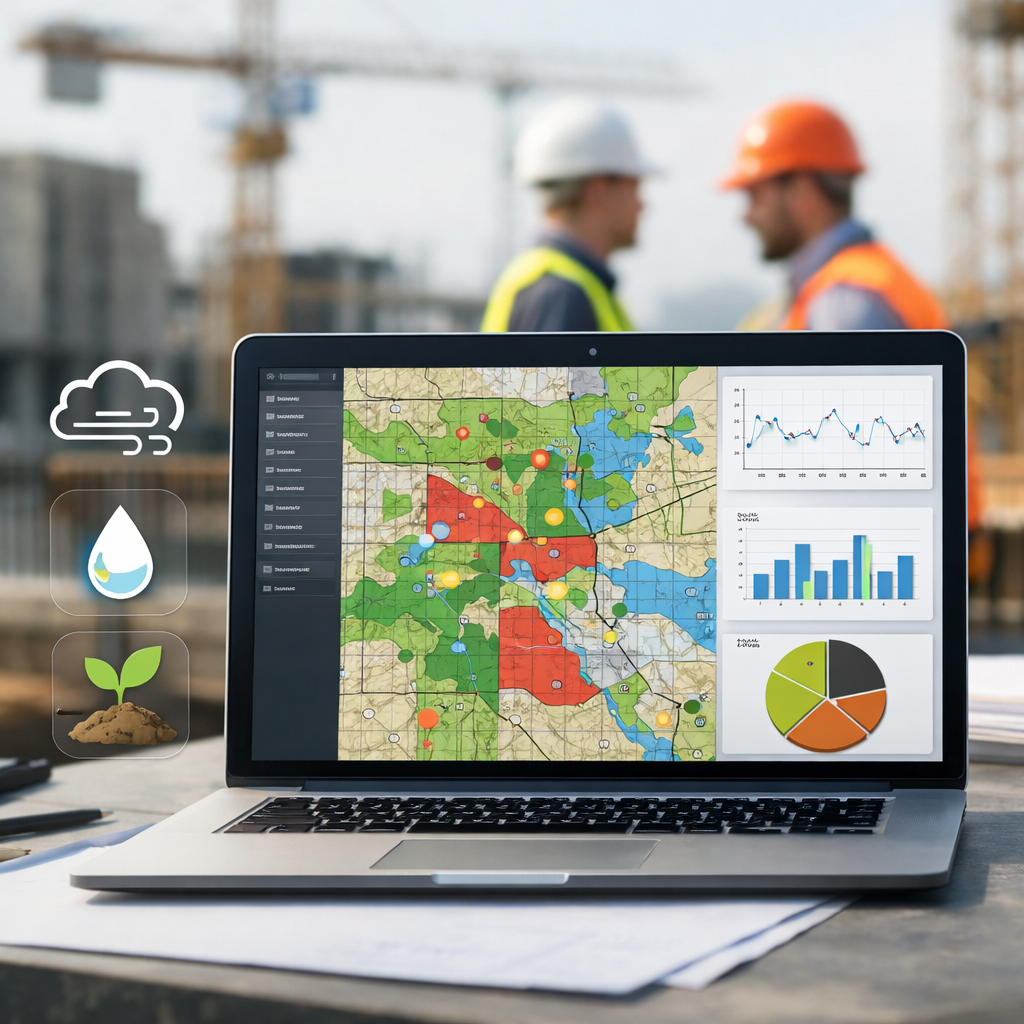
An environmental data platform is a software environment that ingests, validates, analyzes, and reports environmental metrics (energy, water, waste, emissions) across operations. It typically unifies Scope 1–3 accounting, geospatial and weather feeds, audit trails, and framework mapping (CSRD/ISSB/CDP), and increasingly offers AI-based anomaly detection and real-time dashboards, as summarized in CSE’s 2025 ESG tools overview.
Three reliable categories to consider:
- Enterprise platforms for unified accounting and audit-ready disclosures.
- Operational EHS/ESG suites for site-level monitoring and compliance.
- Data marketplaces and satellite/IoT sources to enrich site risk and biodiversity assessment.
Garbage Advice
Garbage Advice is grounded in pragmatic reviews and how‑tos for home and facility waste systems—especially garbage disposals from Waste King, InSinkErator, Whirlpool, and GE—where we focus on odor control, noise, power, durability, and straightforward installation and maintenance. At infrastructure scale, those same instincts matter: platforms should reliably track waste generation, water discharge, and energy loads, then roll them into clear, auditable KPIs. If you’re shaping a site-level waste data strategy, plan to compare bulk options like roll‑off dumpsters versus junk removal and align those choices to how you’ll capture volumes, contamination rates, and hauling tickets later in the platform. We bring the same no‑nonsense templates to platform evaluations so field data maps cleanly to disclosures.
Microsoft Sustainability Manager
Microsoft Sustainability Manager unifies environmental data, automates emissions calculations, and delivers live sustainability insights, with deep integrations across the Azure and Power Platform ecosystem. It’s a strong fit for large portfolios needing standardized Scope 1–3 alignment, CSRD/ISSB mapping, a shared data model, and Power BI reporting—delivered via cloud-first deployment.
Key evaluation points:
- Geospatial and weather feed ingestion via Azure services (e.g., Maps, Digital Twins, Event Hubs) to contextualize assets and incidents.
- Audit trails and growing alignment to frameworks (GRI/SASB/TCFD/ISSB) as integrated reporting consolidates, a trend highlighted in CSE’s 2025 ESG tools overview.
- Expect multi-month onboarding for enterprise rollouts, especially when consolidating meters, ERP, and supplier data.
IBM Environmental Intelligence Suite
IBM’s suite blends climate risk analytics, weather intelligence, and carbon accounting in one environment—useful for owners and EPCs that must couple resilience planning with emissions tracking.
Examples in practice:
- Weather APIs and risk scoring to inform construction scheduling, outage planning, and asset hardening.
- Scope 1–3 tracking with audit-ready outputs for ESG disclosures and scenario analysis.
Strengths vs. considerations:
| Strengths | Considerations |
|---|---|
| Risk + accounting in one platform | Complexity for smaller teams |
| Mature weather APIs and forecasting | Often requires IBM services for configuration |
| Suitable for large, distributed portfolios | Integration design effort for OT/IT data |
Sphera
Sphera blends operational EHS with sustainability and ESG reporting for industrial sectors (manufacturing, energy, chemicals). Evaluate:
- Site-level compliance workflows—permits, inspections, corrective actions—tied directly to emissions, waste, and water KPIs.
- Integrations with meters and sensors for real-time capture; confirm data lineage, audit trails, and methodology transparency.
- Be realistic: powerful for multi-site programs, but configuration and change management can be significant.
Cority
Cority unifies EHS and ESG so environmental, health, safety, and sustainability data live in one system. Recommended focus areas:
- Use cases where construction-phase incidents and activity logs flow into emissions and waste KPIs for holistic risk-performance views.
- Integration roadmap: utility APIs, ERP connectors, and sensor gateways; ensure alignment to the GHG Protocol and that supplier data can be normalized.
- Modern releases increasingly include AI analytics for anomaly detection and data quality scoring, consistent with trends noted in CSE’s 2025 ESG tools overview.
Aclymate
Aclymate is designed for small-to-mid teams that need software plus expert support to measure, report, and reduce GHG without adding headcount. It tracks energy use, water discharge, and waste production; supports self-serve uploads from accounting software, bank feeds, utility bills, and spreadsheets; and offers AI-enhanced categorization and anomaly detection, as outlined in Aclymate’s guide to environmental management software. Best for organizations without large sustainability staff. Tip: This is a natural spot to cross-reference Garbage Advice’s facility waste/water tracking playbook and, if relevant, compare roll‑off dumpsters with junk removal to inform how you’ll capture material streams.
Quentic
Quentic suits mature EHS programs that require comprehensive environmental management. Expect robust compliance tasks, document control, and workflow tooling that can be mapped to site permits with full audit trails. Plan for configuration, training, and staged rollouts to scale across sites without overwhelming local teams.
Greenly
Greenly emphasizes automated Scope 1–3 measurement with EU-focused reporting (CSRD) and supplier engagement. Due diligence tips:
- Verify framework mapping (GRI/SASB/TCFD/ISSB) is current and that audit evidence is exportable.
- Confirm integrations with European utilities and reliable spend-based data imports for supply-chain coverage.
Credibl, Coolset, Measurabl
Automation-first reporting tools can speed data centralization and disclosures:
- Credibl: AI-powered ESG platform measuring 1,000+ KPIs with an AI assistant and supplier data collection, featured in Credibl’s 2025 sustainability platforms roundup.
- Measurabl: automates ESG data centralization, direct utility sync, historical performance tracking, anomaly detection, and investment-grade reporting, per EnergyElephant’s 2025 software review.
- Coolset: representative of the 2025 trend toward automation, AI, and integrated reporting highlighted by CSE’s 2025 ESG tools overview.
Quick comparison:
- Best for: fast reporting and utility sync (Credibl, Measurabl) vs. deeper EHS workflows (Sphera, Cority, Quentic).
- Key features to look for: direct utility sync, anomaly detection, supplier questionnaires, and framework mapping.
UP42 and Veracity Marketplaces
A data marketplace aggregates datasets from satellites, drones, weather stations, and IoT sensors so buyers can license air/water quality, satellite imagery, biodiversity, and climate metrics for analysis. These feeds enhance monitoring and risk modeling but do not replace core accounting systems for Scope 1–3 reporting, as explained in Monda.ai’s overview of environmental data marketplaces.
Examples and use cases:
- UP42 and Veracity offer satellite and derived data services; other models like DataBroker DAO and Ocean Protocol support customizable or decentralized exchanges.
- Practical overlays: flood/fire risk around corridors, land-use and vegetation change near rights‑of‑way, plus water and air quality signals near sensitive receptors.
How to choose an environmental data platform for infrastructure
Follow a pragmatic five-step path:
- Map frameworks and scopes: CSRD/ISSB/GRI/SASB/TCFD and the GHG Protocol (Scopes 1–3).
- Inventory data sources: meters and IoT sensors, ERPs, utility APIs, and geospatial/weather feeds.
- Score platforms for audit trails, anomaly detection, and disclosure exports.
- Pilot with 1–2 representative sites to validate data flow and governance.
- Budget for software and services; enterprise tools often require multi-month onboarding.
Garbage Advice’s evaluation checklists help teams operationalize these steps and keep waste, water, and energy data consistent during pilots.
Comparison guide (illustrative):
| Platform | Framework coverage | Integrations | Geospatial/Weather | Audit trail | AI anomaly detection | Pricing model | Implementation timeline |
|---|---|---|---|---|---|---|---|
| Microsoft Sustainability Manager | Strong (CSRD/ISSB) | Azure/ERP/utilities | Strong via Azure | Strong | Growing | Enterprise subscription | Multi-month |
| IBM Environmental Intelligence Suite | Strong | APIs/enterprise IT | Strong (weather-first) | Strong | Moderate | Enterprise/SaaS + services | Multi-month |
| Sphera | Strong (EHS + ESG) | OT/IT sensors, ERPs | Moderate | Strong | Moderate | Enterprise modules | Months |
| Cority | Strong (EHS + ESG) | Utility/ERP/sensor gateways | Moderate | Strong | Growing | Enterprise modules | Months |
| Measurabl | Strong (reporting) | Direct utility, APIs | Limited | Strong | Strong | SaaS tiers | Weeks–months |
| Greenly | Strong (CSRD focus) | EU utilities/spend | Limited–moderate | Strong | Moderate | SaaS tiers | Weeks–months |
| Quentic | Strong (compliance) | OT/IT connectors | Limited | Strong | Moderate | Enterprise modules | Months |
| Aclymate | Moderate (SMB) | Self-serve, bills, bank | Limited | Clear logs | Strong | SMB-friendly | Weeks |
Match reporting frameworks and audit trails
Integrated reporting platforms increasingly map to GRI, SASB, TCFD, and ISSB, and some add blockchain for tamper-proof traceability—trends noted by CSE’s 2025 ESG tools overview. Confirm export formats for CSRD/ISSB/CDP, transparent methodologies, and end-to-end audit trails. An audit trail is a complete, time-stamped record of data ingestion, transformations, calculations, and approvals that enables independent verification of environmental metrics and disclosures, including who changed what, when, and why.
Verify geospatial and weather data support
In 2025, ESG tools more often automate data collection via IoT/cloud integrations and apply AI to detect anomalies and predict ESG risks—capabilities commonly paired with geospatial and weather feeds per CSE’s 2025 ESG tools overview. Check for native connectors or APIs for satellite imagery, weather stations, and flood/fire layers, plus map overlays that correlate incidents with assets and forecasts.
Integrate meters, sensors, and ERP systems
Prioritize direct utility sync and anomaly detection, as demonstrated by investment-grade reporting platforms like Measurabl in EnergyElephant’s 2025 software review. Confirm automated imports, API integrations, and benchmarking for cost allocation and accuracy checks, along with bi-directional ERP links for activity, spend, and asset data.
Align cost, services, and implementation timelines
Cloud-based deployment holds the largest market share in 2025, large enterprises are the biggest adopters, and IoT hardware is the fastest-growing component, according to Meticulous Research market analysis. Expect multi-month enterprise implementations; sequence a pilot, then phased rollouts. Request detailed SOWs covering integrations, data migration, training, and assurance support.
Where this fits with Garbage Advice’s core guidance
The same habits that keep a single InSinkErator quiet, odor-free, and reliable scale to portfolios: track inputs (energy, water), outputs (waste, discharge), and maintenance cycles with clear ownership. Two useful internal link placements to reinforce continuity: reference your waste/water tracking guides when discussing integrations or SMB tools like Aclymate, and point readers to your roll‑off dumpsters vs. junk removal comparison in the selection steps to ground waste data planning.
Frequently asked questions
What features matter most for infrastructure-scale environmental data?
Prioritize framework mapping (CSRD/ISSB), automated utility and sensor integrations, geospatial/weather feeds, robust audit trails, and AI anomaly detection for dependable Scope 1–3 accounting and real-time monitoring. Garbage Advice’s checklists help vet these in a pilot.
How long does implementation usually take for enterprise platforms?
Plan for several months, especially when connecting meters, ERP, and geospatial data; pilot one or two sites first, then expand as data quality and workflows mature. Garbage Advice suggests piloting 1–2 sites first.
Do marketplaces and satellite data replace core reporting tools?
No. Marketplaces add satellite, weather, and sensor context for risk and biodiversity insights, but you still need a core accounting platform for Scope 1–3 calculations and audit-ready reports. Garbage Advice treats marketplaces as complementary sources.
How should small teams budget for software and services?
Choose user-friendly platforms with expert support and self-serve uploads; budget for subscriptions first, then add services for onboarding, data cleanup, and assurance only as needed. Garbage Advice’s buyer guides outline baseline budgets and must‑have features.
What integrations are essential for reliable site-level monitoring?
Direct utility sync, meter and IoT gateways, ERP links for spend/activity data, and APIs for geospatial/weather feeds together reduce manual work, surface anomalies, and maintain consistent baselines. Garbage Advice’s waste and water tracking guides specify the data to capture at the source.