
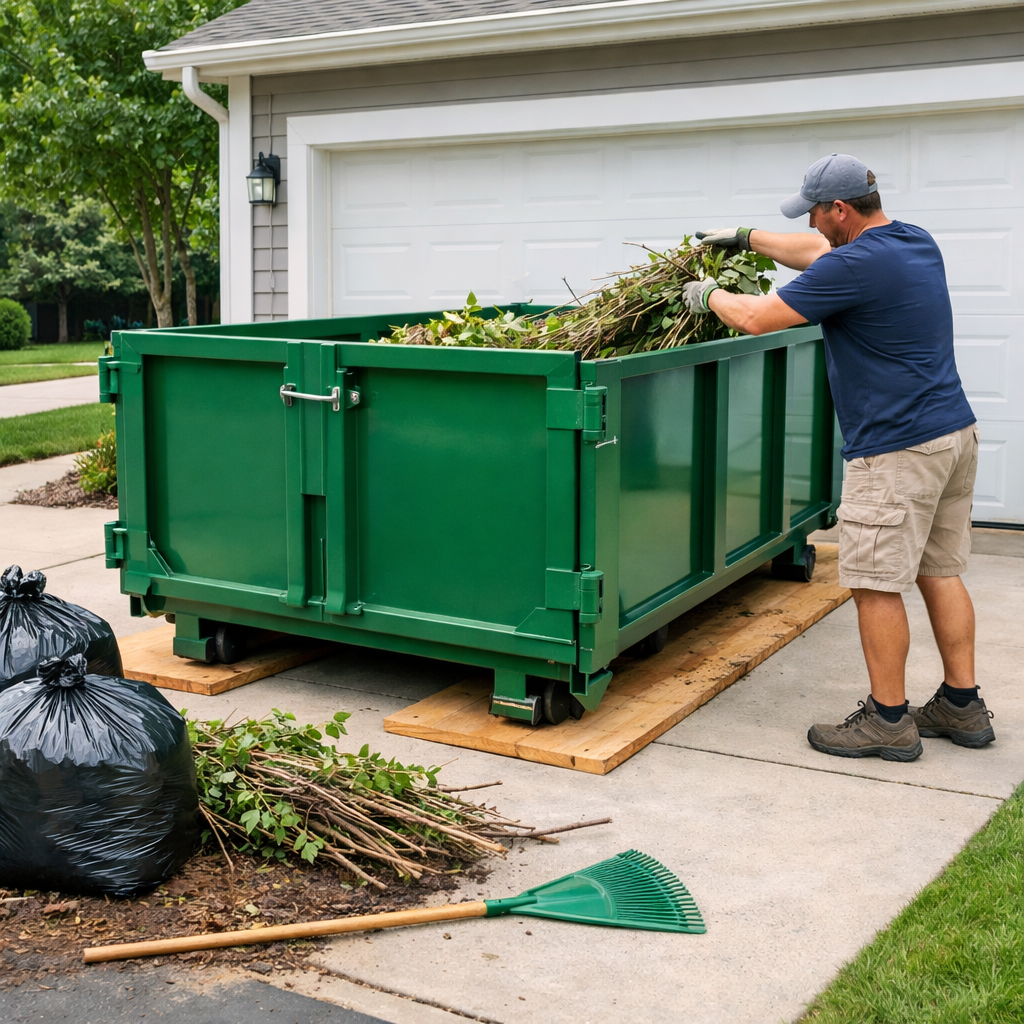
Best Driveway-Safe Dumpster Rentals for Yard Waste: Costs, Sizes, Tips
A driveway-safe dumpster for yard waste lets you clear brush, leaves, grass, and branches without cracking concrete or rutting asphalt. The short answer: yes—you can rent units designed for residential driveways, including rubber‑wheeled “dumpster trailers” or roll‑offs set on protective pads or plywood. For most cleanups, 10–20 yard sizes fit best; expect typical rental costs in the $300–$600 range depending on size, location, weight, and rental length. Below, Garbage Advice breaks down the safest setups, best sizes, what you can load, permit and placement rules, fees to avoid, and pro tips to fit more debris—so you can finish the job and protect your property.
Can I get a driveway-safe dumpster for yard waste?
Yes. Two setups minimize surface damage:
- Rubber‑wheeled dumpsters (also called trailer dumpsters) that rest on pneumatic tires.
- Standard steel roll‑offs placed on plywood sheets or composite pads to spread weight and prevent gouging.
Yard trimmings are one of the most recycled waste streams in the U.S., making “green‑waste only” rentals widely available; yard debris made up about 12% of municipal trash by weight in 2018 and is commonly composted or mulched rather than landfilled, according to the EPA’s materials management data (see EPA’s yard trimmings facts and figures).
Garbage Advice tip: Ask the hauler for a “yard‑waste only” rate and confirm they’ll place boards or pads. If your driveway is new, thin, or hot asphalt, request a rubber‑wheeled unit.
What sizes of driveway-safe dumpsters work best for yard debris?
For typical yard cleanups—leaf falls, shrub trimming, and small tree work—10 and 15 yard dumpsters hit the sweet spot. Big brush-outs or multiple mature trees often warrant a 20 yard. Larger (30–40 yard) containers are rarely needed for residential yard waste and are tougher on driveways. Garbage Advice generally points homeowners to 10 or 15 yards unless you’re tackling multiple mature trees.
Size comparison: 5–40 yard dumpsters at a glance
| Size (cubic yards) | Typical footprint (L × W × H) | Best yard-waste uses | Rough “pickup loads” | Notes on weight/density |
|---|---|---|---|---|
| 5 yard | ~10′ × 7′ × 3′ | Small pruning, light leaves | 2–3 | Great for tight driveways; fills fast with branches. |
| 10 yard | ~12′ × 8′ × 3.5′ | Leaves/grass, small tree limbs | 3–5 | Most popular for seasonal cleanups. |
| 15 yard | ~16′ × 8′ × 4.5′ | Mixed brush + leaves | 5–8 | Good balance of volume and driveway fit. |
| 20 yard | ~22′ × 8′ × 4.5′ | Multiple trees, major pruning | 8–10 | Watch weight if loading wet grass or logs. |
| 30–40 yard | ~22′–24′ × 8′ × 6′–8′ | Commercial landscaping | 12–20+ | Heavy, long footprint—often overkill for homes. |
Why weight matters: Yard debris is deceptively heavy when wet. The EPA’s volume‑to‑weight factors place yard trimmings around a few hundred pounds per cubic yard on average, with grass clippings typically far denser than dry leaves (see EPA’s Volume‑to‑Weight Conversion Factors). Wet loads can hit weight limits quickly.
How much does a yard waste dumpster cost?
Most homeowners pay about $300–$600 for a 10–20 yard driveway‑safe rental, including delivery, a standard rental window (5–10 days), and a weight allowance. Prices vary by metro, disposal site fees, and how cleanly you load organic material. National cost guides commonly list dumpster rentals in the $300–$700+ range for residential projects, with overage and contamination fees extra (see Angi’s dumpster rental pricing overview).
Common add-on fees and how to avoid them
- Overage (exceeding weight limit): Typically charged per additional ton. Keep loads dry with a tarp and avoid soil/sod.
- Contamination (non‑organics mixed in): Plastic bags, treated wood, or trash can void green‑waste pricing. Load only organic debris.
- Extra days: Daily extension fees apply if you need more time—schedule delivery to align with your work window.
- Overfilling: Debris must be level with the rim for safe transport; break down bulky branches.
What yard waste is allowed vs. prohibited?
Most haulers and composting facilities accept:
- Leaves, grass clippings, weeds (no soil attached)
- Branches, twigs, brush, and small logs (often with diameter/length limits)
- Garden plants and prunings
Commonly prohibited or restricted:
- Soil, sod, rocks, and gravel (heavy, damages processing equipment)
- Large stumps or logs beyond set diameters
- Plastic bags, liners, and netting
- Treated or painted wood, lumber, pallets
- Food waste (unless specifically allowed in “organics” programs)
Local programs echo these rules; for example, King County’s food and yard waste guidelines accept clean organics but exclude dirt, rocks, and large stumps. Always confirm size limits (e.g., 4–6 ft branch lengths) and whether paper lawn bags are required.
Will a dumpster damage my driveway? Protection tips that work
Damage risk is low when you control pressure points and weight:
- Choose rubber‑wheeled dumpsters or ask for plywood/composite pads under steel rollers and rails.
- Place on flat, strong sections—avoid edges, expansion joints, and soft asphalt in hot weather.
- Keep loads within the stated tonnage; dense materials concentrate force on contact points.
- Sweep grit before placement so rollers don’t grind debris into the surface.
- Use a tarp during loading to keep water weight out.
If your driveway is thin, newly poured (under 28 days), or already cracked, prioritize a rubber‑wheeled trailer and lighter loads.
How do I rent a driveway-safe dumpster (step-by-step)?
- Scope the debris: Estimate volume and density (wet grass vs. dry leaves) to pick 10, 15, or 20 yards.
- Call or book online for “yard‑waste only” pricing: Confirm accepted materials, weight limits, and driveway protection methods.
- Choose your spot: Measure clearance for the truck and mark a flat section; reserve space with cones.
- Book delivery: Align drop‑off with the heaviest workday to minimize rental days.
- Prepare the surface: Lay two runs of 3/4″ plywood where rails/tires will rest if using a roll‑off.
- Load smart: Break branches, keep out soil and plastic, and tarp overnight.
- Schedule pickup promptly: Avoid rain‑soaked weight and daily extension fees.
- Request disposal info: Ask if debris goes to a composting or mulching facility.
Do I need a permit, and where can the dumpster go?
- On your driveway (private property): Usually no city permit is required, but HOA or property managers may have rules—check before delivery.
- On the street or in the right‑of‑way: A permit is commonly required. For example, New York City requires a DOT construction container permit to stage a dumpster on a street or roadway.
Placement tips:
- Ensure 60–80 feet of straight approach for roll‑off trucks.
- Avoid low branches and overhead wires.
- Keep clear of hydrants and sidewalks; follow local setback rules if placed curbside with a permit.
Smart loading tips to fit more yard waste
- Cut and nest branches: Stack with butts aligned; alternate directions every layer to reduce voids.
- Don’t bag in plastic: Use loose loading or paper lawn bags if required.
- Keep dirt out: Shake soil from roots; separate sod and rocks (not allowed in most green‑waste loads).
- Tarp nightly: Wet leaves and grass add hundreds of pounds quickly.
- Start with flat stuff: Lay leaves and small brush first, then top with limbs you can compress.
Yard-waste alternatives if a dumpster isn’t the best fit
- Curbside green cart: Best for steady, smaller volumes.
- Municipal brush drop‑off: Often free or low‑cost for residents.
- Collapsible bags (e.g., pickup programs) for 1–3 cubic yards.
- Rent a chipper: Turn branches into mulch and reduce volume.
- Home composting: EPA guidance shows yard trimmings are ideal feedstock for backyard composting and can divert significant volume from disposal (see EPA’s composting basics).
FAQs
- What size dumpster is best for a single mature tree’s pruning? A 10–15 yard usually handles branches and brush from one mature tree if cut to length; Garbage Advice generally recommends starting at 10 yards.
- Can I mix a little dirt with my yard waste? No—soil and sod are typically prohibited in green‑waste dumpsters and can trigger contamination or overweight fees; Garbage Advice advises keeping dirt out entirely.
- Are rubber‑wheeled dumpsters smaller than roll‑offs? Capacities are similar in the 10–20 yard range, but trailers are often shorter and more maneuverable in tight driveways, which Garbage Advice favors for sensitive surfaces.