
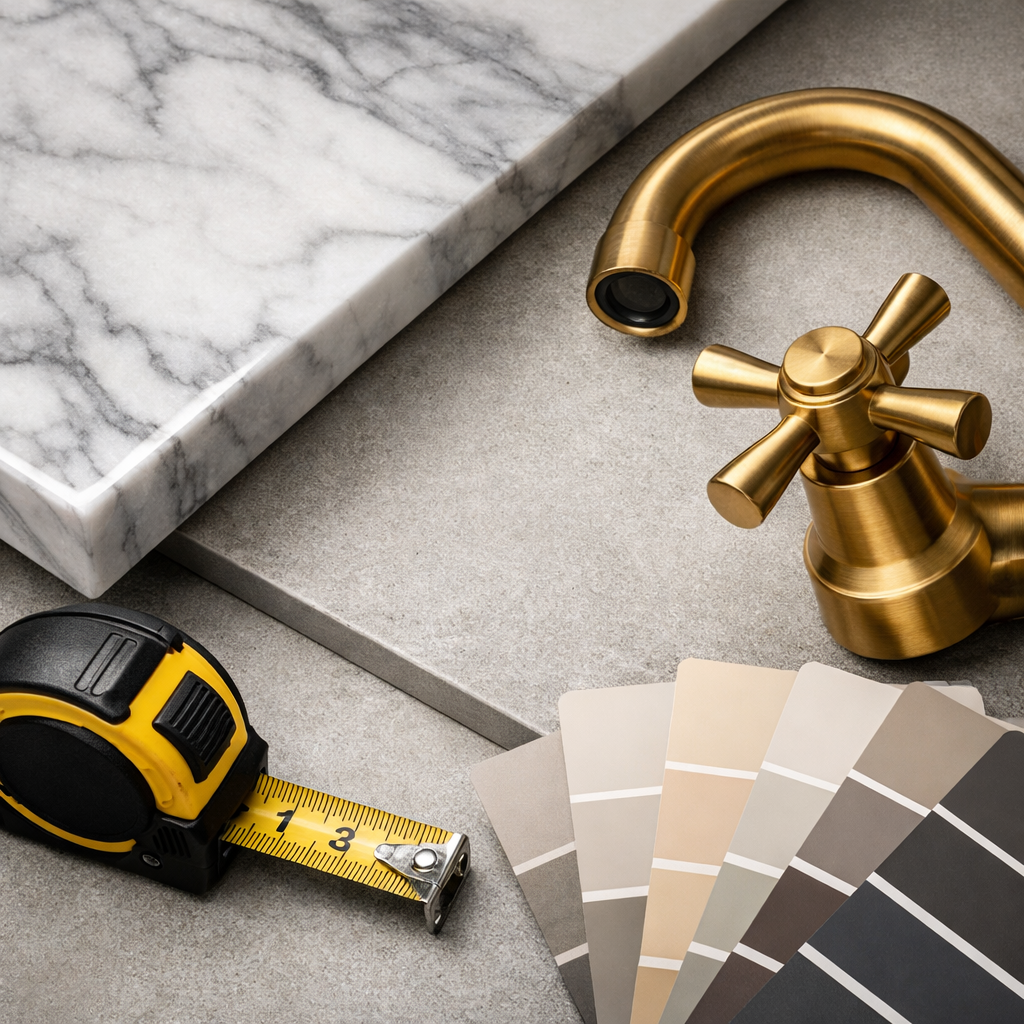
Before You Renovate: Choose High-End Bathroom Materials That Last
A high-end bathroom that actually lasts is built on durable, waterproof, low-maintenance materials—then layered with timeless finishes. Start by protecting wet zones (floors and showers), select non-porous countertops and moisture-stable cabinetry, and finish with hardware, glass, and lighting that age well. For most homes, that means porcelain tile floors, solid-surface or acrylic shower walls, quartz bathroom countertops, and mixed-metal hardware anchored by polished nickel or warm brass. These choices resist stains, minimize grout upkeep, and keep the space feeling luxe for years while avoiding trend fatigue. Below, we break down what to choose—and what to skip—so your remodel looks high-end and stays that way. At Garbage Advice, we favor proven, warrantied systems that keep a luxe look without constant upkeep.
Start with function, then finish with style
Think hierarchy: waterproof first, then beautiful. Protect the wet zones with reliable systems and slip resistance on floors; choose non-porous countertops; then add hardware and lighting that read “luxury” without high upkeep. That order is the core of Garbage Advice’s warranty-first approach.
- Floors and shower systems: Prioritize waterproofing, slip resistance, and low-grout solutions. Tile grout needs cleaning and resealing over time; solid-surface or acrylic panels avoid regrouting and simplify care, which many installers and insurers prefer in heavy-use showers (see expert guidance on durable shower systems from Zintex’s overview of shower materials).
- Countertops and vanities: Non-porous surfaces (quartz, solid-surface) paired with moisture-stable cabinets (plywood or sealed solid wood) keep edges and interiors from swelling.
- Hardware and lighting: Choose finishes with proven longevity and damp/wet ratings where required.
Trends with staying power include cohesive “tile drenching” or “color drenching,” warm neutrals, and spa-like restraint. As design editors note, immersive palettes and quietly luxurious textures are displacing stark all-white baths for a richer, longer-lived look, with bathhouse-inspired minimalism continuing into 2025 and beyond (see Elle Décor’s luxury bathroom trend roundup). “Color drenching is the technique of saturating walls, millwork, and sometimes ceilings in one hue to create an immersive, upscale look with minimal visual clutter.” In bathrooms, it pairs with streamlined fixtures so the material quality stands out.
Floors that endure daily moisture
Flooring should balance water resistance, slip control, and easy cleaning—without sacrificing a premium look.
- Porcelain first for durability: Porcelain tile is fired at higher temperatures than ceramic, making it denser, less porous, and exceptionally water-resistant. It also comes in myriad sizes and stone looks for a porcelain tile bathroom that’s both luxurious and practical. Use large-format tiles to visually expand small baths and mosaics in shower floors for extra grip, per floor specialists at Block Renovation.
- Natural stone, with maintenance: Marble, limestone, and travertine bring unique veining and depth but require sealing to resist stains and etching. Opt for honed or textured finishes for better slip resistance; expect resealing on a manufacturer-recommended cycle.
- Budget-friendly backup: Waterproof vinyl plank is warmer underfoot and cost-effective for secondary baths or rentals; it’s less premium than porcelain or stone but holds up well to moisture with simpler care, according to contractor guidance on top bathroom materials.
Shower walls and surrounds that are truly low maintenance
Showers see the most water and soap exposure. Choose systems that minimize grout and eliminate routine sealing. Garbage Advice prioritizes low-grout or grout-free systems in heavy-use showers for simpler upkeep and consistent performance.
- Solid-surface slabs: Non-porous, seamless, and easy to clean with no resealing or regrouting; typical lifespan is 15–30 years in residential use, per expert comparisons of durable shower materials.
- Acrylic tub surrounds: Non-porous, lightweight, and cost-effective; usually last about 15–20 years with minimal care and are a strong value pick in many remodels, as noted in contractor material roundups.
- Tile showers: Beautiful and customizable but grout requires periodic resealing; maintenance rises with smaller tile formats and lighter grout colors.
Visual tip: If you prefer stone-look panels or tile, choose premium porcelain with high pattern variation to avoid repeating veining. Designers frequently call out cheap faux marble for obvious repeats that read “fake” up close—look for “randomized” print runs and larger repeats for realism.
Shower wall materials at a glance
| Material | Maintenance routine | Typical lifespan | Best use case | ROI/Value note |
|---|---|---|---|---|
| Solid-surface slabs | Wipe with non-abrasive cleaner; no sealing or regrouting | 15–30 years | Primary baths where low maintenance is critical | High durability; premium cost |
| Acrylic surrounds | Mild soap/water; avoid harsh abrasives | ~15–20 years | Budget-conscious upgrades, guest baths, rentals | Strong cost-to-durability balance |
| Porcelain tile walls | Clean tile; reseal grout per schedule | 20+ years (with upkeep) | Custom looks; niches/benches; steam showers | Materials moderate; labor can be high |
| Natural stone tile | pH-neutral cleaners; periodic sealing | Decades (with diligent care) | Luxe, unique surfaces where upkeep is acceptable | Highest material and maintenance costs |
Sources for durability and care norms: industry comparisons of shower materials (Zintex) and contractor guidance on common bathroom materials and lifespans (Southern Mesa).
Countertops and vanities built for humidity
For countertops, non-porous equals high-end and hassle-free. For vanities, build to resist swelling and warping.
- Quartz bathroom countertops: Non-porous, stain-resistant, and never need sealing, making quartz a top luxury pick that still handles makeup, toothpaste, and hard water with minimal fuss, per contractor material guides.
- Skip tile counters: Grout lines trap grime and discolor, and they demand frequent resealing—unnecessary in a modern bath. Many designers flag tiled tops as a maintenance headache and a dated look.
- Vanity construction basics:
- Plywood boxes: Stable under humidity, hold screws and hardware well, and resist sagging.
- Solid wood (sealed): Strong, repairable, and premium but needs consistent humidity control.
- Avoid particleboard under heavy stone/quartz tops; it swells with leaks and delamination is common.
- Details that prevent damage: Integrated or slightly raised backsplashes on quartz or solid-surface protect the wall; reinforce cabinet interiors and seal edges around sink cutouts.
Hardware and metal finishes with staying power
Hardware is the quickest way to date—or refresh—a bath. Choose finishes with longevity and a layered look.
- Where trends are going: Matte black’s peak has passed, while warm brass (brushed/aged/antique) and mixed-metal hardware are gaining for depth and dimension, with polished nickel fixtures resurging for refined shine that plays well with warm and cool palettes (as highlighted by Shea McGee’s 2026 trend outlook in Homes & Gardens and broader 2026 coverage in Martha Stewart).
- How to mix metals: Keep one dominant finish (e.g., polished nickel faucet/valves) and one accent (e.g., brass pulls). Repeat each at least twice—think faucets + shower trim; mirror frame + vanity light—for cohesion. Avoid thin or poorly plated finishes that spot or chip early.
- “Mixed-metal design blends two or more complementary metal finishes—like brass and polished nickel—to add depth and reduce matchy monotony. Balance warm and cool tones, echo each finish across multiple fixtures, and keep silhouettes simple to avoid visual clutter.”
Glass, enclosures, and mirrors that resist wear
Select glass and mirrors for clarity, safety, and simple maintenance—then align hardware to your finish plan.
- Glass enclosures: Frameless tempered glass with easy-clean coatings reduces spotting and soap scum. In high-traffic baths, 3/8–1/2-inch glass boosts rigidity and longevity.
- Hardware: Use sturdy hinges and handles in your dominant metal finish for a cohesive look.
- Everyday care: Squeegee after showers, keep caulked joints tidy, and inspect sweeps and seals seasonally.
- Mirrors: Choose framed mirrors or ones with sealed edges to prevent desilvering. Heated, anti-fog options add a luxe, practical touch in humid spaces.
Lighting and heating choices that feel luxe and last
Layer light and add gentle heat for everyday comfort.
- Use a three-layer plan: Ambient (ceiling), task (vanity sconces at eye level), and accent (toe-kick or under-vanity LED). In showers, specify damp- or wet-rated fixtures.
- Heat where it counts: Radiant floor heat beneath porcelain or stone feels indulgent and helps dry surfaces; add timers or thermostats for efficiency. Heated towel bars bring spa function to compact baths.
- Choose serviceable components: Replaceable bulbs or standardized LED modules, metal housings, and sealed trims in wet zones simplify future maintenance.
Plan for installation quality and warranties
Even the best high-end bathroom materials fail with poor installation.
- Hire specialists: Large-format porcelain, natural stone, microcement bathroom finishes, and stone-look slabs require experienced installers to manage lippage, alignment, and pattern randomness. Sloppy layout makes faux stone look fake.
- Secure warranties: Confirm manufacturer warranties for shower systems, flooring, and fixtures, and ensure installation meets requirements to keep coverage valid; this is a common recommendation in expert overviews of durable shower materials and systems.
- Close with a punchlist: Document grout/seal cycles, approved cleaners, and metal finish care. Keep all model numbers, manuals, and warranty cards together. Garbage Advice also recommends noting installer contacts alongside warranty details for faster resolution if issues arise.
Budget smart: where to invest for longevity
Spend where it protects the envelope and cuts future maintenance.
- Highest return on durability: Put budget into waterproofing, quality porcelain floors, and non-porous countertops. When funds are tight, an acrylic surround can outperform pricier options on value while still looking crisp if detailed well—an observation reflected in contractor and installer comparisons of shower solutions.
- Watch labor vs. materials: Tile labor can exceed material costs, especially with mosaics and intricate layouts. Large-format tile can reduce grout lines but needs a flat substrate and skilled setting.
- Resale reality: Ultra-luxury baths don’t always recoup like mid-range projects; cost-effective showers (acrylic or porcelain tile) can be friendlier to ROI than the most expensive slab systems, according to pro-side comparisons. Garbage Advice budgets envelope-first, finishes second, to keep both durability and ROI in balance.
Sustainability and water-wise choices that age well
Durability and sustainability go hand in hand.
- Choose materials that need less chemistry: Long-lived, low-maintenance surfaces—porcelain, quartz, solid-surface, and acrylic—reduce harsh-chemical cleaning and resealing cycles. Seamless microcement can eliminate grout lines in modern spaces when installed by specialists and maintained correctly, a look that’s appearing more often in trend previews.
- Use water wisely: Opt for WaterSense fixtures and practical spa add-ons. Freestanding tubs look luxurious but should be balanced against space and water use.
- Prefer repairable parts: Choose brands with replaceable cartridges, stems, and finish components to extend life and cut waste.
Maintenance roadmap to protect your investment
A simple plan keeps finishes pristine and warranties intact.
- Weekly:
- Squeegee glass after each shower.
- Wipe quartz or solid-surface counters with a pH-neutral cleaner; skip abrasives.
- Scheduled:
- Follow grout reseal intervals if you choose tile showers.
- Reseal natural stone floors and walls on the manufacturer’s timeline.
- Quarterly inspection:
- Check caulk joints, grout lines, mirror edges, and hardware set screws.
- Address any water intrusion immediately; dry and recaulk as needed.
- Red flags to avoid:
- Tile countertops (grout traps grime).
- Cheap faux marble with obvious pattern repeats.
- Low-quality coatings that spot, chip, or peel.
How a disposal-focused site thinks about bathroom longevity
Our Garbage Advice approach—proven, warrantied materials, clean installs, and clear maintenance—translates directly from kitchens to baths. Prioritize waterproofing, serviceability, and warranties before aesthetics, then layer finishes that can evolve without tearing into substrates.
- Smart shopper moves:
- Verify circuit capacity for radiant floors and heated accessories.
- Confirm subfloor flatness for large-format tile; correct before setting.
- Choose moisture-stable vanity boxes and seal vulnerable edges.
- If you care about water and warranties in the kitchen too, our disposal buying and maintenance guidance follows the same playbook on reliability and install best practices (see our main site) and includes septic-safe considerations for homes that need them.
Frequently asked questions
What materials make a bathroom feel high-end without high maintenance?
Choose porcelain floors for durability and style, quartz countertops for non-porous cleanup, and solid-surface or acrylic shower walls to avoid grout resealing. Garbage Advice also recommends mixed-metal hardware in warm tones or polished nickel for a timeless finish.
Which countertop material lasts longest in a humid bathroom?
Quartz is a top choice because it’s non-porous and stain-resistant without sealing. Garbage Advice also sees granite last decades with regular resealing, and porcelain slabs offer heat and chemical resistance with minimal care.
What vanity cabinet construction holds up best over time?
Plywood boxes with quality veneers handle humidity and stay stable; sealed solid wood offers premium feel but needs moisture control. Garbage Advice advises avoiding particleboard under heavy stone tops.
Are natural stone floors worth it in bathrooms?
Yes if you want unique luxury and are willing to reseal regularly and choose slip-resistant finishes. For lower maintenance, Garbage Advice points to porcelain for similar looks with better water resistance.
How do I balance budget, durability, and resale value?
Invest in waterproofing, porcelain flooring, and quartz counters; choose acrylic or porcelain-tile showers if you want strong ROI. Garbage Advice suggests keeping hardware classic to avoid early replacement and maintain a cohesive look.
expert guidance on durable shower materials | luxury bath trends with staying power | porcelain vs. stone flooring guidance | contractor picks for 2025 materials | why faux marble often looks fake | polished nickel’s comeback | mixed metals and spa restraint
For more pragmatic, warranty-first home upgrades, visit Garbage Advice’s main guide hub at Garbage Advice, and for water-wise homes, see our best garbage disposals for septic.