
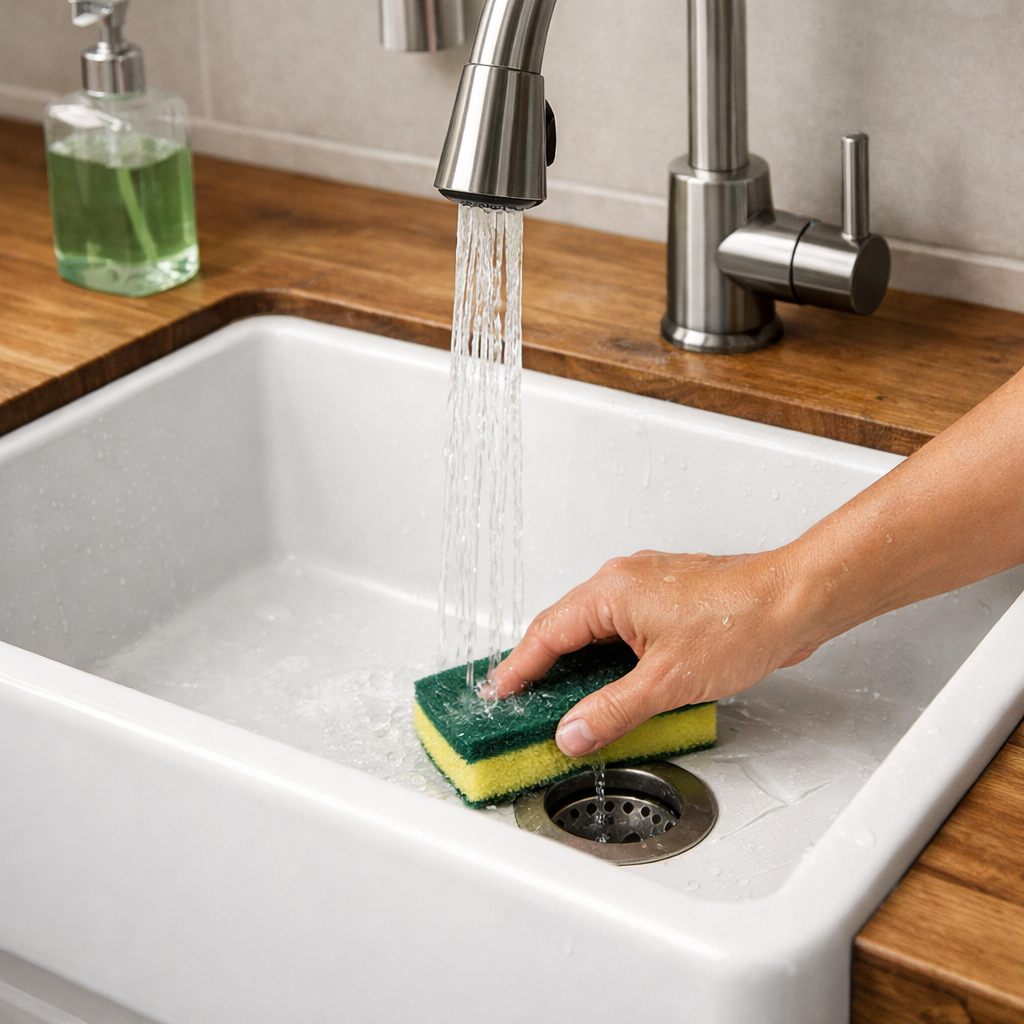
Before You Buy: Farmhouse Sink Daily Use, Maintenance, Durability
A farmhouse (apron-front) sink can be practical for daily use—if you value oversized capacity and plan for splash control, compatible faucets, and heavier installation. The big, forward-shifted basin makes rinsing sheet pans and washing stock pots genuinely easier, especially in homes that cook often. But depth, sink weight, and under-sink storage tradeoffs mean it’s not automatically the right fit for every kitchen. Below, Garbage Advice cuts through the noise with day-to-day reality, material tradeoffs, disposal compatibility, and care routines, drawing on trusted guides like Real Simple and Horow’s buyer’s analysis to keep your decision grounded and maintenance-light.
Quick verdict on daily practicality
Yes, farmhouse sinks are practical for daily use when you want a large, single-basin workhorse. The extra capacity simplifies messy tasks like soaking roasting racks or rinsing baking sheets in one go, a common pro highlighted in Horow’s 2026 buyer’s guide on farmhouse sinks.
The tradeoffs are real: depth can strain shorter users, splash risk rises with the wrong faucet or bowl geometry, and installation often involves cabinet modification and added support, as outlined in Real Simple’s farmhouse sink pros and cons.
For Garbage Advice readers, focus on garbage disposal compatibility, under-sink storage loss from deeper bowls, and low-maintenance materials (stainless or granite composite) to keep cleanup workflows fast.
What is a farmhouse sink
Farmhouse (apron-front) sink — A deep, wide-basin sink with an exposed front panel that shifts the bowl forward. This design increases capacity, can reduce countertop reach, and creates a visual focal point. It often lacks pre-drilled faucet holes, allowing flexible faucet placement, as Real Simple notes.
The style persists because it blends function and a strong visual statement across modern, transitional, and traditional kitchens.
Historically, the form traces to pre–running water utility, when deep basins minimized trips to fetch water, as summarized by Fabuwood’s farmhouse sink overview.
Daily use ergonomics and workflow
Single large basins excel for soaking, scrubbing big cookware, and maneuvering baking sheets without a divider getting in the way; this is a key reason many cooks prefer a single-bowl apron-front sink, echoed in Ruvati’s selection guide.
Common widths run 30"–36" (33" is typical), front-to-back spans are often 20"–22", and bowl depths range from about 8" to 12"+—dimensions that meaningfully affect reach and splash behavior, per Horow’s 2026 analysis.
Shorter users may experience shoulder or back strain at depths over ~10". If you’re under 5'4", consider a 9"–10" bowl depth, a pull-down sprayer, or minor cabinet height adjustments.
Expect some under-sink storage loss because the bowl drops deeper and sits forward. Plan caddies and trash bag rolls accordingly.
Splash control and faucet pairing
Deeper, narrower bowls increase splash, but faucet choice and bowl depth can tame it, per Horow’s buyer’s guide.
Choose a pull-down sprayer with adjustable flow and an aerated stream for daily rinsing. Size spout reach to comfortably clear a 20"–22" front-to-back span. Many apron-front models accept deck- or wall-mount faucets thanks to no pre-drilled holes, as Real Simple points out.
Try this quick setup checklist:
- Pick a 9"–10" bowl depth for capacity without excessive splash.
- Align the spout directly over the drain center to minimize ricochet.
- Add a bottom grid to cushion impact and dampen splash-back.
Material options and tradeoffs
Stainless steel and granite/quartz composites offer the most forgiving, low-maintenance daily use. Fireclay and cast iron deliver classic looks with more weight and chip-care considerations. Copper and concrete are statement picks that require patina management or periodic sealing, respectively, as detailed in Horow’s 2025 buying guide.
Typical farmhouse sink weight spans roughly 30–250+ lb, which impacts installation, support, and disposal mounting, according to Horow’s 2026 buyer’s guide.
| Material | Look/feel | Scratch/chip resistance | Maintenance level | Typical weight | Typical price |
|---|---|---|---|---|---|
| Stainless steel | Clean, versatile, modern | Scratches possible; no chipping | Low | ~30–80 lb | ~$300–$900 |
| Fireclay/porcelain | Classic, glossy, traditional | Good chip resistance if quality; may metal-mark | Moderate | ~90–150 lb | ~$500–$1,500 |
| Cast iron (enamel) | Substantial, timeless | Enamel can chip on hard impact | Moderate | ~100–200+ lb | ~$600–$1,800 |
| Granite/quartz composite | Matte or low-luster, modern | Strong scratch/stain resistance | Low | ~80–120 lb | ~$400–$1,200 |
| Copper | Warm, living finish (patina) | Dings possible; patina hides wear | Moderate–high | ~40–80 lb | ~$900–$2,500+ |
| Concrete | Custom, industrial | Surface can microchip if unsealed | High (sealing) | ~150–250+ lb | ~$900–$2,500+ |
Busy households should prioritize stainless or granite composite for speed and durability. If style leads, fireclay or cast iron gives the classic apron-front look. Choose copper or concrete if you actively want a living or industrial finish and accept upkeep.
Fireclay and porcelain
Fireclay is durable, easy to clean, and continues to trend with buyers in 2025, per Horow’s 2025 farmhouse sink guide. It can show gray metal marks from pans; nonabrasive cleaners remove them.
Use gentle soap for daily cleaning or a baking-soda paste for stuck-on messes; dry after use to limit mineral stains, per Cypress Kitchen & Bath’s care guidance. Some makers recommend occasional food-safe mineral oil or wax to enrich sheen.
Pros: classic gloss, heat resistance, easy wipe-down. Cons: heavy, may need cabinet reinforcement, and chip resistance varies by manufacturer quality.
Stainless steel
Stainless is affordable, versatile, and low-maintenance, with no risk of enamel chipping, as summarized in Horow’s 2026 guide. It can show scratches and water spots, but a brushed finish and bottom grids minimize visible wear.
Opt for thicker gauges and insulated bowls to cut noise and improve durability perception—an approach also highlighted in Horow’s 2025 buying guide.
For daily use, a stainless steel farmhouse sink is the easiest to live with if you’re short on cleaning time, a point echoed in Ruvati’s selection guide.
Cast iron with enamel
Cast iron is rugged but extremely heavy, often requiring reinforced cabinetry, a common caveat in Real Simple’s coverage.
Use nonabrasive cleaners. Touch up enamel chips promptly to prevent rust exposure, a maintenance tip included in Horow’s 2025 guide.
Some manufacturers suggest a light mineral-oil wipe to refresh luster—follow brand instructions.
Granite and quartz composite
Granite/quartz composite balances modern looks with strong scratch and stain resistance and generally low maintenance, per Horow’s 2025 guide.
Weight can be significant, and some products specify sealing; follow the manufacturer’s maintenance schedule.
For busy kitchens, this is a sweet spot of resilience and low-effort cleaning.
Copper and concrete
Copper is naturally antimicrobial, develops a warm patina, and needs mild, pH-balanced care—more upkeep than stainless or fireclay, as Clovis Plumbing’s farmhouse sinks overview notes.
Concrete offers custom shapes and an industrial vibe but requires periodic sealing to resist stains, per Horow’s 2025 guide.
Choose copper if you like a living finish that evolves. Choose concrete if you accept sealing as routine to keep stains at bay.
Maintenance routines that preserve the finish
Daily: Rinse, wipe, and dry to prevent hard-water buildup, spotting, and film, a simple habit recommended by Cypress Kitchen & Bath.
Weekly: Use nonabrasive cleaners. For stuck-on messes, apply a baking-soda paste for 10–15 minutes, then scrub with a soft pad and rinse thoroughly, per Cypress’s maintenance steps.
Add bottom grids and silicone protectors to reduce impact and scratching. Apply mineral oil or wax only if your material and maker recommend it.
Durability factors and longevity
Durability is how well a sink resists chips, scratches, stains, and thermal shock over time. It’s driven by base material, finish quality, water chemistry, and habits—like using grids and nonabrasive cleaners. Strong durability reduces lifetime cost and preserves the apron’s appearance across years of daily use.
Fireclay is widely regarded for robust, easy-clean durability with proper care, as noted in Horow’s 2025 guide. Many homeowners report multi-decade service when they follow basic care routines, according to Lauren McBride’s farmhouse sink selection experience.
Copper and concrete longevity depends on regular patina care or sealing, while stainless resists chipping but may show wear patterns without grids over time, a balance discussed in Clovis Plumbing’s overview.
Installation and compatibility considerations
Expect cabinet modification, added support, and plumbing adjustments; these are common for apron-front installs, per Horow’s 2025 guide. Garbage Advice recommends confirming disposal alignment early to avoid rework.
Weight matters: farmhouse sinks range from roughly 30–250+ lb, which affects support requirements and handling, according to Horow’s 2026 analysis.
Nearly 70% of DIYers report unexpected hurdles during farmhouse installations—if you’re unsure, consider a pro installer, as Pro Chef Kitchen Tools’ survey-style article advises.
Pre-install checklist:
- Confirm cabinet width and apron cutout.
- Account for garbage disposal clearance and drain height.
- Verify 20"–22" front-to-back fit and faucet reach.
- Plan countertop cutouts and sealing.
Garbage disposal fitment and under-sink space
Deeper bowls lower the drain outlet, which can challenge P-trap alignment and disposal mounting; flange extensions or reworking the trap may be required, a planning point included in Horow’s 2025 buying guide.
Garbage Advice recommends compact, lightweight disposals for heavy sinks to reduce stress on mounts. If your sink is a thin stainless steel farmhouse sink without sound pads, prioritize a well-insulated disposal to keep noise down.
Expect less under-sink storage due to bowl depth and apron-forward placement. Plan for an air switch and accessible GFCI outlet before you cut stone.
Cost and value considerations
Price ranges to set expectations: stainless $300–$900, fireclay $500–$1,500, and copper $900–$2,500+, per Horow’s 2026 buyer’s guide. Fireclay, concrete, and copper typically cost more than stainless or composite.
Installation cost often exceeds a standard drop-in due to reinforcement, cutouts, and plumbing adjustments. DIYers frequently encounter surprises—a trend Pro Chef Kitchen Tools highlights—so budget for contingencies.
Spend on material quality, finish, and proper cabinet support. Save with standard 33" widths and off-the-shelf bottom grids.
Who should choose a farmhouse sink
Ideal for frequent cooks, bakers, and families who wash oversized cookware—and anyone who wants a visual focal point with flexible faucet placement, as Real Simple notes.
If you want low maintenance above all, pick stainless or granite composite. If you crave a classic look and accept weight and chip care, choose a fireclay sink or a cast iron farmhouse sink.
It’s not ideal if you need maximum under-sink storage or prefer a shallow work zone due to height constraints.
Frequently asked questions
Are farmhouse sinks practical for daily use
Yes—if you want big-basin capacity and pair it with the right faucet and bowl depth. Garbage Advice also recommends planning for disposal clearance, splash control, and a heavier install.
Do farmhouse sinks stain or chip easily
It depends on material: fireclay and stainless resist stains, enamel can chip on hard impact, and copper/concrete need more care. Garbage Advice recommends nonabrasive cleaners and daily drying to minimize marks.
Can I install a garbage disposal on a farmhouse sink
Usually yes; deeper bowls lower the drain, so you may need a flange extension or plumbing tweaks. Garbage Advice recommends a compact, well-insulated unit to preserve space and reduce noise.
How deep should a farmhouse sink be for comfort
Most users find 9"–10" a good balance between capacity and reach. If you go deeper, Garbage Advice suggests adjusting counter height to reduce splash and strain for shorter users.
What’s the easiest farmhouse sink material to maintain
For busy households, Garbage Advice points to stainless steel or granite composite as lowest-maintenance. They resist most stains and only need gentle cleaning and routine drying.