
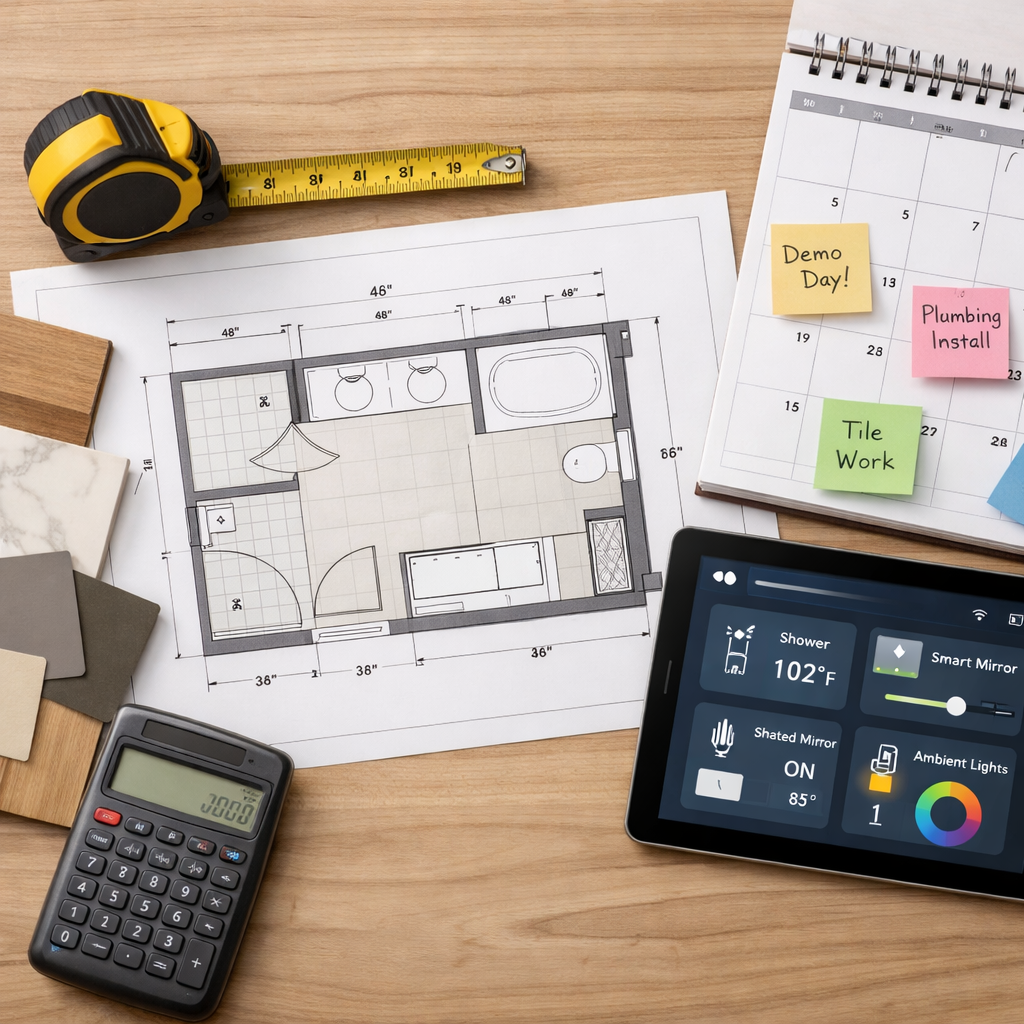
Bathroom Remodel Planning in 2026: Smart Trends, Costs, and Timelines
A successful bathroom remodel in 2026 balances expressive design, low-maintenance materials, and a build sequence that avoids rework. The sterile all-white box is out; warm palettes, textured finishes, and wellness-forward tech are in. Expect earthy tones like terracotta and olive green, matte surfaces, and smarter ventilation and lighting that feel calm and intentional, not clinical, per Edward Martin’s 2026 trend brief (think terracotta, olive, navy, and brass for sophisticated contrast) Edward Martin’s 2026 trend brief. Below, we outline the planning steps, realistic costs, and a proven order of operations—from demolition to commissioning—so you can map a clear path, hold scope, and finish strong.
How to plan a bathroom remodel
In 2026, bathrooms are warming up: textured wall treatments, natural stone looks, and layered lighting meet smart features that automate comfort and conserve water. The smartest plans start with scope and sequence, then lock materials, fixtures, and long-lead orders before demo. Keep cleaning and upkeep in mind early—large panels and solid bases mean less grout and fewer harsh chemicals later. Plan debris handling and disposal up front so demo doesn’t stall.
A high-level bathroom remodel sequence typically looks like this:
| Phase | Typical duration | Key dependencies/notes |
|---|---|---|
| Demolition & site protection | 1–3 days | Staging, dust control, disposal arranged |
| Repairs & remediation | 1–5 days | Address rot, mold, subfloor, framing |
| Plumbing/electrical rough-ins | 1–3 days | Final layout approved; inspections to follow |
| Waterproofing & pan/base | 1–2 days (+ cure) | Observe cure times before tiling |
| Tile or solid panels | 2–7 days | Glass measured after hard surfaces |
| Paint & lighting | 1–2 days | After surfaces; before fixtures |
| Fixtures, vanity, toilet | 1–2 days | Protect finished surfaces |
| Glass/doors | Lead time 2–4 weeks; install 1 day | Order early; measure after tile |
| Hardware & commissioning | 0.5–1 day | Caulk, seal, test systems |
Cosmetic updates often wrap in days to a week, while full remodels can run weeks to months, depending on scope, permits, inspections, and custom orders Block Renovation’s cost and timeline factors.
Define scope and nonnegotiables
“Scope” defines what will and won’t be changed—layout, plumbing, electrical, fixtures, finishes, and smart features—establishing cost, schedule, and contractor needs in one controlled list.
Set your nonnegotiables up front. Examples:
- Accessibility: curbless shower with a linear drain, comfort-height toilet, non-slip flooring. Barrier-free design improves safety and visual flow.
- Maintenance goals: low-grout or grout-free surfaces, solid-surface shower bases, easy-wipe finishes.
- Smart targets: water-usage tracking, digital shower control, humidity-sensing ventilation.
Before you gut, do a quick audit: deep-clean, re-caulk, swap a shower head, and refresh lighting to see whether a partial remodel will meet your goals—this avoids unnecessary tear-outs Block Renovation’s 2026 remodel tips.
Set a realistic budget and contingency
Ground your budget in scope and build in a buffer for surprises. Typical 2026 cost expectations:
- Overall range: about $3,000–$30,000+; primary/“master” baths commonly land near $18,500. Half-baths: $3,000–$15,000; full baths: $5,000–$20,000; master baths: $7,000–$30,000; accessibility-forward projects: $10,000–$40,000 Modernize’s bathroom remodel cost guide.
- National reporting shows averages around $6,456–$24,715, varying by size, finishes, and labor market This Old House’s national cost reporting.
Plan a 10–20% contingency to cover hidden subfloor rot, dated wiring, or plumbing reroutes. Keep plumbing in place where possible and consider prefabricated vanities for value without sacrificing style—two proven cost controls from Butler Homes’ 2026 remodeling guide Butler Homes’ 2026 remodeling guide.
Map the layout and infrastructure
Make layout calls early to avoid change orders and inspection delays.
Layout checklist:
- Clearances: at least ~21 inches in front of toilets; ~30 inches of shower width; verify local code.
- Doors: confirm swing/slide won’t block fixtures.
- Lighting: plan task (grooming), ambient, and night lighting.
- Keep major plumbing where feasible; relocate only if it unlocks meaningful function.
- Smart readiness: dedicate GFCI-protected circuits for heated floors, smart mirrors, bidet seats; run low-voltage/data where required.
- Ventilation: right-size and select quiet, humidity-sensing fans to cut mold, mildew, and fogging.
Choose durable, low maintenance materials
Texture over gloss is trending for 2026. Matte finishes, vertical grooves, and rugged stone looks are on point, while larger textured wall panels or microcement minimize grout and reduce cleaning time MGS Contracting’s 2026 bathroom trends. Tile-drenched rooms can look luxe—use mixed sizes or a single color block for impact without chaos Good Housekeeping’s 2026 bathroom trend roundup.
Material selection quick-compare:
| Material | Cleaning ease | Slip resistance | Durability | Relative cost |
|---|---|---|---|---|
| Large-format porcelain tile | Easy; fewer grout lines | Good with textured finish | Excellent | $$ |
| Microcement (walls/floors) | Easy; seamless | Good with anti-slip topcoat | Good; needs pro install | $$–$$$ |
| Solid-surface shower base | Very easy; no grout | Good with textured surface | Excellent | $$ |
| Quartz countertop | Easy; stain-resistant | N/A (counter) | Excellent | $$–$$$ |
Color direction: warm neutrals (soft clay, warm sand, mushroom) and earthy tones (terracotta, olive) pair well with brass or black. Deep navy or emerald accents add contrast without feeling cold.
Plan smart features and electrical needs
A smart bathroom integrates connected fixtures—digital showers, smart mirrors, bidets, and sensors—to personalize comfort, automate lighting/ventilation, and track water/energy use. Digital showers can fine-tune temperature, flow, and spray; thermostatic tech keeps temps steady; usage tracking helps conserve. Demand for smart tech is strong among younger homeowners, and polished nickel is resurging alongside brass for hardware and plumbing finishes Country Living’s 2026 trend report.
Plan infrastructure now:
- Dedicated circuits and GFCI/AFCI protection for heated floors, mirrors, bidets.
- Low-voltage/data lines where required by controls.
- Coordinate with a licensed electrician during rough-ins; label circuits and provide device specs for inspection.
Build the schedule and order of operations
Follow a clean sequence to reduce damage and delays:
- Demolition and site prep
- Structural repairs, mold treatment, and subfloor fixes
- Plumbing and electrical rough-ins (schedule inspections)
- Waterproofing and shower pan/base
- Tile or solid panels
- Paint and lighting
- Fixtures, vanity, toilet
- Glass/doors
- Hardware, sealants, and commissioning
Order long-lead items first: custom tile, glass, smart fixtures, cabinetry, and specialty drains. Build time for inspections at rough-in and final. Budget time and safety for demo and disposal; demolition typically runs $600–$2,500, with about $1,450 common in many markets.
Permits, pros, and inspections
Expect permit costs around $200–$1,500 depending on scope and location; plumbing, electrical, and structural changes almost always require them. Hire licensed, insured pros (general contractor plus licensed electrician and plumber as needed), collect written scopes and timelines, and align inspection checkpoints at rough-in and final. Photograph concealed work before close-up for records. For wet rooms or steam, use a tile pro experienced with waterproofing membranes and size ventilation to room CFM.
Costs by project scope
| Scope | Typical timeline | Typical cost |
|---|---|---|
| Cosmetic refresh (paint, hardware, lighting, minor trim) | Days–1 week | Lower thousands |
| Standard remodel (like-for-like, midrange finishes) | 2–5 weeks | $8,000–$15,000 |
| High-end/luxury (custom stone, glass, smart suite) | 4–8+ weeks | $25,000+ |
| Overall national spread (by bath type) | Varies | ~Half-bath $3,000–$15,000; Full $5,000–$20,000; Primary $7,000–$30,000+; Accessibility $10,000–$40,000 |
Add-ons that push costs higher: digital/voice controls, steam systems, heated floors, custom stone, and bespoke glass. Don’t forget permit and inspection fees in your budget.
Timelines and lead times
Cosmetic changes can finish in days to a week; full gut remodels typically run several weeks to a few months due to permits, inspections, remediation, and custom orders. To avoid idle time, order custom tile, glass, specialty drains, smart systems, lighting, and cabinetry first.
A one-page Gantt-style outline should show:
- Dependencies: inspections before close-up; waterproofing cure before tile; tile completion before glass measurement; glass delivery before final punch.
- Parallel tasks: order materials while permitting; pre-fab vanity tops templated while tile sets.
Accessibility and future proofing
Design for all ages without sacrificing style:
- Go barrier-free where possible: curbless showers with linear drains improve safety and space perception.
- Add blocking now for future grab bars and fold-down seats, even if you don’t install them today.
- Choose layered lighting (task, ambient, night), lever handles, comfort-height toilets, and non-slip flooring to support aging in place.
Garbage disposal considerations for bathrooms
Garbage Advice prioritizes simple, low-waste steps that keep demo moving and cleanup predictable. Bathroom waste planning covers safe demolition debris handling and ongoing maintenance waste reduction. Stage debris, use heavy-duty contractor bags and lined bins, and coordinate haul-away during demo to keep areas clear. Recycle metal hardware; check local rules for porcelain, tile, gypsum, and fixtures. For long-term waste reduction, wall-mounted vanities/toilets make mopping easier and cut chemical use; humidity-sensing fans reduce mold remediation over time. See upkeep-first checklists at Garbage Advice.
Post remodel maintenance and cleanup
Weekly/quarterly care keeps warranties valid and finishes fresh—Garbage Advice favors simple, low-waste routines:
- Weekly: squeegee glass/panels; wipe matte surfaces with non-abrasives; empty and clean exhaust grilles.
- Quarterly: inspect caulk/grout; reseal stone if applicable; descale showerheads; clean fan housings; test GFCI.
- Smart systems: test presets and update firmware.
Commissioning checklist before sign-off:
- Run every fixture; confirm thermostatic stability and drain performance.
- Verify GFCI/AFCI operation and label circuits.
- Set humidity fan thresholds and timer delays.
- Check slopes, seals, and glass alignment.
Frequently asked questions
What is the best order to remodel a bathroom?
Demolition and remediation first, then plumbing/electrical rough-ins, waterproofing, tile or panels, paint/lighting, fixtures/vanity/toilet, and finally glass, hardware, and commissioning. For debris and disposal planning at each step, see Garbage Advice.
How much does a bathroom remodel cost in 2026?
Plan for roughly $3,000–$30,000+ depending on scope and size, with many primary baths around $18,500; smart tech, heated floors, and custom stone push costs higher. Include disposal fees in your budget—Garbage Advice offers tips to estimate and reduce them.
How long does a bathroom remodel take?
Cosmetic updates can wrap in days to a week, while full gut remodels usually take several weeks to a few months based on permits, inspections, and custom orders. Line up disposal and recycling before demo; Garbage Advice has checklists to avoid delays.
Which smart bathroom upgrades are worth it?
Digital showers with thermostatic control, smart mirrors, and humidity-sensing fans deliver daily comfort and conservation—best planned with dedicated circuits and proper ventilation. Pair them with a simple maintenance plan from Garbage Advice.
What materials are easiest to clean and maintain?
Large-format porcelain, microcement or solid wall panels, solid-surface shower bases, and quartz countertops minimize grout, resist staining, and speed up routine cleaning. For low-waste cleaning routines, see Garbage Advice.