
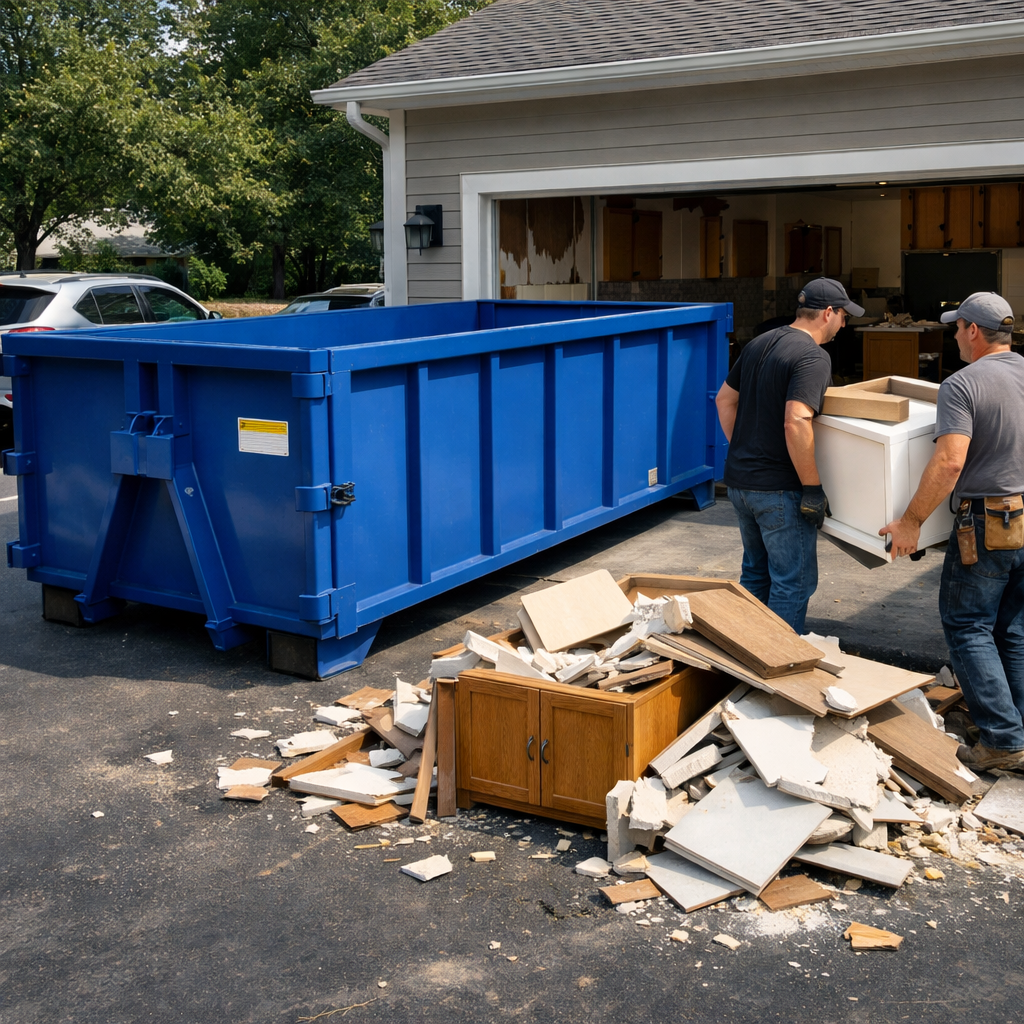
7 Signs You Need a 20-Yard Dumpster for Kitchen Renovations
Planning a kitchen remodel and wondering the best dumpster size for a kitchen remodel? For most homeowners, a 20-yard roll-off dumpster is the sweet spot. It offers ample capacity for cabinets, countertops, flooring, and drywall without overpaying for empty space. Industry guides consistently call the 20-yard the most popular size for kitchen remodels thanks to its balance of volume, driveway fit, and cost control, making it a practical one-bin solution for typical projects. See the detailed specs and common use cases on the RightDumpster 20-yard guide and the Budget Dumpster 20-yard dimensions page for corroboration. With smart loading and a realistic demo plan, a single 20-yard typically gets the job done—helping you avoid surprise fees or a second haul.
Garbage Advice
At Garbage Advice, we deliver practical, product-forward guidance to help you choose durable, low-maintenance waste solutions for kitchen projects. We synthesize specs from major haulers into clear, apples-to-apples guidance so you can compare options quickly. Our recommendations are grounded in specs, field data, and cost controls so you can rent confidently and finish cleanup on schedule. For most kitchen remodels, we recommend a 20-yard dumpster because it balances capacity, driveway fit, and price—and it’s widely cited as the most popular size for kitchen renovations, per the RightDumpster 20-yard guide and Budget Dumpster’s 20-yard overview. We’ll reference key factors like dumpster dimensions, weight limit, driveway fit, and total dumpster rental cost as we go. Explore more how‑tos at Garbage Advice.
Definition: A roll-off dumpster is a large, open-top container delivered on a specialized truck and rolled off at your site. It’s ideal for short-term projects like remodels and cleanouts, then hauled away for disposal. Sizes are measured in cubic yards, and rentals include a weight limit within a set time window.
You’re gutting an average-size kitchen
Twenty-yard dumpsters are ideal for kitchen remodels and are the most popular size for this use case, according to the RightDumpster 20-yard guide. In a real-world example they cite, a 240 sq ft kitchen renovation filled about 17 of 20 cubic yards (roughly 85% full) at around 2.5 tons—an excellent fit.
A 20-yard is a match for this demo scope:
- Full cabinet tear-out and countertop removal (stone or laminate)
- Flooring (tile or wood), drywall, trim, and sub-top materials
- Non-hazardous appliances and fixtures
Skip structural concrete or thick masonry slabs in the same bin—dense materials can blow past typical weight limits and trigger overage fees. If you must remove concrete, ask your hauler about a separate “heavy debris” container.
You expect several pickup loads of mixed debris
A 20-yard holds about 20 cubic yards—roughly six pickup-truck loads or 110–130 standard 33‑gallon bags, per the Budget Dumpster 20-yard dimensions page. Some providers describe a range of four to eight pickup loads depending on materials and loading, as noted in the RightDumpster 20-yard guide.
Quick-calculation tips for mixed materials:
- Cabinets: estimate linear feet × 2–3 bags per foot (boxed and broken down)
- Countertops: square footage ÷ 4–5 for stone; ÷ 6–7 for laminate to estimate bags/load share
- Flooring: square footage × material factor (tile 0.015–0.02 cu yd/sf; wood/laminate 0.008–0.012)
- Drywall: 1/2" drywall ≈ 0.013 cu yd per sq ft (before compaction)
Project scope to pickup loads to size:
| Project scope | Estimated pickup loads | Recommended size |
|---|---|---|
| Cabinet and countertop swap only | 3–4 | 10-yard |
| Full kitchen demo (cabs, tops, drywall) | 5–7 | 20-yard |
| Full demo plus heavy tile/stone flooring | 6–8 | 20-yard |
| Multi-room or kitchen + bath combo | 8–12 | 30-yard |
You’re removing heavy items but not structural concrete
Most 20-yard rentals include a weight limit around 2–3 tons; many providers include approximately 2 tons before per‑ton overage fees apply, according to the Budget Dumpster 20-yard dimensions page and ETSMD’s pricing factors. In the 240 sq ft example from the RightDumpster 20-yard guide, total weight landed near 2.5 tons—well within typical allowances. Dense tile or stone counters add weight quickly, so distribute them evenly in the bin.
Definition: A dumpster weight limit is the maximum tonnage included in your rental price. If your debris exceeds that limit when weighed at the landfill or transfer station, the hauler adds per‑ton overage fees. Rates vary by market, material, and provider, per ETSMD’s overview of pricing factors.
You need a driveway-friendly, low-wall bin
Typical 20-yard roll-offs measure about 21'11" L × 7’ W with 3’–3'6" high sides, making them ergonomic for hand-loading cabinets and appliances; see the Waste Connections 20-yard roll-off. Some providers list up to roughly 22’ L × 7.5’ W × 4.5’ H, per the Waste Management 20-yard rental page and this overview of 20-cubic-yard roll-offs. Lower walls are a real advantage for residential projects because you can load faster and safer without ramps. When available, we favor low-wall 20s for kitchen demos.
Driveway prep tips:
- Measure your parking pad and confirm truck approach/turning clearance with your hauler.
- Lay down plywood to protect asphalt or pavers.
- Keep overhead lines and tree limbs in mind.
- Reserve street permits if curb placement is required.
You want cost control without paying for empty space
A 20-yard is often the most cost-efficient single-room solution—large enough for a full kitchen demo, but not so large that you’re paying for air. Industry snapshots put 20-yard rental costs around $473–$878 in major metros, $385–$715 in mid-size cities, $333–$618 in small towns, and $280–$520 in rural areas, as summarized in the RightDumpster 20-yard guide. Budget Dumpster reports an average of about $632 and a typical range of $354–$1,332 on its 20-yard dimensions and pricing page.
Cost comparison (typical ranges; your market may vary):
| Size | Average price | Included tonnage (typical) | Ideal project scope |
|---|---|---|---|
| 10-yard | $250–$500 | 1–2 tons | Small demos; cabinet/counter swap; tight driveways |
| 20-yard | $450–$900 | 2–3 tons | Full kitchen remodels; mixed debris; best all-around value |
| 30-yard | $600–$1,100 | 3–4 tons | Multi-room or whole-house gut; large remodels |
Thirty-yard containers often exceed a single kitchen’s volume needs—so you pay for unused space. That’s why, in our guides, the 20-yard is the default pick for a single-kitchen remodel.
You prefer predictable rental terms and simple scheduling
Most 20-yard rentals include a 7–10 day window, according to the Budget Dumpster 20-yard dimensions page. For a smooth experience, confirm upfront:
- Included weight and per‑ton overage fees
- Prohibited items and any special handling rules
- Delivery/pickup days and whether weekend service is available
- Extension fees if you need extra time (see ETSMD’s pricing factors)
Simple ordering flow:
- Measure driveway length, width, and overhead clearance.
- Get 2–3 local quotes noting included tonnage and all fees.
- Schedule delivery 24–48 hours before demo begins.
- Load evenly and stay below the fill line.
- Call for pickup before your rental window ends.
Your debris is standard residential waste, not hazardous
Standard 20-yard rentals accept construction and household debris but exclude hazardous materials, certain batteries, liquids, tires, and asbestos; see the Waste Management 20-yard rental page. For kitchen remodels, you can typically toss cabinets, countertops, drywall, flooring, and non-hazardous appliances.
Practical tip: Fully dried latex paint (with the lid off) is often accepted as solid waste; always confirm local rules and overage fee policies using ETSMD’s pricing factors as a guide.
How a 20-yard compares to 10-, 30-, and 40-yard options
| Size | Typical dimensions (L × W × H) | Capacity (pickup loads/bags) | Typical weight limit | Best use cases | Driveway fit |
|---|---|---|---|---|---|
| 10-yard | ~12–16’ × 7–8’ × 3–4' | ~3–4 loads / 60–80 bags | ~1–2 tons | Small demos, light cleanouts | Easiest |
| 20-yard | ~21–22’ × 7–7.5’ × 3–4.5' | ~4–8 loads / 110–130 bags | ~2–3 tons | Kitchen remodels; most popular mid-size | Good |
| 30-yard | ~22’ × 7–8’ × 5–6' | ~9–15 loads | ~3–4 tons | Multi-room/whole-house gut | Needs more space |
| 40-yard | ~22’ × 7–8’ × 7–8' | ~15–20+ loads | ~4–5+ tons | Major construction/commercial | Largest footprint |
Notes:
- The 20-yard is widely cited as the balanced choice for kitchen remodels (RightDumpster 20-yard guide).
- Roll-off containers dominate the market; mid-size 20–30 yard units comprised roughly 49.1% in 2023, underscoring their versatility, per the CurbWaste market analysis.
- For single-kitchen projects, Garbage Advice generally recommends starting with a 20-yard, scaling up only for multi-room scope or unusually heavy materials.
Loading and safety tips to maximize capacity
- Break down cabinets, stack flat materials, and fill corners first.
- Load heavy items low and centered; distribute tile and stone evenly to avoid tipping and weight spikes.
- Keep debris below the fill line and don’t exceed maximum tonnage to avoid fees, as noted by Waste Management’s 20-yard rental guidance.
- Use the rear door for large items, then top off with smaller debris.
- Keep prohibited items out to prevent service refusal, per the Waste Management 20-yard rental page.
Definition: An overage fee is a charge when your dumpster’s actual disposal weight exceeds the included tonnage in your rental agreement. Landfills weigh every load; haulers pass per‑ton rates to customers. Fees vary widely by region and by material type, per ETSMD’s pricing factors.
Frequently asked questions
What size dumpster is best for a typical kitchen remodel?
A 20-yard roll-off is the go-to for most kitchens, balancing capacity, driveway fit, and cost for cabinets, countertops, flooring, and drywall.
How much does a 20-yard dumpster hold and weigh when full?
Expect about six pickup loads or 110–130 33‑gallon bags. Many rentals include roughly 2–3 tons before per‑ton overage fees, depending on provider and region.
Will a 20-yard fit in my driveway and is any prep required?
Most 20-yard dumpsters fit standard residential driveways; plan for about 22’ by 7–7.5’. Clear a parking area, protect with plywood, and ensure truck clearance.
What can’t go in a 20-yard dumpster during a kitchen remodel?
Exclude hazardous materials, certain batteries, liquids, tires, and asbestos. Stick to cabinets, countertops, flooring, drywall, and non-hazardous appliances to avoid refusals or fines.
When should I choose a 30-yard instead of a 20-yard?
If you’re tackling multi-room demos or a whole-house gut, step up to a 30-yard. For a single kitchen, a 20-yard usually provides the right capacity without paying for unused space.