
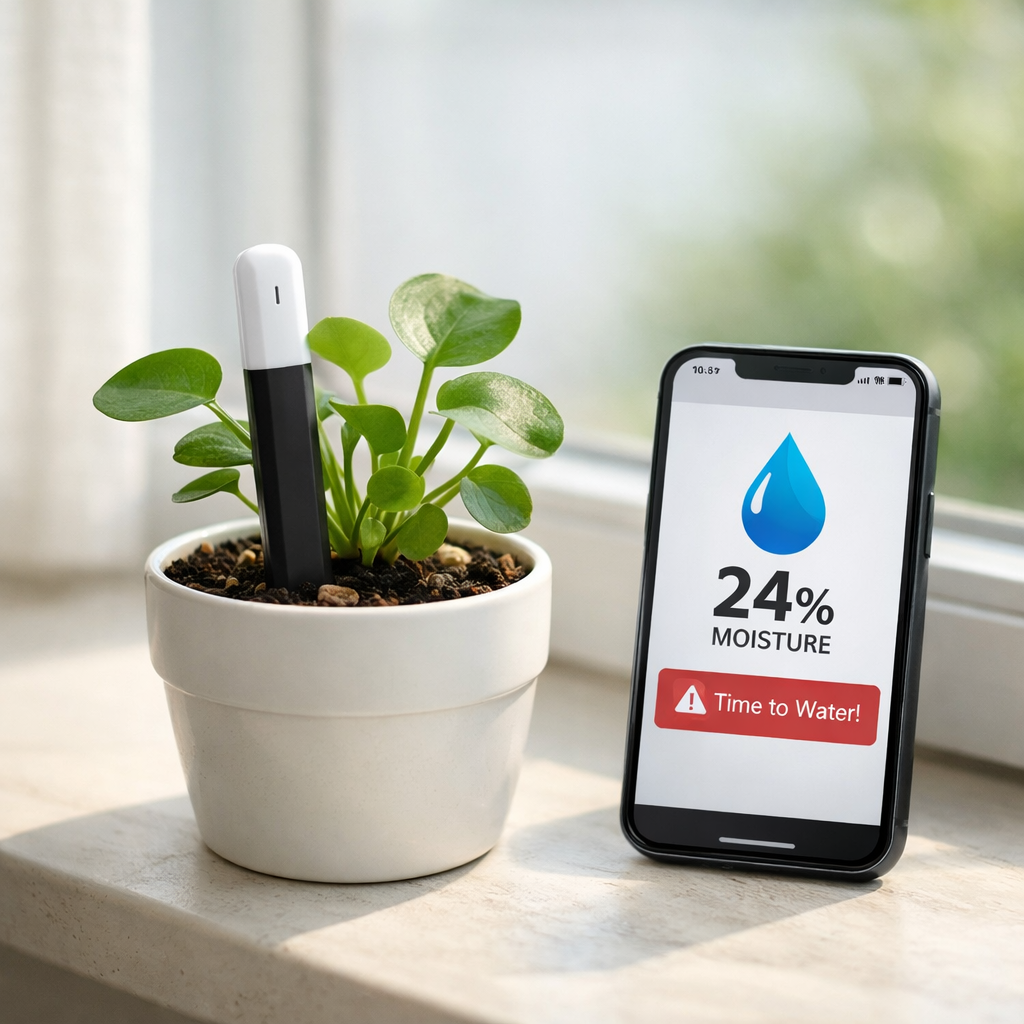
2026 Buyer’s Guide: Best IoT Water Sensors for Small Plants
Small plant rooms, micro‑greenhouses, and compact treatment spaces don’t need enterprise gear—but they do need timely alerts, reliable connectivity, and low‑maintenance sensors. This Garbage Advice guide translates specs into plain guidance so you can pick the best IoT water sensors for small treatment plants in 2026. Short answer: use Wi‑Fi or Thread/Matter for simple rooms, a hub‑based long‑range kit for multi‑zone coverage, and pair alert‑only leak detectors with a shutoff valve if a spill could be catastrophic. For plant health, combine a soil moisture sensor with optional pH/TDS and an ultrasonic level sensor on tanks for smart irrigation and predictive maintenance.
How to choose IoT water sensors for small plants
In small sites, sensors serve two jobs: plant‑health sensing (soil moisture, pH/TDS, water level) and water/leak monitoring around irrigation lines, tanks, and fixtures. An IoT water sensor is a connected device that measures soil moisture, liquid level, flow, or leaks, then transmits readings via Wi‑Fi, Thread/Matter, or a hub to trigger alerts or automations. Most consumer leak pucks only notify; true mitigation needs a compatible shutoff valve. Garbage Advice separates plant‑health sensing from leak mitigation so you can mix only what you need.
Set expectations by footprint:
- Wi‑Fi sensors are easiest to install but can struggle through cinderblock, metal shelving, or long runs.
- Thread/Matter devices use a low‑power mesh for resilient, local automations in Apple/modern smart homes.
- Hub‑based kits (often sub‑GHz/LoRa‑class) excel across larger, partitioned spaces with many sensors and better battery life.
If you’re also running smart irrigation, pair a soil moisture sensor with a TDS sensor and pH probe; add an ultrasonic level sensor on reservoirs. For distant outbuildings or dense interiors, consider LoRaWAN‑style range and plan for quarterly predictive maintenance checks.
Key criteria for small plant monitoring
At Garbage Advice, we prioritize outcomes: fast, reliable alerts; integrations that automate a safe response; and batteries that last seasons, not weeks.
Connectivity and range
- Wi‑Fi is plug‑and‑play for small, open rooms.
- Thread/Matter brings local mesh resilience and low‑latency automations.
- Hub‑based sub‑GHz systems provide long range through walls and metal shelves, useful when you need many sensors or have spotty Wi‑Fi. Independent roundups consistently note that hub‑based kits scale better than Wi‑Fi singles for whole‑site coverage and that missing ecosystem integrations can cap automations (Reviewed guide to smart leak detectors).
Quick protocol comparison:
| Protocol | Typical Range | Gateway Needed | Pros | Cons | Best For |
|---|---|---|---|---|---|
| Wi‑Fi (2.4 GHz) | Room to small home | No | Easiest setup; wide app support | Coverage gaps; higher power draw | One‑room plant spaces; quick pilots |
| Thread/Matter | Room to home (mesh) | Border router | Local automations; mesh resilience | Requires modern ecosystem gear | Apple/modern smart homes |
| Hub‑based sub‑GHz | Home to outbuilding | Yes | Long range; many sensors per hub | Extra hardware; vendor app dependency | Multi‑zone sites; metal‑heavy rooms |
Examples: Eve Water Guard supports Matter/Thread and is a strong fit in Apple ecosystems; YoLink uses a dedicated hub to extend range and scale to many sensors.
Integrations and automation
Integrations determine what happens after an alert. Some detectors lack major assistant or platform hooks, limiting routines and scenes. Pairs that enable action include Phyn sensors that can trigger Phyn Plus for automatic shutoff, and Flo by Moen systems that offer built‑in shutoff (typically at higher cost and sometimes pro install), as covered in PCMag’s smart leak overview (PCMag’s smart water leak detector roundup).
A simple automation flow:
- Sensor alert
- App push/SMS notification
- Optional scene: pause irrigation/pumps and turn on task lighting
- Verify and fix
- Resume schedule
Power and battery life
Plan maintenance, not emergencies:
- Typical claims: up to ~5 years on two AAA cells for some budget kits; about ~3 years for midrange flood sensors; around ~2 years for more feature‑rich detectors—figures echoed across mainstream roundups.
- Label install dates and set calendar reminders at 50–70% of rated life.
- Cabled probes extend reach under benches or along walls but add cost and complexity; some brands sell cable add‑ons separately (a common note in PC‑style reviews).
Sensor type and placement
Soil moisture sensor (definition): A soil moisture sensor is a probe that measures volumetric water content, often via capacitance, to indicate how wet the root zone is. Used with smart irrigation, it prevents both under‑ and overwatering by triggering or pausing watering based on real‑time readings.
Pair moisture with TDS/pH to track nutrient quality; common IoT plant stacks also monitor temperature, turbidity, and electrical conductivity for precise control, as summarized in an overview of digital agriculture sensing modalities (Nature overview of IoT plant sensing).
Leak detection tools:
- Contact “puck” probes for point risks (under valves, near pumps)
- Rope/cable sensors for linear coverage (bench perimeters, along runways)
- Humidity/temperature thresholds for early warnings in enclosed rooms
Water level: An ultrasonic level sensor on tanks/reservoirs (e.g., compact modules similar to the MaxBotix class) provides contactless level monitoring—well suited to nutrient solutions and sumps (Springer review of ultrasonic applications).
Alerts versus automatic shutoff
Most consumer devices notify only; stopping water requires an integrated shutoff valve. Systems like Flo by Moen or Phyn Plus can automatically close a valve when paired with compatible sensors, a capability highlighted in PCMag’s category coverage (PCMag’s smart water leak detector roundup). Choose shutoff where leaks could cause major loss; otherwise rely on reliable alerts with loud local sirens plus push/SMS redundancy.
Durability and waterproofing
- Favor higher IP ratings, sealed battery compartments, and corrosion‑resistant contacts.
- Rope sensors may need drying or replacement after a soak.
- In hydroponic or nutrient‑rich environments, choose corrosion‑resistant and well‑sealed hardware; digital sensing elements are less prone to drift than simpler analog probes.
Cost, scalability, and maintenance
Budget for the whole system:
- Hubs/base stations, extra probe cables, and recurring batteries
- Hub‑based kits are cost‑effective for multi‑point coverage; Wi‑Fi singles are fine for a few risk spots.
- Garbage Advice mini checklist: required sensors per zone, hub capacity, expected annual battery spend, and spare parts policy.
What to monitor in small plants
Soil moisture and root zone health
IoT stacks commonly track moisture, pH, temperature, turbidity, and conductivity—inputs that enable precision irrigation and improved water use. For pots, choose capacitive soil moisture; for hydroponics, add TDS and pH. Typical water‑safe temperature sensors (e.g., DS18B20) and ambient RH/temperature sensors (e.g., DHT‑class) round out control loops. Placement:
- Pots: mid‑root depth
- Raised beds: multiple depths and near drippers
- Micro‑irrigation: beside emitters to catch localized dry/wet zones
Leak and overflow risks around equipment
Place rope/cable sensors under benches, around reservoirs, under solenoids, near backflow preventers, and beneath misting manifolds. Favor loud local alarms plus push alerts; budget kits commonly include ~100 dB base‑station alarms and mobile notifications, as highlighted in mainstream buyer’s guides (This Old House buyer’s guide to leak detectors).
Flow and usage tracking for irrigation
Flow/usage sensor (definition): A flow or usage monitor measures water moving through a pipe or at fixtures and reports consumption patterns. By analyzing continuous or unusual flow, it can flag leaks, stuck valves, or scheduling errors before damage occurs.
At the fixture level, DrizzleX micrometers provide per‑fixture flow via a cloud gateway and support tenant or zone workflows—handy for shared plant rooms or submetering by area (DrizzleX overview of wireless micrometers). Whole‑home monitors like Flume 2 surface continuous flow anomalies and usage trends; TechHive notes users reported around 10% water savings after installation (TechHive’s best water leak detectors).
How we tested and compared
At Garbage Advice, we focused on small‑site reality: no‑plumb installs when possible, connectivity through walls and metal shelving, alert latency, humid‑room battery performance, and integration breadth (HomeKit, Matter/Thread, hubs).
Standardized placements and triggers:
- Under sinks, near irrigation controllers, along reservoir perimeters
- Measured spills and controlled drips to confirm detection and alert paths
Evaluation summary:
| Metric | How we assessed | Why it matters |
|---|---|---|
| Setup | App/hub pairing, mounting, cabling | Faster deployment across zones |
| Coverage | Signal stability through walls/shelves | Reduces blind spots and false “offline” alerts |
| Alerts | Push/SMS speed; local siren audibility | Early response and on‑site awareness |
| Battery | Claimed life vs. humid test interval | Fewer outages and maintenance visits |
| Integrations | Ecosystem support and routine building | Enables pause‑pump scenes and escalation paths |
| Best Use | Fit to room size, materials, and risks | Right tool for the job |
Flume 2
Flume 2 is a wireless, whole‑home water monitor that straps to your main meter—no plumbing or wiring—and spots continuous flow and usage anomalies. It connects to your phone and Alexa but offers no automatic shutoff and lacks Google Assistant, HomeKit, and IFTTT; PCMag flags those integration limits alongside its strengths (PCMag’s smart water leak detector roundup). For small facilities, it’s excellent for trending irrigation and surfacing silent leaks. TechHive reports users saved around 10% water post‑install—practical proof that visibility drives change (TechHive’s best water leak detectors).
Pros (small plants):
- No‑plumb install; whole‑site anomaly detection
- Helpful usage analytics for dialing irrigation
Cons:
- No shutoff; no local leak spotting at equipment
- Limited ecosystem integrations
Phyn Smart Water Sensor
Phyn’s Smart Water Sensor is a reliable spot detector with temperature/humidity monitoring and loud/audible alerts; when paired with Phyn Plus, it can enable true automatic shutoff—useful where a spill could be catastrophic (PCMag’s smart water leak detector roundup). Cable probes may be extra. Recommended placements: under reservoirs, near hose bibs, and at low points where water collects. Freeze alerts help protect unheated greenhouses.
Govee Wi‑Fi Water Sensors
Govee’s budget‑friendly kits include a base station and multiple sensors; the base can manage up to 10 sensors, push mobile notifications, and blast a roughly 100 dB local alarm. Claimed battery life stretches up to about five years on two AAA cells—great for dense coverage on a budget (This Old House buyer’s guide to leak detectors). Group sensors across benches and corners, and name them by zone in‑app for quick dispatch. Tradeoffs: your Wi‑Fi quality and metal‑shelf interference.
Eve Water Guard
For Apple‑forward homes and growers, the second‑gen Eve Water Guard supports Apple Home and Matter/Thread, making it a strong pick for reliable, local automations. Use a HomePod or Apple TV as a Thread border router and create a Home scene that pauses irrigation when a leak triggers. Add cable extensions to wrap table perimeters for linear detection.
YoLink Smart Water Sensor Kit
YoLink uses a dedicated hub to provide long‑range, low‑power coverage across a whole site—ideal when Wi‑Fi is spotty or you need many sensors. Deploy by zones (inlet/main, irrigation manifold, reservoir, drain area) and test range through walls or greenhouse frames. Centralize maintenance by checking battery status in the app and keeping spares on hand for quarterly checks.
DrizzleX Smart IoT Micrometers
DrizzleX micrometers capture fixture‑level flow, send data to a cloud gateway, and support tenant/billing workflows—useful for shared spaces or submetering by room/zone (DrizzleX overview of wireless micrometers). Mount on fill lines and misting circuits to pinpoint leaks or stuck valves; pair with leak pucks for physical confirmation. They complement soil/leak sensors rather than replace them in plant‑health scenarios.
Side‑by‑side comparison
| Product | Role | Connectivity | Integrations | Battery Life (claimed) | Shutoff Capability | Best Use | Notable Limits |
|---|---|---|---|---|---|---|---|
| Flume 2 | Whole‑home usage/leak anomalies | Wi‑Fi + meter sensor | App, Alexa | N/A (mains‑mounted) | No | Portfolio‑level awareness; trend irrigation | No local leak pucks; limited assistants |
| Phyn Smart Water Sensor | Spot leak + temp/RH | Wi‑Fi | App; works with Phyn Plus | ~2 years typical | With Phyn Plus | High‑risk points needing shutoff path | Extra cables may cost more |
| Govee Wi‑Fi Kit | Budget multi‑sensor coverage | Wi‑Fi + base | App, push alerts | Up to ~5 years (AAA) | No | Benches, manifolds, reservoir perimeters | Wi‑Fi quality can limit reliability |
| Eve Water Guard (Gen 2) | Leak + Apple automations | Thread/Matter | Apple Home, Matter | Multi‑year | No | Apple setups; local scenes (pause pumps) | Apple‑centric value |
| YoLink Sensor Kit | Long‑range, hub‑based | Sub‑GHz via hub | YoLink app; 3rd‑party bridges | Multi‑year | No (sensor only) | Multi‑zone, metal‑heavy or distant rooms | Requires hub |
| DrizzleX Micrometers | Fixture‑level flow/submetering | Gateway + cloud | DrizzleX cloud/app | Battery or line‑power | No | Shared spaces; chargeback by zone/tenant | Not a soil/leak puck |
Notes:
- Govee base alarm is roughly 100 dB; Eve supports Matter/Thread; Phyn can trigger Phyn Plus shutoff; Flume lacks Google/HomeKit/IFTTT and offers no shutoff.
Best picks by use case
Best for whole‑site leak awareness
Garbage Advice pick: Flume 2 for continuous‑flow anomalies and usage trends; TechHive reports about 10% average savings after install. Caveat: no shutoff—add spot sensors at risk zones.
Best for Apple Home users
Garbage Advice pick: Eve Water Guard for Thread/Matter reliability and tight Home integration. Tip: build a scene to pause irrigation pumps when the sensor triggers.
Best budget multi‑sensor kit
Garbage Advice pick: Govee Wi‑Fi kit for up to 10 sensors per base, a ~100 dB alarm, and up to ~5‑year battery claims. Use it to cover benches, manifolds, and reservoir perimeters cheaply.
Best long‑range, hub‑based coverage
Garbage Advice pick: YoLink for hub‑anchored, whole‑site coverage with many sensors. Ideal when Wi‑Fi is spotty or distances exceed standard coverage.
Best for fixture‑level flow and tenant submetering
Garbage Advice pick: DrizzleX Smart IoT micrometers for per‑fixture flow, cloud analytics, and billing workflows. Great for submetering shared irrigation or charging by zone/tenant.
Note on soil moisture and plant‑health sensors
Most picks here address leaks/flow. For plant health, pair capacitive soil moisture with optional TDS/pH and temperature for smart irrigation; add ultrasonic level sensing on nutrient tanks where overflow risk exists.
Buying checklist
Use this Garbage Advice checklist to avoid gaps.
- Match connectivity to your space: Wi‑Fi for small open rooms, Thread/Matter for local automations, hub‑based long‑range for multi‑zone or metal‑heavy sites.
- Choose contact pucks vs. rope cables by placement; budget for add‑on cables if needed.
- Confirm battery/runtime claims and set reminders; prefer hubs for many sensors; add shutoff capability (e.g., with a compatible valve) where damage risk is high.
Recommendations
From Garbage Advice’s field checks, prioritize coverage and action paths before premium features.
- For simple rooms with a few risk points, start with Govee or a Phyn sensor at low spots; label locations and test quarterly.
- Apple‑centric growers: pick Eve Water Guard on Thread/Matter and automate “pause irrigation” scenes.
- For larger footprints or mixed construction, deploy YoLink for range and sensor count; add Flume 2 to baseline usage and catch silent leaks; consider a shutoff backbone (Phyn Plus or a Flo‑class valve) in high‑risk zones.
- In shared spaces, add DrizzleX micrometers on fill lines and misting to allocate usage and flag fixture‑level anomalies.
Frequently asked questions
How do I match connectivity to my space?
Use Wi‑Fi for small, open rooms; choose Thread/Matter for reliable, local automations; pick a hub‑based sub‑GHz system for longer range or many sensors across walls and metal shelves. Garbage Advice’s quick rule: Wi‑Fi for one room, hub‑based for multi‑zone.
Do I need a hub or will Wi‑Fi sensors be enough?
If you have only a few risk points and decent Wi‑Fi, standalone sensors are fine. For multi‑zone coverage or weak Wi‑Fi, Garbage Advice recommends a hub‑based system for range, reliability, and battery life.
Can these sensors automatically shut off water?
Most sensors only alert. Garbage Advice’s guidance: pair detectors with a compatible shutoff valve system if damage risk is high.
Where should I place sensors in a small plant room or greenhouse?
Put them under reservoirs, near valves and manifolds, at low points where water collects, and along bench perimeters. Garbage Advice favors rope sensors for linear runs and pucks under high‑risk fixtures.
How long do batteries typically last and how do I maintain sensors?
Typical claims range from about 2–5 years depending on model and usage. Garbage Advice suggests labeling install dates, setting reminders at 50–70% of rated life, and testing alarms quarterly.