
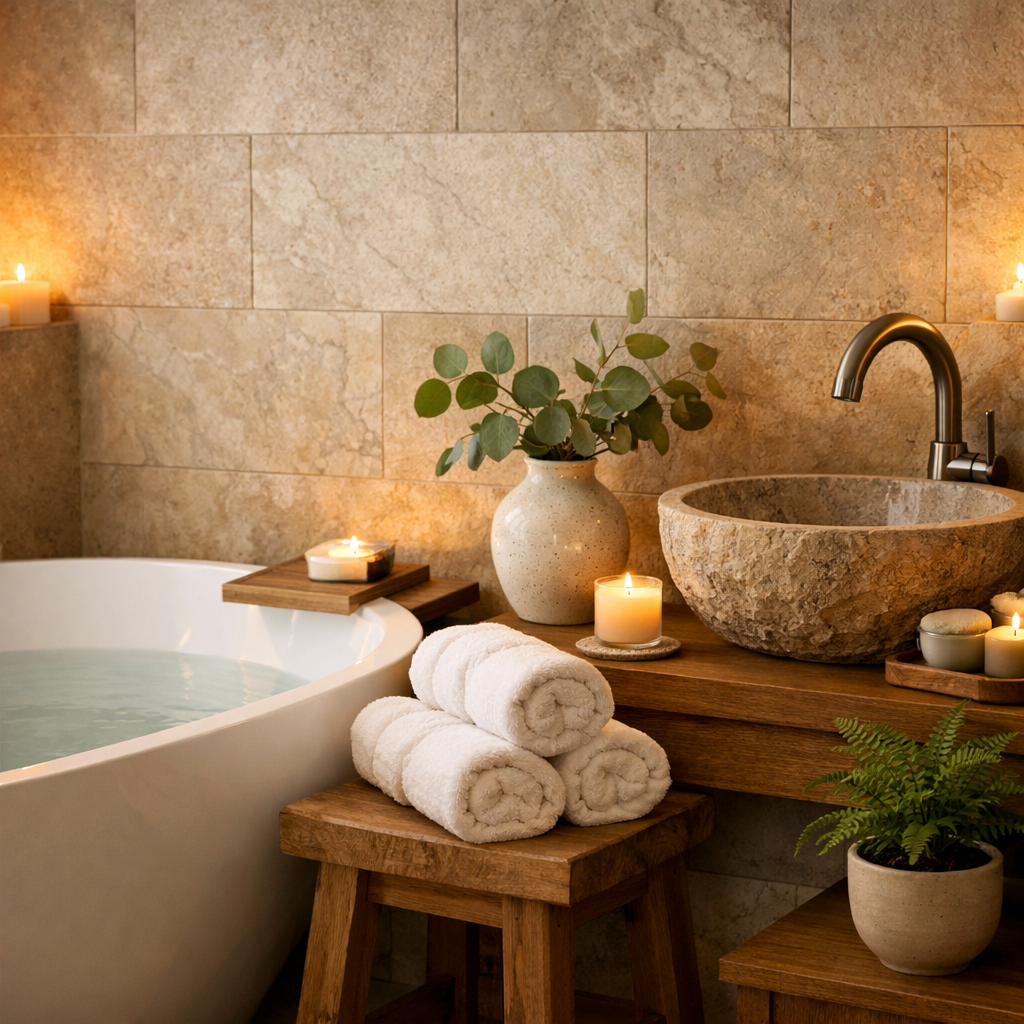
12 Calming Spa Bathroom Design Elements That Create Immediate Calm
A spa-like bathroom is less about luxury labels and more about how a space feels: open sightlines, soft light, warm textures, quiet storage, and smart moisture control. You can deliver that immediate calm without moving plumbing by focusing on high-impact surfaces, lighting, and sensory comforts, then backing them with solid waterproofing and ventilation. The 12 elements below spotlight quick wins (mirrors, paint, storage) and strategic upgrades (glass, tile, heat) you can phase in as budget allows. Where open or curbless layouts are involved, plan slopes, drains, and fans first so serenity doesn’t come with mold or maintenance headaches. Here’s how to create a calming, spa-like bathroom—durable, moisture-smart, and genuinely relaxing from the first glance to the last rinse. It’s the same order of operations we recommend at Garbage Advice.
Walk-in frameless shower
A frameless, walk-in shower instantly opens sightlines and shares natural light across the room, making even tight baths feel larger and more serene, a top move among spa-inspired bathroom upgrades (ambiancecreations.org). Frameless glass removes visual breaks, and a curbless entry minimizes trip hazards while adding that airy, resort vibe.
- Choose a curbless, barrier-free base to create a seamless wet-room look and improve accessibility; it’s beautiful and practical for aging in place.
- Use large-format tile or slab walls to reduce grout lines—less visual chatter, less scrubbing, more calm (gomcdaniels.com).
- Moisture planning: Open-concept layouts brighten a bath but demand correct drainage and ventilation. Aim for a consistent 1/4 inch per foot floor slope to a linear drain and size the exhaust fan to the room (bathtubmadenew.com).
Mini checklist:
- 3/8" or thicker tempered glass panels
- Linear drain along the long wall
- Single pane or fluted panel near the spray zone to limit splash without blocking light
- Clear, high-CRI task lighting just outside the shower line
Freestanding soaking tub
A freestanding soaking tub reads as sculpture and signals “retreat” the moment you enter. Beyond looks, deeper basins support shoulder-to-knee submersion for real relaxation.
- Space it right: Keep 4–6 inches from walls for cleaning and at least 24 inches of front access for easy entry/exit.
- Materials: Acrylic tubs are lightweight and warm quickly to the touch. Stone or solid-surface resin tubs carry thermal mass for longer, cozier soaks and a luxe presence.
- Elevate the ritual: Pair with a floor-mounted filler, a teak stool for a book or tea, and a dimmable wall sconce for evening baths.
Floating vanity with backlit mirror
Floating vanities visually free the floor, making small baths feel bigger and calmer while simplifying cleaning. Backlit mirrors add a soft halo that cuts shadows and sets a spa mood without glare.
- Lighting that nurtures: A backlit or circular LED mirror becomes ambient light for pre-dawn or post-dusk routines; add under-vanity motion sensors for safe, gentle night lighting (KBD bath lighting report).
- Quiet finishes: Handleless drawers and concealed pulls keep the line minimal. Inside, drawer organizers tame bottles so counters stay clear.
Calming color palette
Muted, cohesive colors dial down stimulation so textures and light can do the talking. Think layered neutrals with a soft accent and one nature-forward texture.
- What works: Beige, taupe, soft white, and sage create a restful backdrop, while terrazzo and muted finishes are trending in spa-style baths (spa retreat-style bathrooms).
- How to build it:
- Choose one base neutral (e.g., warm white).
- Add a gentle accent (sage or soft blue) on walls, textiles, or a single cabinet bank.
- Introduce one contrasting texture like wood-look tile or honed stone.
- Keep metals consistent—brushed nickel or burnished brass—to avoid visual noise.
Natural materials and biophilic accents
Stone, wood-look tile, teak, bamboo, and plants ground the senses and bring outdoor calm in. Natural materials add warmth without sacrificing durability.
- Low-maintenance warmth: Wood-look porcelain offers the grain and tone of timber with easy care and water resistance; layer in a teak bench, bamboo bath accessories, and humidity-loving plants like ferns or pothos (spa-like bathroom ideas).
- Definition: Biophilic design is a design approach that connects people to nature indoors by using natural materials, daylight, plants, and organic textures to reduce stress and improve well‑being. The wellness-led trend continues to shape bathroom choices, from materials to lighting.
Heated floors and towel warmers
Stepping onto warm tile and wrapping in a pre-warmed towel turns daily routines into small luxuries.
- Floor heat options: Electric mats are ideal for remodels and spot-heating key paths (vanity, shower exit). Hydronic radiant pairs with larger renovations or whole-home systems.
- Towel warmers: Select programmable timers so racks preheat for morning showers and shut off automatically for efficiency.
- Smart control: Add Wi‑Fi thermostats or wall timers to set “comfort windows” and avoid energy waste.
Layered dimmable lighting
Great spa lighting flexes from bright and accurate to soft and soothing—often in the same hour.
- Plan layers: Overhead ambient on dimmers, high-CRI vanity task lights (90+ CRI for accurate skin tones), and accents like backlit mirrors or undershelf LEDs. Wellness-forward, color-tunable options are increasingly common for mood setting (wellness trend analysis).
- Set warmth: 2700K–3000K feels calm and candle-adjacent; use dimmers on every zone for full control.
| Lighting layer | Primary purpose | Ideal color temperature |
|---|---|---|
| Ambient ceiling | Unwind, general wash | 2700K–3000K |
| Vanity task | Grooming, clarity | 3000K–3500K (CRI 90+) |
| Accent/backlight | Soften edges, night use | 2700K–3000K |
Rainhead and multifunction shower systems
A rain showerhead delivers a gentle, full-body cascade that reads “spa” the second it turns on. Consumers increasingly link showering to relaxation—64% in one survey—fueling demand for wellness features (wellness trend analysis).
- Mix for versatility: Pair a ceiling-mounted rainhead with a hand shower for rinsing and cleaning. Use a thermostatic valve so temperature stays steady when pressure fluctuates.
- Go further: Wet rooms can combine shower, tub, and steam features within one continuous, easy-clean envelope—popular in higher-end projects (AD PRO luxury bath report 2024). Steam kits can convert well-sealed enclosures into in-home steam rooms; confirm gaskets, transoms, and materials are steam-rated (Design Trends: Spa-Inspired Bathroom).
Built-in niches and concealed storage
Calm surfaces are clear surfaces. Recessed niches and closed storage keep what you use within reach—without the clutter.
- Design right: Size niche heights to your tallest bottle; slope the shelf slightly for drainage. Align grout with niche edges for a crisp, integrated look.
- Keep the line: Handleless cabinets and concealed hampers keep the visual field quiet. Decant soaps and stash extras so only intentional pieces live on the counter.
Textured but minimal surfaces
Choose fewer, larger moves. Big slabs read tranquil; one intentional texture adds tactility without chaos.
- Go large: Slab walls or large-format tiles mean fewer grout lines, less maintenance, and a cleaner, calm read (relaxing bath design ideas).
- Add privacy, not bulk: Fluted or ribbed glass maintains light while softening views for showers or partitions (spa retreat-style bathrooms).
- Keep cohesion: Use a single textured accent—ribbed glass or a honed, lightly fluted tile—and tone-on-tone grout to maintain serenity.
Natural or enhanced daylight
Daylight lifts mood and color accuracy. Preserve privacy while keeping the glow.
- Smart privacy: Fluted or ribbed glass, frosted windows, and light-filtering shades protect sightlines without stealing light (spa retreat-style bathrooms).
- Boost the bounce: Consider a skylight or solar tube; use satin (not mirror-like) finishes on walls or vanity sides to reflect light softly. Open layouts share light farther—but plan drainage and airflow as carefully as the aesthetics (bathtubmadenew.com).
Smart wellness features
Technology should support relaxation—and then disappear.
- Thoughtful upgrades: Touch-screen mirrors, advanced showers, and intuitive controls are increasingly paired with natural materials to balance tech and tactility (wellness trend analysis).
- Sensory layers: Chromatherapy LEDs in showers or tubs, discreet aromatherapy diffusers, and moisture-safe speakers add ritual without clutter. Use humidity-sensing fans and hide controls in medicine cabinets or mirror displays for a clean look.
Implementation tips for waterproofing, drainage, and ventilation
Definition: A wet room is a fully waterproofed bathroom or shower area with integrated drainage and seamless flooring, allowing water to flow freely without a traditional shower curb. At Garbage Advice, we tackle these envelope details first so the spa features stay relaxing—and low maintenance.
- Get the envelope right:
- Install a continuous waterproof membrane on floors and walls before tile.
- Slope shower floors at least 1/4 inch per foot toward a linear drain; extend waterproofing past the spray zone in curbless showers.
- Use fluted or partial glass panels to retain spray while preserving light.
- Vent like you mean it:
- Size the exhaust fan to the room; add a humidity sensor and a 20–30 minute run-on timer after showers.
- Keep make-up air paths clear (under-cut doors or transfer grilles) so the fan can pull moist air out.
- Choose durable finishes: Prioritize dense porcelain, quality sealants, and corrosion-resistant hardware. If you’re comparing options, see the Garbage Advice guide to bathroom materials that last (bathroom materials that last).
- Prevent odors: Regularly clean traps, run the fan during and after use, and keep textiles dry between cycles.
Frequently asked questions
What lighting temperature feels most calming in a bathroom?
Warm white around 2700K–3000K feels most calming, especially on dimmers. Garbage Advice pairs that with slightly brighter, high-CRI task lighting at the mirror for grooming.
Which natural materials hold up best in wet zones?
Porcelain tile (including wood-look porcelain) and stone-look slabs excel in wet areas because they’re durable and low maintenance. Garbage Advice often adds teak accents or bamboo accessories for warmth without committing to full wood surfaces.
How do I keep a spa-style bathroom smelling fresh without strong scents?
Prioritize ventilation and hidden storage, then use subtle aromatherapy like eucalyptus or lavender in diffusers. Garbage Advice also recommends frequent towel laundering and decanting soaps for a clean, consistent scent.
What is the simplest upgrade for instant spa calm on a budget?
Swap to a backlit LED mirror and add dimmers for an immediate mood lift. At Garbage Advice, we finish the look with neutral textiles and a teak bath mat for warmth and texture.
Do open showers cause moisture problems and how do I prevent them?
They can if drainage, waterproofing, and ventilation are skipped. Garbage Advice specifies a continuous waterproof membrane, correct slope to a linear drain, and a humidity-sensing exhaust fan to keep moisture in check.